• TalkBass has been independent since 1998. Add your voice.
    Create a free account to reply to discussions, view embedded media, and browse with fewer display ads.
    Join freeLog in
    Want zero display ads or expanded classifieds tools? Compare plans.

Fretting hand cramps

This makes me feel better, thanks, I know that Billie Jean is not that hard to play at regular tempo but I guess I need to get used to maintaining it.

i find billie jean is a bit of a hand-cramper for some reason. so is nivana's breed, but that makes more sense.

btw, getting a setup means you won't be fighting to push your strings as far. i also use extra light strings, which means i'm not fighting the strings themselves. not everyone does that, but it works for me.

stop pushing so hard while you play - you just exhaust your muscles. if you HAVE to press that hard to get the notes, you don't need a hand exerciser - you REALLY need a setup AND lighter strings. and life will be great.
 
i find billie jean is a bit of a hand-cramper for some reason. so is nivana's breed, but that makes more sense.

btw, getting a setup means you won't be fighting to push your strings as far. i also use extra light strings, which means i'm not fighting the strings themselves. not everyone does that, but it works for me.

stop pushing so hard while you play - you just exhaust your muscles. if you HAVE to press that hard to get the notes, you don't need a hand exerciser - you REALLY need a setup AND lighter strings. and life will be great.
Yes, same goes for Breed. By setup you mean taking my bass to a professional right? Or should I try to do it myself?
 
Your make of bass should have an on-line video on setup. I play Warwicks and they have instructions on set up, intonation, truss rod, etc on their web site. I finally got metric tools to make my measurments accurate. Do a little checking and see - you can teach yourself on doing a full setup. I take a week twice a year to do a full setup on mine but it is worth every minute. I'm 70 and still play almost daily. But, there are some songs I just can't do with fingers anymore - such as TNUC by Grand Funk Railroad. So I just don't do that song anymore. I can still do Stevie Wonder's "I Wish" as it's not so intensive and looser than "Billy Jean." Welcome to the BASSment.
 
Your make of bass should have an on-line video on setup. I play Warwicks and they have instructions on set up, intonation, truss rod, etc on their web site. I finally got metric tools to make my measurments accurate. Do a little checking and see - you can teach yourself on doing a full setup. I take a week twice a year to do a full setup on mine but it is worth every minute. I'm 70 and still play almost daily. But, there are some songs I just can't do with fingers anymore - such as TNUC by Grand Funk Railroad. So I just don't do that song anymore. I can still do Stevie Wonder's "I Wish" as it's not so intensive and looser than "Billy Jean." Welcome to the BASSment.
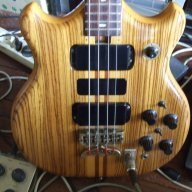
Well, I use a bass my friend borrowed me for learning. It is a custom bass and therefore has no markings on it at all, but thank you for your advice. Since I am only 18 I am glad that someone with so many years of experience helps me, really, thanks.
 
Lots of good setup advice here: ALL BASIC SETUP QUESTIONS ANSWERED HERE

If the bass has never had a proper setup, I recommend to take it to a pro the first time. Then once it's in good shape, if you like, you can learn to do the regular maintenance yourself.

A good rule of thumb is that fretting a note on the bass should take about the same amount of force as typing a letter on your computer keyboard. If your bass feels much "stiffer" than your computer keyboard, then you would definitely benefit from a setup and/or a more forgiving set of strings, in my opinion.
 
Assuming he uses a proper technique (and from what he told us he uses proper technique and tries to keep his wrist straight)....
We can't assume this. OP says he tries to use proper technique and keep his wrist straight, but he isn't able to; he also acknowledges that he is squeezing too hard and that his thumb position is wandering. The solution is to fix the technique, not play through the pain. And BTW, working to prevent long-term injury doesn't make some a p**** -- it makes them smart.

OP, have you ever checked out this video? This might contain the solution to your wrist-bending problem. It such worked for me:

 
1. Set your bass up with a low action - allen keys are cheap. It's fun setting up your instrument to your own taste. There's heaps of vids around to show you how.
2. Get a decent teacher. If you absolutely cant find one - Online Bass Guitar Lessons | Scott's Bass Lessons - Do a beginner course on here, or check out his youtube channel.
3. Find some 4 finger warmups that cover the whole neck - get a few ones to work on. - on the net or youtube Remember *thumb behind the neck, using all 4 fingers curved over - and using the tips of your fingers - practice them every day.
4. Learn all 7 modes , 3 minor scales, the Blues scale, major/minor pentatonics, whole tone, the 2 Diminished half/whole and whole/half scales - learn the arpeggios that fit over each of these scales - Learn the One octave patterns - then expand. Practicing these will also be part of your warmup - and it's a good way to find patterns you like, and help you learn shapes to play with.
5. If your hands start to cramp up give them a good shake and move on to something else, If it's really bad have a break for a while. Your practice should go: *Warmup, *scales and Arpeggios, *riffs and songs... If you do this everyday your stamina will get better.
6. Skip what that guy said about the hand strength gizmo. Don't play through pain, just move onto something else. And either come back to it later or tomorrow.
7. Make sure you are actually healthy, and getting all your vitamins - You will definitely need all your B vitamins, Potassium, iron, magnesium and calcium - the last 2 being very important for tendons and muscles. and of course - water. *If you drink or smoke a lot this could be affecting you stamina and vitamin intake.

I am guessing you don't have a teacher or he/she would have told you all this stuff... And you wouldn't be asking us ;). And I am also guessing you don't have much of a practice regime - because a good teacher would MAKE you practice this stuff every day - And you would have a fair bit more stamina.

Cheers, I hope this helps.
 
We can't assume this. OP says he tries to use proper technique and keep his wrist straight, but he isn't able to; he also acknowledges that he is squeezing too hard and that his thumb position is wandering. The solution is to fix the technique, not play through the pain. And BTW, working to prevent long-term injury doesn't make some a p**** -- it makes them smart.

OP, have you ever checked out this video? This might contain the solution to your wrist-bending problem. It such worked for me:


Well, I have a bit different philosophy on playing the bass. I guess I am a indeed bit oldschool as an earlier commenter mentioned. I personally can't stand bass players that play soft and try to be 'nimimal' in everything they do on the bass. Both left and right hand I can use quite a bit of force even though the neck of my bass is light and fast to play on. More pressure also shapes the tone, just as less pressure does. To have some soul in your notes you also want some strength behind the notes you play (depending on what you play of course).

He knows what the proper technique is, but he can't keep it up. That sounds to me like an endurance problem more than a technique problem at his end. So lets combine your advice and my advice. If you want to increase endurance you need to train those muscles and bite through some (controled) pain and cramp to train those muscles.
 
Last edited by a moderator:
  • Like
Reactions: TYoungman
the key is relaxing. I used to have this problem where I would give my bass the death grip even with my thumb in the middle of the neck. also watch your breathing. do you stop breathing during these parts? or harder passages in general?
 
  • Like
Reactions: TYoungman
We can't assume this. OP says he tries to use proper technique and keep his wrist straight, but he isn't able to; he also acknowledges that he is squeezing too hard and that his thumb position is wandering. The solution is to fix the technique, not play through the pain. And BTW, working to prevent long-term injury doesn't make some a p**** -- it makes them smart.

OP, have you ever checked out this video? This might contain the solution to your wrist-bending problem. It such worked for me:


I've discovered that guy few months ago and I watched that exact video. Earlier this month, while was searching for some tutorials and tips, I came across that video again and watched it very catefully. This thing you mentioned about my thumb wanderig is actually a result of me trying to play a Billie Jean bassline using that technique because when I pont my thumb to the headstock my palm gets very close to the bottom of the neck. Then while trying to play at that tempo my palm ends up touching the bottom of the neck and my thumb ends up sticking over the neck.
 
I've discovered that guy few months ago and I watched that exact video. Earlier this month, while was searching for some tutorials and tips, I came across that video again and watched it very catefully. This thing you mentioned about my thumb wanderig is actually a result of me trying to play a Billie Jean bassline using that technique because when I pont my thumb to the headstock my palm gets very close to the bottom of the neck. Then while trying to play at that tempo my palm ends up touching the bottom of the neck and my thumb ends up sticking over the neck.

And does it feel better? Less pain and cramping? Got pics?
 
  • Like
Reactions: TYoungman
Relaxation is definitely important. I am someone who is incredibly hypertensive and it just leads to frustration if I don't make the effort to recognize it and relax. One can't develop muscle memory if the muscles are already overexerted before even starting.
 
  • Like
Reactions: TYoungman
1. Set your bass up with a low action - allen keys are cheap. It's fun setting up your instrument to your own taste. There's heaps of vids around to show you how.
2. Get a decent teacher. If you absolutely cant find one - Online Bass Guitar Lessons | Scott's Bass Lessons - Do a beginner course on here, or check out his youtube channel.
3. Find some 4 finger warmups that cover the whole neck - get a few ones to work on. - on the net or youtube Remember *thumb behind the neck, using all 4 fingers curved over - and using the tips of your fingers - practice them every day.
4. Learn all 7 modes , 3 minor scales, the Blues scale, major/minor pentatonics, whole tone, the 2 Diminished half/whole and whole/half scales - learn the arpeggios that fit over each of these scales - Learn the One octave patterns - then expand. Practicing these will also be part of your warmup - and it's a good way to find patterns you like, and help you learn shapes to play with.
5. If your hands start to cramp up give them a good shake and move on to something else, If it's really bad have a break for a while. Your practice should go: *Warmup, *scales and Arpeggios, *riffs and songs... If you do this everyday your stamina will get better.
6. Skip what that guy said about the hand strength gizmo. Don't play through pain, just move onto something else. And either come back to it later or tomorrow.
7. Make sure you are actually healthy, and getting all your vitamins - You will definitely need all your B vitamins, Potassium, iron, magnesium and calcium - the last 2 being very important for tendons and muscles. and of course - water. *If you drink or smoke a lot this could be affecting you stamina and vitamin intake.

I am guessing you don't have a teacher or he/she would have told you all this stuff... And you wouldn't be asking us ;). And I am also guessing you don't have much of a practice regime - because a good teacher would MAKE you practice this stuff every day - And you would have a fair bit more stamina.

Cheers, I hope this helps.

Wow, thank you so much, I'll definitely try to go through all of the things you mentioned. You basically gave me a fully detailed tutorial here for which I am very grateful. Thank you again, these are some great advices. :)
 
  • Like
Reactions: Larchi
the key is relaxing. I used to have this problem where I would give my bass the death grip even with my thumb in the middle of the neck. also watch your breathing. do you stop breathing during these parts? or harder passages in general?
Sometimes I do, but based on the pointers I got here, such as yours, I'll watch my breathing and try to fully relax, thx.
 
There are thee issues to address when cramping up.
1. Your Body
2. Your Equipment
3. The Song

1. Body: Make sure you're properly hydrated and not lacking nutrition. Having a good meal helps. A burger with fries is not a good meal. Bananas are a fast and easy source.

2. Your bass should hang in a position that lets your left hand work in a comfortable way. There is pain in your hand that comes from your muscles getting tired (which you can ignore and push on) and there is pain that comes from using the wrong technique, which should not be ignored. A proper setup with low action helps.
When you play too hard, turn up the amp and play softer. If you want a gizmo to aid you, a compressor with good peak limiting can be your friend. Set with a fairly low threshold you can play with the amp quite loud and without fear of accidentally blurting out some super loud notes because you slipped.

3. The Song - this is where I see, after reading all you wrote, the main problem.
Some pieces are unfamiliar and need lots of work to get into muscle memory so they basically play themselves.
When Billie Jean gets too fast for comfort, you could leave out the second note of the lick sometimes to give yourself room - most people won't notice.
When you sit down at home,
practice at a tempo you are 100% comfortable and are able to hit every single note without stress. Play a few minutes. Then increase the tempo just a bit (2-5 bpm) - not to the point where you're struggling, but to the point where you're 99,5% comfortable. Play a few minutes. Raise tempo by another tiny margin. Rinse and repeat.
You should notice that after a few sessions, your comfort zone has raised a few bpm.
Do that every time you sit down. Start at the point where you're relaxed and every note is just right and then raise the tempo just a fraction until you're comfortable there. It helps to take notes to track your progress.
Do that until you reach 120% of the song's speed. This one starts with drums and many drummers are prone to play too fast when they play live, so if yours starts into the song with a few extra bpm you're covered.
 
  • Like
Reactions: TYoungman
There are thee issues to address when cramping up.
1. Your Body
2. Your Equipment
3. The Song

1. Body: Make sure you're properly hydrated and not lacking nutrition. Having a good meal helps. A burger with fries is not a good meal. Bananas are a fast and easy source.

2. Your bass should hang in a position that lets your left hand work in a comfortable way. There is pain in your hand that comes from your muscles getting tired (which you can ignore and push on) and there is pain that comes from using the wrong technique, which should not be ignored. A proper setup with low action helps.
When you play too hard, turn up the amp and play softer. If you want a gizmo to aid you, a compressor with good peak limiting can be your friend. Set with a fairly low threshold you can play with the amp quite loud and without fear of accidentally blurting out some super loud notes because you slipped.

3. The Song - this is where I see, after reading all you wrote, the main problem.
Some pieces are unfamiliar and need lots of work to get into muscle memory so they basically play themselves.
When Billie Jean gets too fast for comfort, you could leave out the second note of the lick sometimes to give yourself room - most people won't notice.
When you sit down at home,
practice at a tempo you are 100% comfortable and are able to hit every single note without stress. Play a few minutes. Then increase the tempo just a bit (2-5 bpm) - not to the point where you're struggling, but to the point where you're 99,5% comfortable. Play a few minutes. Raise tempo by another tiny margin. Rinse and repeat.
You should notice that after a few sessions, your comfort zone has raised a few bpm.
Do that every time you sit down. Start at the point where you're relaxed and every note is just right and then raise the tempo just a fraction until you're comfortable there. It helps to take notes to track your progress.
Do that until you reach 120% of the song's speed. This one starts with drums and many drummers are prone to play too fast when they play live, so if yours starts into the song with a few extra bpm you're covered.
I'll surely try that approach, start at comfortable rate and progressively develop speed. Thx for breaking it down to more details, you've given me a complete guide for the excercise, so thank you.
 

Latest posts