

Greetings, I come in pieces.
I recently went surfing for a new head to accompany a forlorn 4x10 (and let's be honest, my axe, too) collecting a very sad layer dust. I happened upon a name I recognized from my teenage GAS days and did a bit of poking around to find out more about it. A few short minutes later, I popped up to my local GC which had this used GBE 250C head for sale. Tried it out for a few minutes and snatched it up before someone else did.
Got it home and after some very rusty playing, I decided some due diligence cleaning was in order. Found a surprisingly low amount of dust—I was expecting a lot more—a few threaded screw clips were rattling around (lucky me, no shorts, I think...), and then I noticed a resistor that just might need replacement.
I would've just decoded the color bands, but...
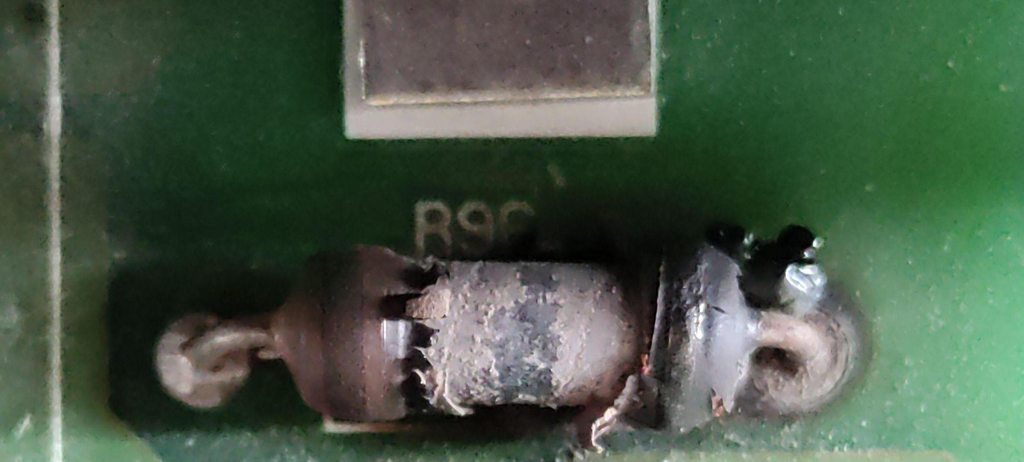
I desoldered it out and got a measurement... 11 Ohms is what it shows. That doesn't seem right to me, but I'd like a second opinion, as I have no schematic, and not enough analog circuitry experience to divine what the correct value should be. I mean, it's working at the resistance it shows, but I don't feel comfortable playing through it more without replacing it.
If anyone has a 250C they'd be willing to crack open and snap a pic of the resistor in question for me, it's R96 on the output board:
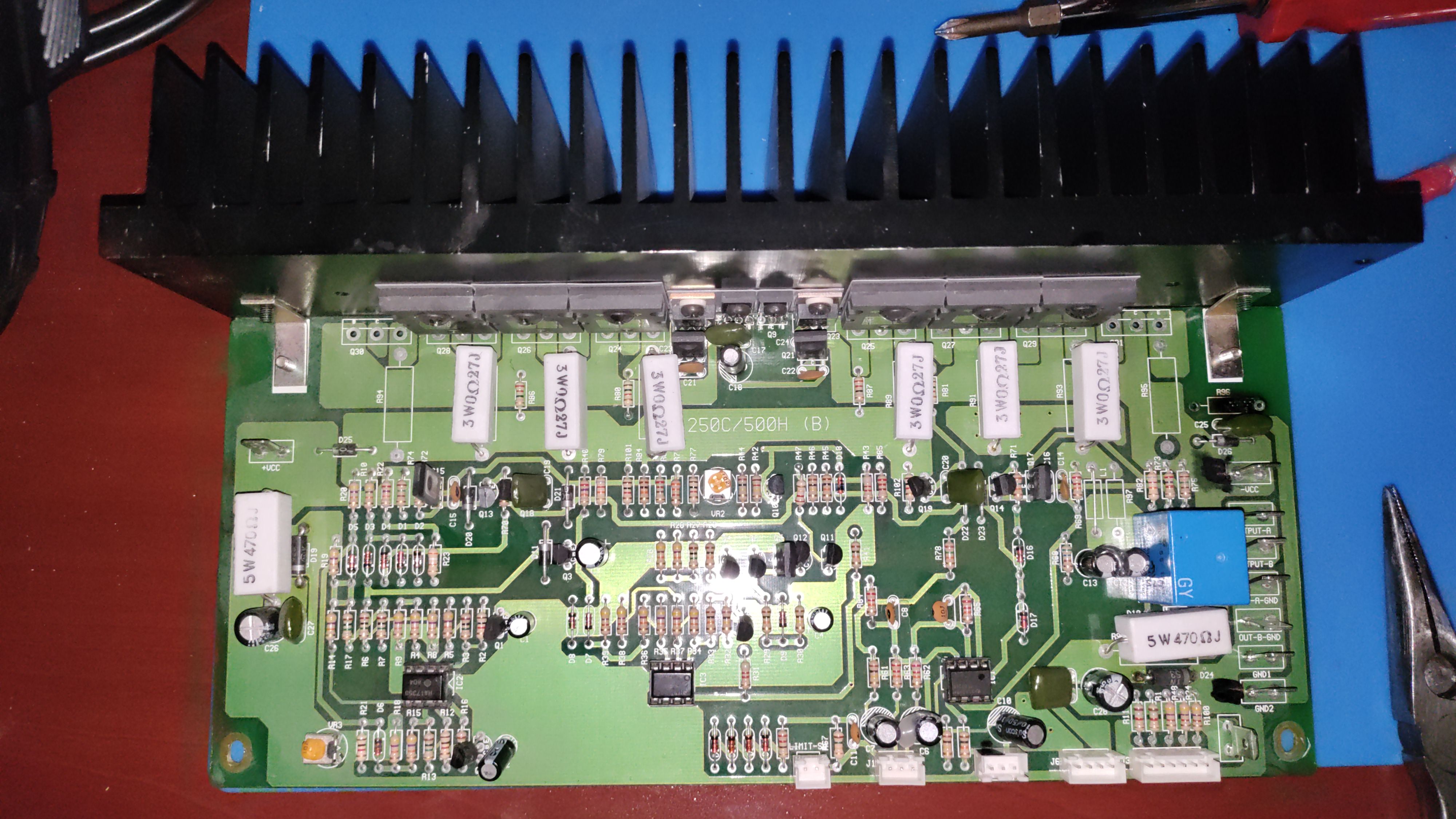
Ignore the isopropanol- smeared sharpie reminder mark, but it's just north of there, above C25.
Or alternatively, if anyone happens to have the schematic and could read off the value from there for me (I don't know how impolitic it is to ask for a schematic right out, and I don't really need the whole thing at this point). I don't want to be disrespectful to the creators, whom I've seen contribute graciously to the community here, which is a very cool thing for them to do. Hats off to you.
I'm also open to any other alternate paths to working out what it should be, if that's easier. I don't want this to be a hey, do all the work for me kind of request, but I'm rusty, and would appreciate any help
Many thanks in advance.
I recently went surfing for a new head to accompany a forlorn 4x10 (and let's be honest, my axe, too) collecting a very sad layer dust. I happened upon a name I recognized from my teenage GAS days and did a bit of poking around to find out more about it. A few short minutes later, I popped up to my local GC which had this used GBE 250C head for sale. Tried it out for a few minutes and snatched it up before someone else did.
Got it home and after some very rusty playing, I decided some due diligence cleaning was in order. Found a surprisingly low amount of dust—I was expecting a lot more—a few threaded screw clips were rattling around (lucky me, no shorts, I think...), and then I noticed a resistor that just might need replacement.
I would've just decoded the color bands, but...
I desoldered it out and got a measurement... 11 Ohms is what it shows. That doesn't seem right to me, but I'd like a second opinion, as I have no schematic, and not enough analog circuitry experience to divine what the correct value should be. I mean, it's working at the resistance it shows, but I don't feel comfortable playing through it more without replacing it.
If anyone has a 250C they'd be willing to crack open and snap a pic of the resistor in question for me, it's R96 on the output board:
Ignore the isopropanol- smeared sharpie reminder mark, but it's just north of there, above C25.
Or alternatively, if anyone happens to have the schematic and could read off the value from there for me (I don't know how impolitic it is to ask for a schematic right out, and I don't really need the whole thing at this point). I don't want to be disrespectful to the creators, whom I've seen contribute graciously to the community here, which is a very cool thing for them to do. Hats off to you.
I'm also open to any other alternate paths to working out what it should be, if that's easier. I don't want this to be a hey, do all the work for me kind of request, but I'm rusty, and would appreciate any help
Many thanks in advance.



