• TalkBass has been independent since 1998. Add your voice.
    Create a free account to reply to discussions, view embedded media, and browse with fewer display ads.
    Join freeLog in
    Want zero display ads or expanded classifieds tools? Compare plans.

Getting into amateur Astronomy....any tips?

KevInDaBassment

The cat's "meh..."
Jul 30, 2010
8,451
9,332
Gulf Coast
Something tells me I definitely won't be alone on this one :)

While certainly not NASA material, I've always liked things related to space (or science in general) as a kid. I've been wanting to branch out some recently, and I had the epiphany to look for an astronomy club in my area. Turns out there's one that meets very close to my area, plus there's an observatory that I never knew existed nearby!!! We do have NASA over here in Houston, but it's awful far south of town, so it's not like meeting there every week will be possible.

I'm already a member (price was very reasonable) and they have loaner telescopes available after you've been a member for 6+ months. I'm a LITTLE hesitant to borrow something that expensive, so hence the interest in owning one (....possibly). At $30/year for club membership, it will be worth it for the observatory time and access to live lectures alone.


Anyone else get into amateur stargazing around here? Any ($$) pitfalls to look out for? Fun anecdotes and experiences to share? It seems like a fun group activity with plenty to keep you mentally engaged....as it IS the final frontier :smug:
 
  • Like
Reactions: fig
Been stargazing since I was a kid (now 60). I've owned just about every type of telescope out there at one time or another. You need to discover what type of objects you prefer to observe most often...planets, deep-sky (galaxies/nebulae), double stars, etc. That will help shape which type of scope will best suit your needs. And just a heads-up...almost nobody stops at just one scope. As you become more experienced and have tried different set-ups through your astronomy club, you'll get a good idea of what works best and is most practical at the same time.

Not really a pitfall, but getting into astrophotography is very hard on the wallet...that stuff gets very expensive. And there is a fairly steep learning curve to get things just right. Not trying to discourage you if that's your goal, but be prepared to spend. (I'm a visual only observer, and still spend more than I expected!)

If you have access to dark skies, away from the city light pollution, then that's a huge plus. Even modest scopes will wow in truly dark skies. Another great thing about this hobby is that I've taken a hiatus many times, for a few years at a time, yet upon returning to it, everything 'up there' is right where I left it! (Except the occasional comet.)

For further reading, here's a thread from a few years back. Lots of good information here...
Looking to buy an astronomical telescope - please advise.
 
Something tells me I definitely won't be alone on this one :)

While certainly not NASA material, I've always liked things related to space (or science in general) as a kid. I've been wanting to branch out some recently, and I had the epiphany to look for an astronomy club in my area. Turns out there's one that meets very close to my area, plus there's an observatory that I never knew existed nearby!!! We do have NASA over here in Houston, but it's awful far south of town, so it's not like meeting there every week will be possible.

I'm already a member (price was very reasonable) and they have loaner telescopes available after you've been a member for 6+ months. I'm a LITTLE hesitant to borrow something that expensive, so hence the interest in owning one (....possibly). At $30/year for club membership, it will be worth it for the observatory time and access to live lectures alone.


Anyone else get into amateur stargazing around here? Any ($$) pitfalls to look out for? Fun anecdotes and experiences to share? It seems like a fun group activity with plenty to keep you mentally engaged....as it IS the final frontier :smug:
I think you covered the most important thing, joining the club. That's where you can go to learn more about the things that interest you. The telescope loaner program is also a great resource. That way you can try out different scopes to see what you like before buying your own. Perhaps ask someone in the club, to go out with you in the beginning with your loaners.
 
As @dwm74 and @Old Garage-Bander write, trying out the different scopes through the club is the best way to find out what suits you, because the hobby can be a rabbit hole like bass gear. As for purchasing, I don't know what the status of stock items are now but like most products during the height of the pandemic, availability was scarce as many decided to try amateur astronomy.

The saying is buy the scope that you will use the most. Big scopes are great for example, but if it's too cumbersome to bring out both you and the scope end up staying inside.

Have fun in the club!
 
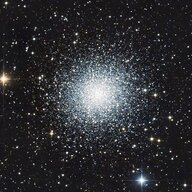
While you are deciding on what scope to choose, a good pair of binoculars will go far in looking at the night sky. Globular clusters, the moons of Jupiter and great crater images of our moons' terminator are well within reach. Even the Andromeda galaxy can be seen. I do most of my star gazing with them. I did get out my scope a few weeks ago though and that is always something special.
 
I was very into Astronomy in my teens, but New York City probably has the worst light pollution in the U.S., if not the world, so I could only go so far.

As Datsgor said, buy a good pair of binoculars, and mount them to a heavy tripod.

Right now, I have a pair of 10x50 Pentax binoculars, and a 20-60 x 60mm spotting scope.

I mostly use them around Jamaica Bay and the airport. I’m a novice bird-watcher.

The club will help you a lot.

Good luck, this is a nice hobby.

Mike ;)
 
@Plucky The Bassist,

You're certainly on the right track with joining your local astronomy club. I suggest that you take advantage of as many "star party" events they hold, whether private (for members only) or public (everyone is invited). In my opinion, this is the best way to learn as much as you can as quickly as possible.

At a star party, you won't need your own telescope because other members will bring their own. Usually, you can just wander from one scope to the next and see what each owner happens to be observing at the time.

This is your opportunity to ask questions. I have yet to see a telescope owner at a star party reluctant to speak freely and at length about anything to do with stargazing and give advice about how to get into amateur astronomy.

By the way, which astronomy club did you join? Based on the info you've given, I'm going to guess it's the North Houston Astronomy Club.
 
Last edited:
Some more specific advice about equipment:

Binoculars are an excellent idea for someone on a budget who doesn't yet know what kind of telescope they might want. I got my first telescope at age 9 (way back in 1977) and have since owned at least a dozen telescopes (several that I built myself) and I still often enjoy grabbing a pair of binoculars to go sky gazing because they're so easy to use and the stars just look so amazing with even a modest pair. My go to binoculars are 8x50s that cost me $150.

As far as telescopes go, I strongly recommend that when you decide to buy your first scope that you make a priority of two things:

1) Quality optics
2) Ease of use

A common mistake beginners make is buying a scope that has an abundance of "features" that you don't need and being compromised by poor quality optics and construction. Many an astronomy newbie gets frustrated by a telescope that is difficult to use or gives poor images and then gives up the hobby in disgust.

Very often, beginners will buy a telescope that is desigbed to he able to track the motions of the stars so they can take pictures. This is nearly always a mistake, because astrophotography requires a large investment in equipment that will double or triple the cost of the telescope, in addition to the investment in expensive digital cameras and other supporting equipment.

But even if money is no object, using a telescope that's designed for astrophotography simply for casual viewing is a real pain in the butt. It's great advice for beginners to stay away from astrophotography completely, at least until you've gained some experience just casually observing and becoming familiar with a basic telescope and finding objects in the night sky.

I have a recommendation and it's a telescope that I use, myself, more often than my other scopes that cost a whole lot more.

Orion StarBlast 4.5 Astro Reflector Telescope | Orion Telescopes

This scope has very good optics for the price and it's incredibly easy to use and is ultra portable. While it's long been a top pick for beginners, it's also remarkably popular with seasoned veterans who just want to grab a scope and go out and enjoy seeing the stars with no hassles or difficulties.
 
Last edited:
Loving the replies so far!! Exactly what I was wanting, some advice to chew on before I go to one of the meetings :)

I don't think I have the photographic skills (or money) to attempt astrophotography, I'd also say that plenty of folks with way more money and experience than I are happy to share their photos online. I'm also after the social aspect of this, as many of my current hobbies are rather insular.

Along with that, I sort of prize those "in the moment" experiences. Seeing it right there in person is sort of the goal, I also want to get good at finding or focusing on objects using the telescopes. Maybe this is pretty far down the pipe, but the ability to show/experience this with my future offspring is something I'd love to do. I really dug anything science-related as a kid, but my folks didn't want to do much to develop that in me. No telescope, no junior chemistry set (I did get one of these though!!), and no breadboard for learning about circuits.

Most of the time my older brother got this stuff, broke it, and my parents didnt want to buy another by the time I was old enough to use it. I'd like to make sure my kids have some sort of access to scientific instruments if they're interested. Computers I've already got covered...one of the perks of working in the I.T. industry ;)
 
I'm almost dw74 above to a T. I started with my dad's binoculars then bought a $50 Montgomery Ward 50mm refractor which came with 2 eyepieces. A good inexpensive starter scope would be the table top onesky reflector scope they sell for $250 at the Astronomers Without Borders website and you'd be supporting a worthy cause on top of it. I'm going to get one for my lake property in Northern Wisconsin where I get pretty dark skies. A lifelong hobby that will definitely suck you in. Shop.astronomerswithoutborders.org
 
  • Like
Reactions: KevInDaBassment