
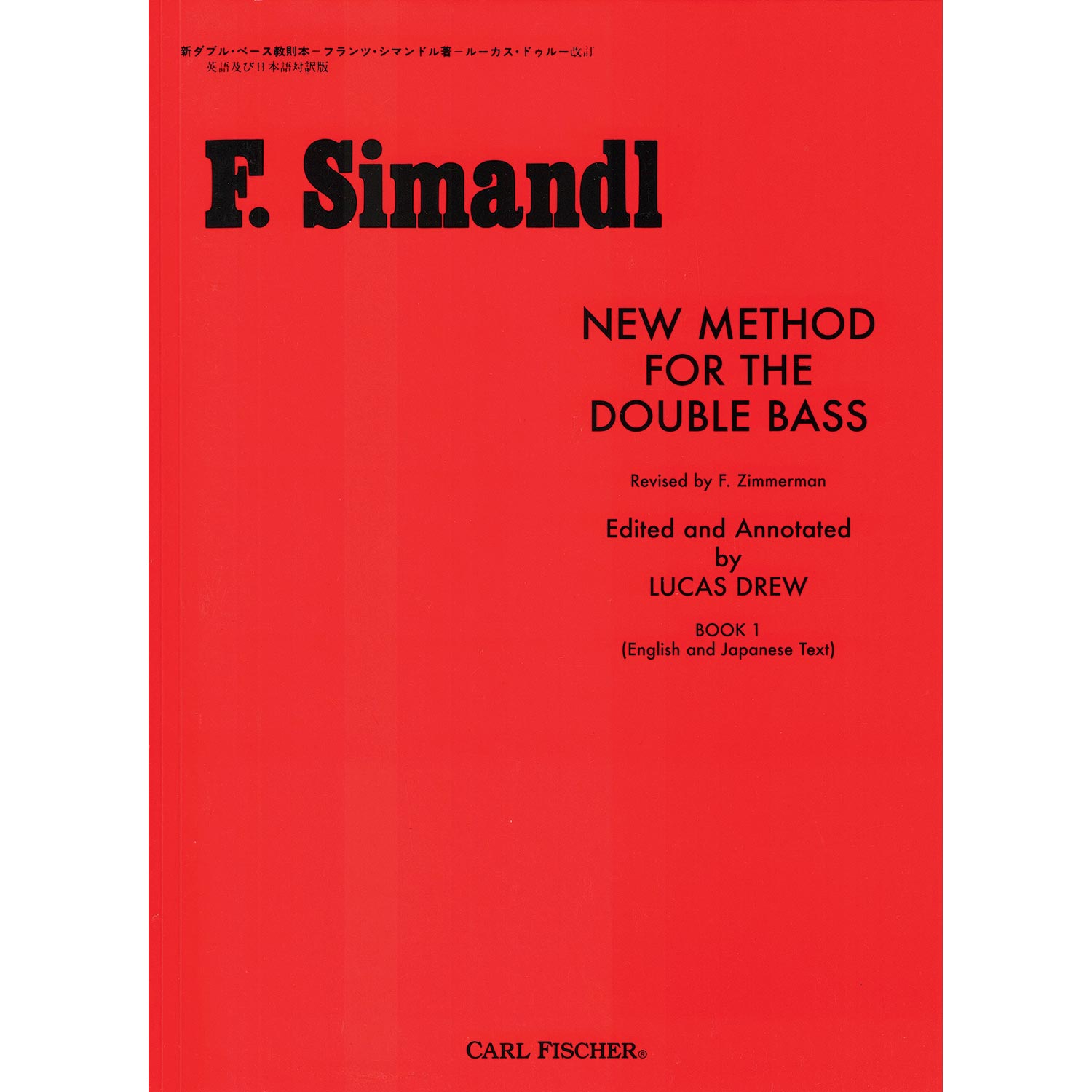
I recommend you study the techniques of our double bass playing brothers and sisters. This is how I learned to shift:

Enjoy the benefits of a premium membership!
Upgrade Account
-
TalkBass has been independent since 1998. Add your voice.
Create a free account to reply to discussions, view embedded media, and browse with fewer display ads.
Join free Log in
Want zero display ads or expanded classifieds tools? Compare plans.
You are using an out of date browser. It may not display this or other websites correctly.
You should upgrade or use an alternative browser.
You should upgrade or use an alternative browser.
Guidelines on shifting?
- Thread starter oomo
- Start date
More options
Who Replied?

The Ray Brown Method is fantastic but for most rock-inclined players it’s too deep, too much. Simandl is likewise great for formal or disciplined players but, again, rather substantial. John Pattitucci published his 60 Melodic Etudes which gives scale fingerings in Part 2. You’re free to pick and choose among the many etudes but, once more, it gets deep. I like Damon Mazzocco’s Diatonic Major and Minor Scales for Electric Bass. I got it from Jamey Aebersold: jazzbooks.com: Product Details The digital version is $4.95. I refer to this as the Segovia Scales for electric bass. It’s a quite thin book but there’s an enormous amount of teaching in it; even more when you think beyond just strings, frets and fingers to pursue smoothness, dynamics, L-R hand coordination, relaxed playing, et al.
But … I suspect that the OP’s question is less about how to shift than when to shift in the course of a tune. Generally shifting should happen between musical phrases in a tune. As I learn a tune I watch for awkward fingerings in the bass line, which typically happens in a new phrase, then I choose a different position to play that phrase. Shifting at start/end of a phrase makes the bass line smoother than if you play in one position until you can’t reach a note in the middle of a line and shift there.
But … I suspect that the OP’s question is less about how to shift than when to shift in the course of a tune. Generally shifting should happen between musical phrases in a tune. As I learn a tune I watch for awkward fingerings in the bass line, which typically happens in a new phrase, then I choose a different position to play that phrase. Shifting at start/end of a phrase makes the bass line smoother than if you play in one position until you can’t reach a note in the middle of a line and shift there.

Or just close your eyes
This is TB.
Surely someone here knows a pedal that bluetooths into your phillips smartbulbs.
This isn't a problem to be solved with thinking. This is a problem to be solved by buying more gear!

When playing a two octave major scale, a teacher I had suggested shifting between 6th to 7th with the index finger...this positions your hand to play the second half of the scale in a familiar pattern...I know there is more than one approach, but I liked this one.
In a C Maj scale starting on E string 8th fret - with scale tone (finger):
C (2), D (4), E (1), F (2), G (4), A (1) SHIFT B (1), C (2), D (4)...etc.
For me, a shift depends on the context...so when I shift and which fingers I land on in the new position depend on what is coming next.
In a C Maj scale starting on E string 8th fret - with scale tone (finger):
C (2), D (4), E (1), F (2), G (4), A (1) SHIFT B (1), C (2), D (4)...etc.
For me, a shift depends on the context...so when I shift and which fingers I land on in the new position depend on what is coming next.

There are no rules for this. Learn as much shift options as you can think of. Shifting with the pinky is not a problem.
But as a general thing that can help I would say; get the shift out of the way first. Then you are planning ahead and ready for the next phrase. This is much better than thinking at the very last moment that you have to shift. Don’t wait until you are at the G string with the pinky before you shift, (like many upright players do) because then you have to climb up all the way on one string. That mostly doesn’t work on electric bass when doing fast runs.
But as a general thing that can help I would say; get the shift out of the way first. Then you are planning ahead and ready for the next phrase. This is much better than thinking at the very last moment that you have to shift. Don’t wait until you are at the G string with the pinky before you shift, (like many upright players do) because then you have to climb up all the way on one string. That mostly doesn’t work on electric bass when doing fast runs.

Context is key, as there's a big different between shifting to hit one note as opposed to shifting to play the next passage in a different register.
Overall I think the key to shifting comfortably and fluidly is to not think of your scales a boxed shapes you have to move between, but study every scale in every position, including the awkward ones that fall between the more standard shapes. If you are used to building G Minor Pentatonic around your first finger on the lowest root in position, try putting your first finger on the highest root (say, the 5th fret on your D string) and map the scale out that way.
Once you can play through the scale in numerous positions and from different starting/ending fingerings, think like a baseball player warming up with a way-too-heavy bat. Shift every third note. Build the scale spanning the whole fretboard. Set yourself up to land in uncomfortable positions or outside of spots you typically play in.
After doing that for a while it will get much easier to shift when necessary rather than relying on a specific set of rules.
Overall I think the key to shifting comfortably and fluidly is to not think of your scales a boxed shapes you have to move between, but study every scale in every position, including the awkward ones that fall between the more standard shapes. If you are used to building G Minor Pentatonic around your first finger on the lowest root in position, try putting your first finger on the highest root (say, the 5th fret on your D string) and map the scale out that way.
Once you can play through the scale in numerous positions and from different starting/ending fingerings, think like a baseball player warming up with a way-too-heavy bat. Shift every third note. Build the scale spanning the whole fretboard. Set yourself up to land in uncomfortable positions or outside of spots you typically play in.
After doing that for a while it will get much easier to shift when necessary rather than relying on a specific set of rules.
One finger per fret. Twenty four fingers per hand. No shifting.

Smooth_bass88
vaxx!
- Oct 31, 2006
- 12,122
- 16,794
- Disclosures
- have been on nationally released albums, charting on the Billboard 200
I would also encourage this. Ascending and descending.:earn how or do scales on one string. John Patitucci old video teaches this.

My not so helpful answer would be to shift whenever works best for you. I try to follow "economy of motion", meaning to move my fretting hand as little as possible. I even incorporate open strings when I can if it will help to avoid shifting. When I do shift, whenever possible I try to follow the one-finger-per-fret rule, and my index finger moves to the start of the new position. Hope that helps.I'm practicing some scalar exercises which involve a lot of shifting up and down the fretboard, and there are lots of different places I can choose to shift.
So was wondering if there are any guidelines or good practices to bear in mind when shifting, regarding when to shift, or with which fingers? E.g.:
Should I avoid shifting to a new fret with the same finger? Or always try and do this?
If I have a passage with a shift, should I play as much as I can in one position then shift? Or get the shift out of the way early?
For a basic example, say I'm playing the first 3 notes of the C major scale on the A string:
3-5-7-5-3
I could play with any of these fingerings (using / to show a shift):
1/1-3/3-1 (shifting as early as possible)
1-3/3-1/1 (shifting as late as possible)
1-3/4-2/1 (avoiding re-using the same finger for shifts, shifting late)
1/2-4/3-1 (avoiding re-using the same finger for shifts, shifting early)
This is just a trivial example of course, I'm mostly interested if there are any general guidelines that I should try and keep in mind for much more complicated patterns.
Upright technique, as I was taught, is to shift in whole steps rather than half steps, and to avoid shifting 4-4 (1-2-4 or 1-3-4 fingering). When and where you shift is up to you, practice all varieties. In application you do what the music demands even if it doesn’t fit the guidelines.
Bass guitar technique is much more forgiving, do what sounds and feels good.
Please explain 1-2-4, 1-3-4, and what does avoid shifting 4-4 mean. Thank you.
- Apr 6, 2007
- 778
- 550
- Disclosures
- Endorsing Artist: Fishman Transducers, Aguilar Amplifiers, Ear Trumpet Labs
Sure thing. Upright generally uses a 3-finger hand position in lower positions with two fingers working together as a pair. 1st finger on it's own, 2nd finger on it's own, and 3 & 4 used together as one (notated just as "4") is most common in the U.S., but some systems pair the 2nd and 3rd fingers. When that's the case those fingers used together are noted as "3". A 4-4 shift means shifting from 4th finger to a different position while still using the 4th finger.Please explain 1-2-4, 1-3-4, and what does avoid shifting 4-4 mean. Thank you.
Hope that's helpful!

Why would you avoid that on electric bass? I find it works well when shifting to a higher note on the same string.A 4-4 shift means shifting from 4th finger to a different position while still using the 4th finger.

One finger per fret. Twenty four fingers per hand. No shifting.
That would be handy.
I'll get my coat.

Lots of great suggestions already. A couple of Talking Bass lessons on practicing shifts which I've found useful:
Smooth Position Shifts for Bass Guitar
Cycling The Major Scale Part 4 - Position Shifting
But I think Discount Bassy has the best idea - if I just develop 24 fingers and then at least I've got one string sorted. I then either need to develop more skill in string crossing or add in another 72 fingers ... just glad I only play a 4 string bass.
Smooth Position Shifts for Bass Guitar
Cycling The Major Scale Part 4 - Position Shifting
But I think Discount Bassy has the best idea - if I just develop 24 fingers and then at least I've got one string sorted. I then either need to develop more skill in string crossing or add in another 72 fingers ... just glad I only play a 4 string bass.
Thank you! I understand now.Sure thing. Upright generally uses a 3-finger hand position in lower positions with two fingers working together as a pair. 1st finger on it's own, 2nd finger on it's own, and 3 & 4 used together as one (notated just as "4") is most common in the U.S., but some systems pair the 2nd and 3rd fingers. When that's the case those fingers used together are noted as "3". A 4-4 shift means shifting from 4th finger to a different position while still using the 4th finger.
Hope that's helpful!


