• TalkBass has been independent since 1998. Add your voice.
    Create a free account to reply to discussions, view embedded media, and browse with fewer display ads.
    Join freeLog in
    Want zero display ads or expanded classifieds tools? Compare plans.

Help Me Design a Practice Routine

If I total up all of the time I spend each day with a bass in my hands, it probably equals at least an hour, often time more. Most of that time is not spent constructively. The missing link (I think) is focus, and having a goal outside of mindless noodling.
  • I'm more or less an intermediate player (playing about 9 months, though I had played guitar before so didn't start from zero). I know basic music theory and can apply it with some thought. I'm not in a band or currently jamming with anyone, but I have had a regular jam in the past playing covers and originals.
  • I don't know all of the notes on the fretboard by heart, though I can work them out with a little time. I'd like to nail this down finally.
  • I have a decent internal metronome, but I do struggle with syncopation at times
  • I'd like to get better at being able to improvise convincingly, as in "here's the chords; play something good without having to take it home and work on it for three days"
  • I'd also like to get better at note-for-note covers. I'm typically learning a handful of songs at a time. I lack focus in this pursuit, hence the need to try to organize my time better and set some goals.
I feel that with some organization and discipline, I can make the next leap. I've been stuck at the same level since the beginning, though my technique has improved just from playing around everyday. If you're a teacher, or someone who is methodical about this kind of thing, share your thoughts.
 
FWIW here is what I am starting with:
5min - Warm Up
10min - Theory
15min - Song Practice
15min - Skill study
15min - Improv with backing

Each section needs something specific to work on. I'll have to find some exercises and material to slot in there. My aim will be to hit every section at least once per day even if it takes more than one session.

I have never had the discipline to keep this up... we'll see how it goes. I'm going to keep a diary, and maybe even record myself.
 
  • Like
Reactions: George Dennis
Sounds like you need to know where the notes are on the neck and how to "spell" them. That's first, we can get into the other "stuff" after we get this down.

See a Cm7b5 and you know you need a C. Then you need the b3-b5-b7 notes within the C Major scale. AND know where those notes are on your neck. The pattern you will find in the following string repeats itself all over your neck. See or hear the chord and then visualize the pattern that will give you the spelling of that chord. Not a step for a stepper. Let's assume we will need the 1 and a 5 note. All you need to do is add which 5 and how many more chord tones you want to get into your bass line to make a Cm7b5 chord.

Yes the 1 and the b5 may do all that the song wants, so you get off light, but adding the b3 and b7 would help give that minor seven diminished sound.

Get that down first then look into the other things you listed. This should help. Go to post # 14 in this string. How to get started?

All the other stuff you listed kinda depends on having the spelling of the chord or scale you want locked down first. Good luck.
 
Last edited:
  • Like
Reactions: meadeam
I'm more or less an intermediate player (playing about 9 months...
...I've been stuck at the same level since the beginning...

As a guitar player of 3 years whose been playing bass without much direction for about a year, a lot of your post resonates with me. However I admit happily that with the bass, I am most definitely a beginner. As such I am not reticent about working with beginner's guides, and doing exercises on the bass that might not be challenging enough for me on the guitar. If I viewed myself as intermediate on the bass, I might be inclined to miss out on these exercises and ideas and try to do more than I was capable of, and get lost and directionless in the process. Just an observation.

Also recently, with the intention of getting more focussed, I've been working through Ed Friedland's Bass Method which gives a progressive approach to learning the bass which is working for me in lieu of a teacher, and fits well into a simple practise session of warmup, 15 mins right-hand exercises, 15 mins scales/triads and the rest of the time on the book.
 
-have you considered a teacher? Or at least, online lessons? Talkingbass is great. I was a little disappointed with Scott’s paid lessons- hard to find a structured path.

-plenty of scale/ arpeggio/ fret board exercises out there. I like to stick with one scale (say “C mixolydian”) for a week or so before I switch. Really burn it in and explore the whole fret board in that key.

-studying walking bass is an amazing skill-builder. Even if you don’t play jazz, it builds harmonic knowledge, fret board facility and sense of time. It’s great for any player.

-what do you use for “note for note” songs? I like using a variety of resources- play by ear, YouTube bass covers, written notation, tab is a last resort. The YouTube covers are nice, hearing the bass line boosted and seeing someone play it. (Nice for fingerings.) Reading notation is a skill in itself, and my practice routine includes a section for reading.

-for jamming, just learning chord spelling (along with scales) builds the foundation of what notes are appropriate. The inspiration and improvisation “What to play” comes after you lay that foundation.

-keep a journal. Even consider mapping out a week or month of practice sessions, then analyze and reassess after. (Cool thread here of an epic practice journal)

good luck!
 
-have you considered a teacher? Or at least, online lessons? Talkingbass is great. I was a little disappointed with Scott’s paid lessons- hard to find a structured path.

I do like Talkingbass. I've signed up for a free account, and may get a paid subscription. I do think a structured path will help. I took lessons with a live teacher in a studio last year when I picked up the bass, and I may go that route again.

I have tried one of the free walking bass lessons at Talkingbass.net, and it was great! I've never been into the style, but I am hooked now. It is a great learning tool for many reasons. Walking under a jazz and/or blues progression in various keys is definitely going to become a regular part of practice.

I've been using a combination of youtube and songsterr for note-for-note learning. Right now I am working on Pink Floyd "Hey You" and Pearl Jam "Nothing as it Seems" because I just got a fretless bass. The latter is quite simple, but I'd like to get it just perfect. Pink Floyd and Pearl Jam are two of my favorite rock bands, so I will probably pick some more of their songs. I like both bassists' style. Roger Waters is very elemental with a subtle groove (I know Dave Gilmour played bass on some tracks, including Hey You, but I still like Roger's playing). Jeff Ament's background is in punk rock, so lots of eighth notes but he is also experimental at times.

I'll check out that practice journal. Seems a good idea.
 
  • Like
Reactions: CallMeAl
FWIW here is what I am starting with:
5min - Warm Up
10min - Theory
15min - Song Practice
15min - Skill study
15min - Improv with backing

Each section needs something specific to work on. I'll have to find some exercises and material to slot in there. My aim will be to hit every section at least once per day even if it takes more than one session.

I have never had the discipline to keep this up... we'll see how it goes. I'm going to keep a diary, and maybe even record myself.
Not bad, but how about some reading in there?
 
  • Like
Reactions: bass12
Perhaps. Ages ago I played clarinet and later trumpet in band and I learned to read reasonably well for those instruments. I can sort it out for the most part now, though I can't play straight off a chart. It's a skill I haven't made time for thus far, but I may add it in.
Reading will help you in a lot ways specially for learning new material
 
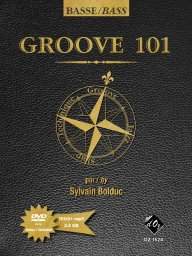
Pick up Groove Master’s “Groove 101” book. This will:

- get you reading and focus your attention on how rhythms look when written out;
- get you focused on your timing and internal clock;
- get you playing a wide variety of rhythms;
- get you playing with different techniques (fingers, slap, muted thumb);
- get you focused on the nuances of expression;
- help show you where your weaknesses/timing tendencies are;
- provide a structured approach with a sense of progression/accomplishment.

If you’re comfortable working in front of a computer get the pdf version - you’ll find it convenient to have everything in one place.

Also, +1 to Talkingbass over Scott’s Bass Lessons. The modules on Talkingbass are much more clearly structured and there’s no fluff. You pay for whichever module you want to work through and that’s your course. You might want to start with the “Scale Essentials” course.
 
Perhaps. Ages ago I played clarinet and later trumpet in band and I learned to read reasonably well for those instruments. I can sort it out for the most part now, though I can't play straight off a chart. It's a skill I haven't made time for thus far, but I may add it in.
Reading isn’t just about being able to get the notes off the page (or being able to write them down). Reading also helps with the conceptual aspects of rhythm, note length, pattern, etc. It’s something that I rarely hear discussed but, to me, is a significant (and beneficial) “side effect” of reading.
 
  • Like
Reactions: CallMeAl
I bought the Walking Bass Course from TalkingBass.net. That will cover a lot of the ground I want to cover and provide a roadmap which I desperately need to stay on track. I may keep a diary here of my practice and progress.
 
  • Like
Reactions: CallMeAl
Just to put a point on this thread, I have been practicing specific things, using a timer, and journaling for 5 days now and I am already seeing improvement. It is very small, but in only 5 days I can see the benefit of conscientious practice. I've always known this is the way to go, but for some reason I've always resisted. I'm going to set goals for consistency.... 5 day streak, 10 day, 30 days.... 3 months, 6 months, etc.
 
Forget the warmup. Start with something easy. Scales, arpeggios.
Take your time and learn these in the first position. Play really slow saying the name of each note as you play them. Practice this in all 12 keys. This will take some time and mental focus. No distractions!!! It’s a little boring but this info will allow you to learn the notes and transfer the info to other parts of the neck.
If you make mistakes it’s all part of the process. You will soon be able to hear these patterns in music you hear. It takes time.