• TalkBass has been independent since 1998. Add your voice.
    Create a free account to reply to discussions, view embedded media, and browse with fewer display ads.
    Join freeLog in
    Want zero display ads or expanded classifieds tools? Compare plans.

Help recording bassline - sounds bad!

Jan 15, 2019
3,766
6,564
I'm working on recording the bass part for House of the Rising Sun (The Animals) and so far I'm not happy at all with the recording sound. My skill/experience level at both bass and recording are very low and my gear is limited. I'm hoping I can twiddle some knobs or change something minor to improve the sound. This bass part does not need to stand out, just fill in the low end.

Here's my signal path: Yamaha BB434, MXR Bass DI+ (using EQ only), Lexicon Omega USB recording interface, Audacity. The USB interface is an old one I borrowed, low end device, but all I have for now. My tone knob is at around 90%, P pick-up max, J pick-up maybe 75%.

I attached an MP3 of the first few measures and here's what I'm hearing and my questions.

My bass has an odd phased sound that I have not figured out how to reduce. I hear this both when played direct to amp and recorded, so I don't think it's a recording artifact. Anyone have experience with this type of noise? Could string change or pick-up change reduce this? I'm still playing stock strings. Is it a technique problem? I would love to get rid of this sound, instead to have a nice clear steady long tone. I know for sure I hear this with the P pickup alone but I never play the J alone, so not sure if it goes away with the J. I could check that, but not much of a solution because the J alone doesn't sound very good.

Any suggestions on the EQ? Is it boomy/bass heavy? Too much mids? I'm just not sure what would sound best in a mix. I don't have an HPF but that could be done in Audacity.

Then the tone - doesn't sound that good to me, or not what I would imagine for a bass line like this, but I don't think I can adjust that too much with my gear. The MXR DI+ has a "color" button but I haven't tried recording with it. I would be happier if I could get a good tone just with the EQ, because if I can't, it just means I don't really like the tone of my bass (though that may in fact be the case). Elsewhere someone mentioned a cheap amp modeler, like the Behringer BDI21. The MXR was a local buy and has pretty much the same controls so I went with it instead. But would it help to have a pedal or box that can significantly modify the tone?

Other pedals I have but not using for this: MXR Bass Octave Deluxe, Idiot Box D4 Distortion, Ampeg Liquifier Analog Chorus.

Any help on this would be greatly appreciated!
 

Attachments

It doesn't sound so bad to me, signal level maybe could be a bit stronger. I do hear the phasing thing, but I don't recognize it sorry. I'm sure one of the real experts will come along shortly and tell you more than you ever wanted to know. ;)

I'm also trying to record this morning, and can't get a good sound, but that's because it's Bb clarinet which I haven't practiced much in years, and my playing just stinks today. And I chose Em as the key, which comes out as F#m on clarinet. Tricksy fingerings with sharps all over.
 
It sounds like a good, solid tone to me. The slight phasing probably won't be audible in the full mix. Now you need to put it in the mix with other instruments and hear what needs to be changed in the context of the mix. Remember, you'll be competing for frequency range with the kick in the low, and guitar and vox int he mids. Until you hear what the overlaps are, you won't know what to change to make everything sound clear.
 
Thanks for the comments above. On the phasing sound, I can understand it might disappear in the mix but would still like to know if this is normal and what might be the cause. There may some mixes where it can't easily be hidden or covered up. One thing I could check is to try different cables. I have a few different ones of different length and construction. But if anyone has experienced this and could suggest a fix I would love to hear it. I could also do a full J pickup recording to see if it goes away. Maybe it is the P pickup?
 
The phasing/chorusing sound is likely a twisted string. Be sure that all of your strings are installed completely straight. This can be trickier than it sounds since you have to wrap them around a tuning machine. I'd remove those strings and restring the bass. You don't need to use new strings, just be sure and fully unwind the current ones and set your witness points properly when stringing up the bass.

As for the tone; I run a small studio professionally. If someone sent me files to mix and this was the bass tone I received I would have absolutely zero issues with it. Sounds perfectly fine to my ears.
 
The phasing/chorusing sound is likely a twisted string. Be sure that all of your strings are installed completely straight. This can be trickier than it sounds since you have to wrap them around a tuning machine. I'd remove those strings and restring the bass. You don't need to use new strings, just be sure and fully unwind the current ones and set your witness points properly when stringing up the bass.

As for the tone; I run a small studio professionally. If someone sent me files to mix and this was the bass tone I received I would have absolutely zero issues with it. Sounds perfectly fine to my ears.

Thanks for the tip on the twisted strings. I will test that out tonight!

So far I'm hearing that the tone isn't too far out of line. I have very little mixing and recording experience so my expectations for the sound of a stand-alone bass track probably just aren't reasonable or correct.
 
Thanks for the tip on the twisted strings. I will test that out tonight!

So far I'm hearing that the tone isn't too far out of line. I have very little mixing and recording experience so my expectations for the sound of a stand-alone bass track probably just aren't reasonable or correct.
When people come in to record with me I always give them this advice: “Let’s start with how you sound live and unless there’s a major problem we’ll start there.” If it starts out sounding like what you’d expect from a bass track, a good engineer can ensure that it ends up sounding like a bass track on the record... barring complications from things like a bad player and/or a bad song arrangement :smug:
 
  • Like
Reactions: Kro
I tried releasing all 4 strings fully from the tuning machines and reinstalled them, taking care to relieve any twist. The strings have been on for awhile and so already are crimped/formed around the saddles and tuners. It is strung through body so I could not rotate them at the ball end without bending them the "wrong way" over the saddles. But in any case, I went through this as well as I could. At first I thought there was an improvement but I'm not so sure now. It is definitely still there, possibly a little less, but maybe not.

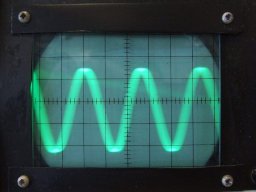
This noise may be related to the asymmetric shape of the waveforms:

waveform.png

waveform2.png


On another thread it was suggested that I adjust the pick-up height, but I have gone through various pick-up height settings over time and this noise has not changed.

I'm thinking of heading over to GC tonight to pick up some new strings, and maybe try string through the bridge instead of body, just as a test.

New audio sample attached. I didn't take care to get it tuned up but close enough to test for this noise.
 

Attachments

I tried releasing all 4 strings fully from the tuning machines and reinstalled them, taking care to relieve any twist. The strings have been on for awhile and so already are crimped/formed around the saddles and tuners. It is strung through body so I could not rotate them at the ball end without bending them the "wrong way" over the saddles. But in any case, I went through this as well as I could. At first I thought there was an improvement but I'm not so sure now. It is definitely still there, possibly a little less, but maybe not.

This noise may be related to the asymmetric shape of the waveforms:

View attachment 3848387
View attachment 3848388

On another thread it was suggested that I adjust the pick-up height, but I have gone through various pick-up height settings over time and this noise has not changed.

I'm thinking of heading over to GC tonight to pick up some new strings, and maybe try string through the bridge instead of body, just as a test.

New audio sample attached. I didn't take care to get it tuned up but close enough to test for this noise.

I'm not sure what to listen for in terms of "phasing". Can someone point it out to me so I can recognize it?

Having said that, I think I like the sound of the first sample better. It sounded more solid, full and "foundational", in spite of whatever imperfections the others heard.
 
I tried releasing all 4 strings fully from the tuning machines and reinstalled them, taking care to relieve any twist. The strings have been on for awhile and so already are crimped/formed around the saddles and tuners. It is strung through body so I could not rotate them at the ball end without bending them the "wrong way" over the saddles.
Then you have not done anything to un-twist them if that ends up being the problem. You need to take them off the tuning machines, straighten them out completely, get the bridge end freely rotating and then reinstall them so that it's a perfectly straight pull from one witness point to the next. Now... all that said, I just listened to the second clip and I don't hear any of the phasing that I did in the first clip, so that might have done it. Are you still hearing it?

This noise may be related to the asymmetric shape of the waveforms:
Waveofrm asymmetry comes from a number of factors, none of which are necessarily a culprit of the phasing heard in your first clip.

On another thread it was suggested that I adjust the pick-up height, but I have gone through various pick-up height settings over time and this noise has not changed.
I had that thought earlier as well. It's almost always a case of the pickups being too close to the string and as far as I can tell is only an issue with very strong, exposed pole piece pickups. Audible phasing would take a strong magnetic pull on the strings to create that kind of sound. If you've lowered the pickups and it still persists then I wouldn't waste too much time on this potential fix.

I'm not sure what to listen for in terms of "phasing". Can someone point it out to me so I can recognize it?
It's pretty apparent in the first clip. In the upper midrange and higher frequencies you can hear something akin to what you'd get out of a chorus pedal. It's pretty faint, but once you know what you're listening for it becomes much more apparent.
 
  • Like
Reactions: AlexanderB and Kro
Then you have not done anything to un-twist them if that ends up being the problem. You need to take them off the tuning machines, straighten them out completely, get the bridge end freely rotating and then reinstall them so that it's a perfectly straight pull from one witness point to the next. Now... all that said, I just listened to the second clip and I don't hear any of the phasing that I did in the first clip, so that might have done it. Are you still hearing it?


Waveofrm asymmetry comes from a number of factors, none of which are necessarily a culprit of the phasing heard in your first clip.


I had that thought earlier as well. It's almost always a case of the pickups being too close to the string and as far as I can tell is only an issue with very strong, exposed pole piece pickups. Audible phasing would take a strong magnetic pull on the strings to create that kind of sound. If you've lowered the pickups and it still persists then I wouldn't waste too much time on this potential fix.


It's pretty apparent in the first clip. In the upper midrange and higher frequencies you can hear something akin to what you'd get out of a chorus pedal. It's pretty faint, but once you know what you're listening for it becomes much more apparent.

I think the phasing was a little less obvious in the 2nd clip because I was playing longer notes. It is most clear at the start of each note.

I went ahead and removed the strings again. This time I fully unseated them on the bridge end so that the ball ends were lose and visible beyond the back side of the bass. I pull them back in, laid each string flat along the neck with no twist, laid the loops over the tuners and re-tightened, holding the string to make sure they don't twist. As you can hear in the attached clip, the phasing sound is still there. If the strings were severely twisted, maybe the "twist" is now permanently imprinted into the string (or whatever the right term is - the string deformed in the shape of the twist).

This recording has 3 sections: PJ (P 100%, J ~80%), P only and J only. I also set the EQ on the MXR DI+ to the 0 position (I previously had a little bass boost and a little mid cut).

Maybe the noise is a little more subtle now but it is definitely still there.
 

Attachments

Yeah, I can hear it a little more in the third clip than I could in the second. Still less than the first clip which was the most pronounced to my ears on my studio playback system. It's also audible in all pickup positions which indicates that it's either a string problem or a technique problem. I'm not sure how you would achieve that kind of phasing with technique and since it doesn't sound like you're plucking the strings too hard for this style of playing I'm going to put it down to a string issue. I could very well be wrong, but that's what I'm hearing.

As mentioned before, in a mix that type of things isn't going to be noticeable at all. Don't lose any sleep over it, but do give it a good check the next time you change your strings. Also be sure and read up on setting witness points when changing your strings. It's very simple and while it is mostly to account for potential intonation issues with slack build-up behind fixed points on your bass it will help to ensure a perfectly straight pull when installing new strings.
 
check out the bass here … it sounds like it is muted and played with a pick

So what? OP is making his own recording. He doesn't need to copy the original sound.

I strongly feel that a brand new set of strings will make you very happy, OP. This nonsense about taking them off and fiddling with the wrap isn't going to solve nothin IMO.
 
I think the phasing was a little less obvious in the 2nd clip because I was playing longer notes. It is most clear at the start of each note.

I went ahead and removed the strings again. This time I fully unseated them on the bridge end so that the ball ends were lose and visible beyond the back side of the bass. I pull them back in, laid each string flat along the neck with no twist, laid the loops over the tuners and re-tightened, holding the string to make sure they don't twist. As you can hear in the attached clip, the phasing sound is still there. If the strings were severely twisted, maybe the "twist" is now permanently imprinted into the string (or whatever the right term is - the string deformed in the shape of the twist).

This recording has 3 sections: PJ (P 100%, J ~80%), P only and J only. I also set the EQ on the MXR DI+ to the 0 position (I previously had a little bass boost and a little mid cut).

Maybe the noise is a little more subtle now but it is definitely still there.

In the latest audio, I hear "overtones", Could be pickup type.. could be the brand of strings.. could be the condition of the strings. I hear them with a fresh low B on my sire.. I usually EQ around it til the strings settle in a bit.

This guy is recording with more gain, or a hotter bass, but I feel like I can hear a similarity in the voicing of the DI with all of the bass guitars he runs through it.


Looking at the specs.. 60hz bass knob, 850hz mid, 4k high. Are you recording to a DAW? Try recording flat and setting the EQ in the DAW. If you plan on adding drums, I'd cut anything between 20hz-80hz a tad, and likely boost around 120-170hz to give you some beef without stepping on the kickdrum, if you feel like you need more grit/treble boost 1-2k a tad.

I've used Reaper and Cubase, and either offers parametric EQ. Recorded sound, live FOH support, and amp sounds are all different beasts.
 
  • Like
Reactions: hbarcat
There's only so much sonic real estate to go around so EQing the bass and drums to occupy different frequencies is a big part of getting a good mix that sounds good and isn't muddy. You never REALLY know how good the bass track is sounding until you hear it against the backdrop of the other instruments. That's why hearing a P played solo sounds nowhere near as good as it does in a band. In a live setting, it occupies an ideal spot in the frequencies.
 
  • Like
Reactions: Funky Phantom
Like others have said, the sound your bass gets by itself isn’t as important
as how it sounds ‘in the mix’. A great way to record is to keep a ‘frequency chart’.
This allows you to map out the frequency’s of all the instruments on the track.
Then you can put your bass in a frequency not inhabited by another instrument.
That makes your bass louder and allows you to not have to push the level to hear it.
This, in turn, allows you more headroom at mixdown.
As for your ‘phasing’ issue, most d.i. boxes have a phase reverse switch.