I recently purchased an ibanez sr405 bass, used. It makes an uneven hissing sound, kind of sounds like wind or surf, whenever plugged into any amp, I've tried my tko 80, headphone mini amp, my guitar amps, etc. Same with all of them. It's loud enough to be pretty annoying. Anybody had this problem, can point me in the right direction? Other than that I love this bass so far.

Enjoy the benefits of a premium membership!
Upgrade Account
-
TalkBass has been independent since 1998. Add your voice.
Create a free account to reply to discussions, view embedded media, and browse with fewer display ads.
Join free Log in
Want zero display ads or expanded classifieds tools? Compare plans.
You are using an out of date browser. It may not display this or other websites correctly.
You should upgrade or use an alternative browser.
You should upgrade or use an alternative browser.
Hissing bass
- Thread starter Rfd578
- Start date
More options
Who Replied?


Treble control doesn't have much effect on the noise.Is the treble control all the way up, maybe?

That's what I call "white noise" and is symptomatic of low audio quality opamps (and other electronic bits). There are various grades of opamps with the higher-quality commanding more costs and reduced battery life. In most cases the noise isn't "that" noticeable in a gigging situation but is problematic for recording.
I've successfully upgraded opamps on many devices with great success. In most cases it eliminates, or dramatically reduces, the noise. In one case, my Godin Multiac, I bought a new pcb without an opamp and populated it myself.
I've successfully upgraded opamps on many devices with great success. In most cases it eliminates, or dramatically reduces, the noise. In one case, my Godin Multiac, I bought a new pcb without an opamp and populated it myself.
thank you!Texas Instruments Excalibur series is top shelf and what I use.
Install a quality preamp of your choice.Thanks. Sounds like I'm doing some research on opamps.
It will have better components, not just the op amp(s).


Is the frequency of the hiss really high? Like 8k to 10k? If so a really cheap option is to just eq it out of low pass it out. There really isn’t any useful sonic information in the 8k to 10k area coming straight from a bass guitar. Another thing you could do if the noise is in the area mentioned above and would be really cheap to modify is put a 1meg resistor between hot and ground on the output jack, which will work like a low pass.
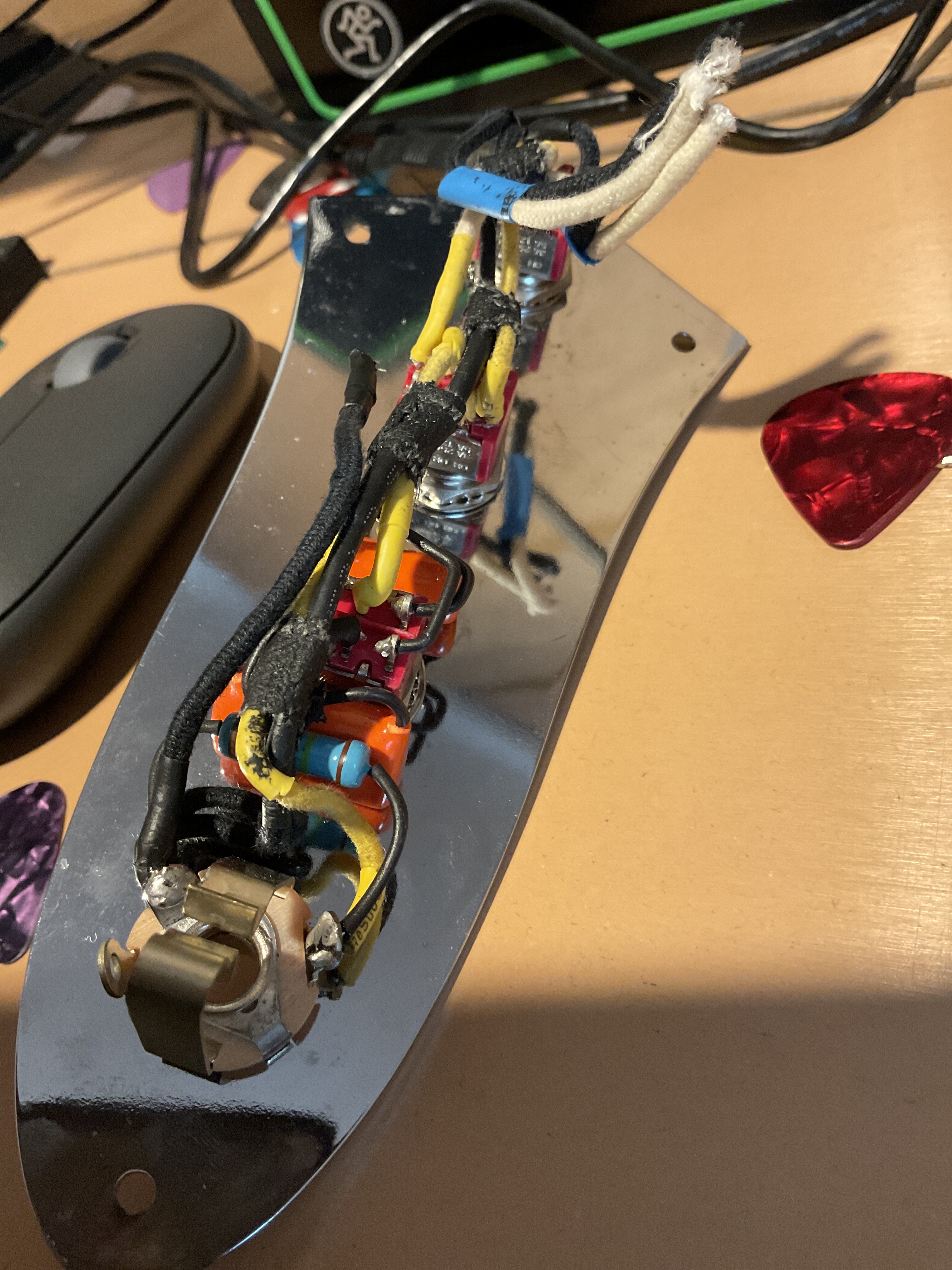
As seen here.
This is a electric guitar trick but works on a bass too.
As seen here.
This is a electric guitar trick but works on a bass too.
Last edited:

White noise has an emphasis on the high frequency end of the audio spectrum, making a sharp "hiss". Pink noise has a more mid-range "surf" sound, generally the result of a white noise source being filtered to reduce the high end, and distributes frequencies more "evenly" according to the sensitivity of human hearing, rather than having equal amplitude at each frequency.
A poor-quality op amp (or the wrong type for the purpose) can cause noise, but other components (transistors, diodes, even some resistors) can be the source. If the preamp in the instrument is open, you might be able to substitute a low-noise chip, which is the most likely culprit. If it's encapsulated, or has components where the connections are UNDER the component, you're probably better off replacing the whole preamp. If you're not familiar with electronics and soldering, then it should be referred to someone who knows what they're doing, or you're likely to blow out the chip by putting in the wrong type (single versus dual, different pinout, etc.) or by shorting pins together.
The cheap and dirty solution would be to bypass the active preamp and run it passive.
A poor-quality op amp (or the wrong type for the purpose) can cause noise, but other components (transistors, diodes, even some resistors) can be the source. If the preamp in the instrument is open, you might be able to substitute a low-noise chip, which is the most likely culprit. If it's encapsulated, or has components where the connections are UNDER the component, you're probably better off replacing the whole preamp. If you're not familiar with electronics and soldering, then it should be referred to someone who knows what they're doing, or you're likely to blow out the chip by putting in the wrong type (single versus dual, different pinout, etc.) or by shorting pins together.
The cheap and dirty solution would be to bypass the active preamp and run it passive.


