I've been trying to mix my amp and basses to try and get that true slap bass tone. I have had no luck so far. Can anyone tell me what are some of the secrets to obtaining this sound?

Enjoy the benefits of a premium membership!
Upgrade Account
-
TalkBass has been independent since 1998. Add your voice.
Create a free account to reply to discussions, view embedded media, and browse with fewer display ads.
Join free Log in
Want zero display ads or expanded classifieds tools? Compare plans.
You are using an out of date browser. It may not display this or other websites correctly.
You should upgrade or use an alternative browser.
You should upgrade or use an alternative browser.
How do I get the true slap bass tone?
- Thread starter SOADFreak1989
- Start date
More options
Who Replied?Contrary to popular belief good slap tone has very little to do with the equipment used. The best thing that you can do in terms of equipment is get a good bass, Put really bright strings on it (try out d'addario's stainless steel roundwounds) and run it clean into your amp. My teacher plays an early 80's Fender Jazz bass that sounds fantastic.
In saying that, the most important aspect of good slap tone (this is my opinion but it serves me well) is good right hand technique. It takes very little force to coax good tone out of slap. Check out Marcus Miller's technique, its completely effortless and gentle. It will allow you to play much faster (less energy used with each motion). The best way to learn this is to do right hand excersizes that start very slow so that you can focus on tone and tempo. Then slowly increase the speed while keeping good tone in mind. Use a metronome so that you know your sense of time is right.
Lastly slap/pop is really hard on cabinets. It so percussive you can actually damage the speaker cones. To prevent this I recommend using a Boss Bass Limiting peddle. I cant remember the model number but its a green pedal. It limits the peaks of the signal and helps prevent damage to the cabinet without losing good tone. If you'd like more info just let me know.
In saying that, the most important aspect of good slap tone (this is my opinion but it serves me well) is good right hand technique. It takes very little force to coax good tone out of slap. Check out Marcus Miller's technique, its completely effortless and gentle. It will allow you to play much faster (less energy used with each motion). The best way to learn this is to do right hand excersizes that start very slow so that you can focus on tone and tempo. Then slowly increase the speed while keeping good tone in mind. Use a metronome so that you know your sense of time is right.
Lastly slap/pop is really hard on cabinets. It so percussive you can actually damage the speaker cones. To prevent this I recommend using a Boss Bass Limiting peddle. I cant remember the model number but its a green pedal. It limits the peaks of the signal and helps prevent damage to the cabinet without losing good tone. If you'd like more info just let me know.


I hear a lot of people saying it's all in the hands, not the equipment. I'm going to respectfully disagree. I was a P-Bass player for decades, and I had been working on my slap and pop technique for years. It just wasn't happening. I wasn't getting the sound I wanted. I could tell it wasn't my technique. I started experimenting with different basses, different woods, different string gauges. To answer OP's question, I prefer the combination of Jazz bass, ash body, maple board, .045-.100 gauge roundwounds. Once I zeroed in on that, my slap and pop took on huge proportions I hadn't experienced before. I also found a great enhancer/limiter pedal that took it up another notch. I'm considering a bit more onboard tonal control with actives and preamps. These things don't work for everyone, but they did for me.
Do make sure you've done everything you can to ensure proper techique. If you're still not happy with the sound, I submit it could be the equipment.
Do make sure you've done everything you can to ensure proper techique. If you're still not happy with the sound, I submit it could be the equipment.
the most important aspect of good slap tone (this is my opinion but it serves me well) is good right hand technique. It takes very little force to coax good tone out of slap.
+1
You can generate a LOT of force with your thumb, especially on the lower strings. I used to have a very heavy thumb, and it took a little time to lighten up my touch. Once I did, I got a nice even tone across all strings and less ambient spike noise on the lower strings.

Strings are a factor. I play EB Slinkies, and they work GREAT. It's also how you do it though (meaning, it's all in the hands) and which tone you are referring to by "true slap bass tone". Personally I shoot for Marcus tone, and find I get fairly close with EB Slinkies. However, gear also helps to an extent, because my amp lacks the power to get the great low end that Marcus gets. I get some of it, but it's not QUITE as bassy as Marcus' high quality rig allows him to be.
This is why I believe gear is a factor. You can get slap tone without great gear, but it helps. P-bass slap tone is different than Jazz bass slap tone entirely. While I like P bass slap at times, I usually prefer Jazz bass.
I hear a lot of people saying it's all in the hands, not the equipment. I'm going to respectfully disagree. I was a P-Bass player for decades, and I had been working on my slap and pop technique for years. It just wasn't happening. I wasn't getting the sound I wanted. I could tell it wasn't my technique. I started experimenting with different basses, different woods, different string gauges. To answer OP's question, I prefer the combination of Jazz bass, ash body, maple board, .045-.100 gauge roundwounds. Once I zeroed in on that, my slap and pop took on huge proportions I hadn't experienced before. I also found a great enhancer/limiter pedal that took it up another notch. I'm considering a bit more onboard tonal control with actives and preamps. These things don't work for everyone, but they did for me.
Do make sure you've done everything you can to ensure proper techique. If you're still not happy with the sound, I submit it could be the equipment.
This is why I believe gear is a factor. You can get slap tone without great gear, but it helps. P-bass slap tone is different than Jazz bass slap tone entirely. While I like P bass slap at times, I usually prefer Jazz bass.
- Nov 29, 2007
- 3,641
- 13
- Disclosures
- Endorsing artist GENZ BENZ/HERCULES STANDS/XSonics
strings are indeed a factor...10 year old strings will NOT respond. Live roundwounds are a big factor. The rest is in the hands. Figuring out how to get the "perfect slap tone" whatever you percieve it to be can only be accomplished acousticly then the amp must reproduce it.
p.s. I like a Pbass for slap because it retains body. On my Smith's I push a touch of mids (not bass and treble) to get a fat slap tone.
p.s. I like a Pbass for slap because it retains body. On my Smith's I push a touch of mids (not bass and treble) to get a fat slap tone.
+1
You can generate a LOT of force with your thumb, especially on the lower strings. I used to have a very heavy thumb, and it took a little time to lighten up my touch. Once I did, I got a nice even tone across all strings and less ambient spike noise on the lower strings.
this was the key for me. When I started I was more tense and stiff thatn I realized. But recently I've begun to relax my right hand more, and it's caused my thumb to have less of a muting factor and let the string ring better when I strike it. It's really helped with getting a nice tone across all the strings.
What did it for me was practicing unplugged. No compressor, no eq settings just the bass.
What did it for me was practicing unplugged. No compressor, no eq settings just the bass.
I do this too. In fact, I've learned how to judge the tone of a bass and whether or not it will work for me when it's uplugged.
.. I recommend using a Boss Bass Limiting peddle. I cant remember the model number but its a green pedal. It limits the peaks of the signal and helps prevent damage to the cabinet without losing good tone. ...
I'll agree with this. Boss LMB-3 (mine is light blue, actually) is your best friend if you slap/pop. The combination of the limiter AND the enhancer can help to give you a really nice bright slap-happy tone. And you'll get a million opinions on strings, so to add my $.02, DR Lo-Riders are awesome slap strings.
fwiw - I don't do much slap/pop. OK, none. But I slept at a Holiday Inn Express once.
I do this too. In fact, I've learned how to judge the tone of a bass and whether or not it will work for me when it's uplugged.
Now that I think back, I played quite a bit unplugged and it helped to improve my slap tone as well. Never even thought about it though...
It really is a technique thing.
10% is in the equipment, and 90% is in the technique. I'd say it's impossible with old, dead strings or with certain basses (like a Hohner violin bass, for example). An amp without some headroom in the watts and a good, wide spectrum is necessary, too.
If you've got decent equipment, then focus on the technique, not the equipment. Focusing on the equipment is a crutch, and probably implies that you've got poor musicianship (which is different then technique).
Other then that, it really is in the technique. Less is more, and it doesn't take much effort to pop a string and get a good tone out of it, as mentioned before.
10% is in the equipment, and 90% is in the technique. I'd say it's impossible with old, dead strings or with certain basses (like a Hohner violin bass, for example). An amp without some headroom in the watts and a good, wide spectrum is necessary, too.
If you've got decent equipment, then focus on the technique, not the equipment. Focusing on the equipment is a crutch, and probably implies that you've got poor musicianship (which is different then technique).
Other then that, it really is in the technique. Less is more, and it doesn't take much effort to pop a string and get a good tone out of it, as mentioned before.
JAUQO III-X
Inactive
Lastly slap/pop is really hard on cabinets.
No more harder than hard aggressive pizzicato playing.
To much emphasis is put on using limiters or compression. In a lot of cases they can hinder you developing a good slap tone(or any kind of tone that you may be going after). If you want to develop a good tone just use your bass,amp and cabs and the texture of your hands and take it from there.
I have been utilizing both techniques for many years in various musical settings and I have never blown or destroyed a speaker in any way. And I do not use limiters or compressors at all.

Depends on how you define true slap tone. Big difference between Marcus Miller and early Larry Graham for example. Then there is Flea, Mark King, Stanley Clarke...
Do you use/want flats or rounds?
+1
A little vague on the question, I think.

Slapping changes the harmonic content of the sound. Some frequencies can get too loud while others quiet down.
Check out a multi-band compressor that that on the TC Electronics RH450
Try some of the factory presets. Or play with it, Run the bass frequencies straight through, and try compression and/or limiting on the higher frequencies.
Either way you'll need to practice it, with or without technology. Technology can help if you practice it also.
Check out a multi-band compressor that that on the TC Electronics RH450
Try some of the factory presets. Or play with it, Run the bass frequencies straight through, and try compression and/or limiting on the higher frequencies.
Either way you'll need to practice it, with or without technology. Technology can help if you practice it also.

Slapping changes the harmonic content of the sound. Some frequencies can get too loud while others quiet down.
Check out a multi-band compressor that that on the TC Electronics RH450
Try some of the factory presets. Or play with it, Run the bass frequencies straight through, and try compression and/or limiting on the higher frequencies.
Either way you'll need to practice it, with or without technology. Technology can help if you practice it also.
Beat to death topic, but IMO there is NO reason to use a compressor when slapping. If you are experiencing different volumes, peaks, valleys, and transients that are off the scale, then it's a much more useful trip to the woodshed than to a GC for a compressor.
While slap transients (and similarly digging in hard... per Jauqo's post) can require a bit more power and a larger cab than more 'polite' fingerstyle playing, there is no reason that slap style can't be just as controlled and even as any other technique.
To the OP... regardless of the slap tone you end up digging (i.e., older school, or uber modern sizzle), the key is to work your thumb hits so that you get NO increase or decrease in volume and low end between a thumb slap and your typical fingerstyle technique. The best way to improve on this is to forget about fancy pops, etc. for a while, and just practice your normal routine (scales, etc.) using thumb hits. When you can do a major scale as evenly (time, volume, and tone AND muting of the strings you are not playing) with your thumb as with your fingers, then it's time to move on to slap/pop triplets, etc.

IMO and IME!
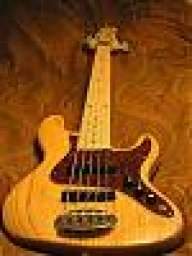

Yeah, everyone needs to stop with the misinformation. Slapping isn't the least bit hard on your gear as long as you're not abusing volume. And though some do use compressors, they're not using them to "fix" technique problems. If you need a compressor to slap, then you need to practice more. Also, I have slapped on everything from a Precision with dead old flats to a neck-thru with EMG's to a Beatle bass. If you want the bright snappy slap tone, then yeah, get a Jazz or a neck thru with actives and new rounds, but slapping on flats is also quite badass, and in some ways even more so than on rounds.
But if you want the TRUE slap tone, buy an upright.
But if you want the TRUE slap tone, buy an upright.


