• TalkBass has been independent since 1998. Add your voice.
    Create a free account to reply to discussions, view embedded media, and browse with fewer display ads.
    Join freeLog in
    Want zero display ads or expanded classifieds tools? Compare plans.

How many things are you working on/practicing at one time?

Is there a benefit to working on only one thing until you have it down, even if it takes weeks or months (i.e. fast string crossing a la "River People") or is it OK, or even good to work on multiple things at once? I am probably working on 5 things right now. When I sit down to practice for an hour I'll usually only work on one, maybe two in one sitting. But for instance I'm working on my slap accuracy and muting, my general right hand muting technique (which is really good but looking to get this to a place where I don't need to really work on it anymore going forward), and then a couple of music theory things that don't have much to do with physical dexterity but more music knowledge (being able to improvise in a blues jam setting).

How many things are you working on? How many is too many?

 
I find that working on 3 different aspects per hour is a good middle ground between not giving each thing sufficient time to work on and burning yourself out on one. Anything over a half hour and my concentration starts to falter, assuming it's something that requires it.

If I have more than one hour, I'll take a 5 minute break and start the cycle over if necessary.
 
  • Like
Reactions: wesonbass
Is there a benefit to working on only one thing until you have it down, even if it takes weeks or months (i.e. fast string crossing a la "River People") or is it OK, or even good to work on multiple things at once? I am probably working on 5 things right now. When I sit down to practice for an hour I'll usually only work on one, maybe two in one sitting. But for instance I'm working on my slap accuracy and muting, my general right hand muting technique (which is really good but looking to get this to a place where I don't need to really work on it anymore going forward), and then a couple of music theory things that don't have much to do with physical dexterity but more music knowledge (being able to improvise in a blues jam setting).

How many things are you working on? How many is too many?
I don't think there is a short answer here because it depends on too many things like how do you practice, what are you practicing exactly and how often. But my advice is evaluate your improvements over a period of time and adjust your routine accordingly. This is very important to take in consideration to get the most out of your practice time.

Good luck
 
Working in theater pit orchestras there is often a need to work on 2 or 3 shows at one time (some sight readable, some nasty ass workouts). Plus, sight reading skills, no matter how developed they might be, need to be maintained and advanced. In addition there are always technical aspects that have to maintained.
All that is to say, having 3 or more needs on the table is not a problem. Keeping things fresh is very important (for me at least) to maximize practice time.
 
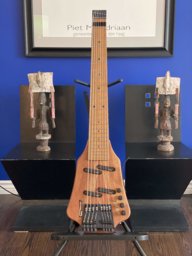
I've been working on playing the Prelude in G from the first cello suite on my acoustic bass guitar or over a year. I'm not there yet, but I'm comfortable enough with it that I am now working on the two Menuets from the first suite. And the third thing is that I'm practising scales with both hands on the "Krapstick" as my daughter calls it. Today I branched out and tried playing the first menuet on it with both hands.

So... Three things, but they're all closely related. Then again, I'm a re-beginner so it's fine for me to maintain a relatively narrow focus.
 
  • Like
Reactions: Cliff Colton
I'd say if you're working on a bunch of things at once, none of them are getting much better. I am working on "Got A Match" and the prelude to Suite #3 right now...but I work one for a few days/weeks, then drift to the other.
 
My feeling is that there are diminishing returns from spending a lot of time at once on one thing. After a few minutes I'd rather sleep on it and come back to it tomorrow. Then again my idea of a "thing" is pretty small. If I'm learning a new piece of music, for example, I may break difficult parts down into very small exercises to be practiced individually, so I might be working on a lot of different little "things" all in service of getting that one piece down.
 
Current regimen is:

1. Learning the neck with the circle of fifths.
2. Technique-patterns, scales, arps.
3. Reading-Bach, Handel continuos, or trombone music. Anything really where you have to decode notation.
4. Repetoire-music for your gig, music for potential gig, and stuff you find musically rewarding.

Emphasize one over another as you see fit, but try to work in at least a little of each.
 
Last edited:
I don't think there are any problems with juggling more than one thing. However I do have problems with juggling more than one thing in one sitting. For example I'll set a timer for example 30 minutes and in that time I'm working one thing only. Then I'll take a break to switch off from that idea before setting the timer again, this time working on a different thing. This way you actually developed a focused practise time which is always more productive. Even as little as 10 minutes with the timer and your phone locked away you'll be amazing how much ground you can cover.

Work on one thing at a time and you'll progress one thing at a time. Work on multiple things at once and you'll keep doing just that.

As a general point the more you dig into something the less immediate the returns become and the subtle nuances begin to become understood and developed. Consistency doesn't happen instantly, it happens with...well consistency. The aim of the game should always be that. Guaranteed something you nail in your room once only is going to crumble on the gig in front of an audience.
 
I've got a couple of buddies who are world class musicians. Both of them, and all the great players I have talked to have said they spent 6-8 hours a day practicing in their formative years to get great. And that practice was focused solely on things they were bad at. One guitar player buddy of mine would spend 8 hours a day on really challenging phrases only, playing the same thing over and over for days until it became something he could do in his sleep, never switching off onto something different or less frustrating. I wonder how many truly great players didn't have the type of laser focus coming up.
 
Current regimen is:

1. Learning the neck with the circle of fifths.
2. Technique-patterns, scales, arps.
3. Reading-Bach, Handel continuos, or trombone music. Anything really where you have to decode notation.
4. Repetoire-music for your gig, music for potential gig, and stuff you find musically rewarding.

Emphasize one over another as you see fit, but try to work in at least a little of each.

Hi, do you mind going into a little more detail about your approach for learning the neck with the circle of fifths? I'm aware of the circle of fifths, but I'm curious about how you're incorporating it into a practice routine...sounds like something I may want to adopt. Thanks.
 
Hi, do you mind going into a little more detail about your approach for learning the neck with the circle of fifths? I'm aware of the circle of fifths, but I'm curious about how you're incorporating it into a practice routine...sounds like something I may want to adopt. Thanks.

It's from a Scott's (not me) Bass Lessons on YouTube. I'll play 2 bars of eighth notes on C on the E string, then go to all the other strings finding the C on each string, then do the same for the G note, the D, etc until you come back to C on the circle of fifths. Say and sing all the notes you are playing.

The idea is that it breaks up the notes so you have to know where it is on the fingerboard as opposed to just doing scales where you cheat (so to speak) by using a scale pattern. Next time, go counter-clockwise on the circle. (C, F, b-flat...), then minors. Side benefit of course is that you internalize the circle of fifths.

And channeling Jeff Berlin, don't use a metronome for this exercise. :)
 
  • Like
Reactions: B-Lo