
Having put off using them for so long, I gave in and finally went looking for some ferrules (not to be confused with 'ferals').
[This invalid link has been removed]
When they arrived (in a record 6 days!) I then started trying to figure out how to put them in. They're 14.2mm in dia, to be precise. Initially I thought drill a 14mm hole in a router guide and using a pattern bit to make the recess would do the trick, but it was so tight, I had to hammer the ferrule in. If you look on the left at the pic below you can see what I had to do to get the ferrule out of the test piece...
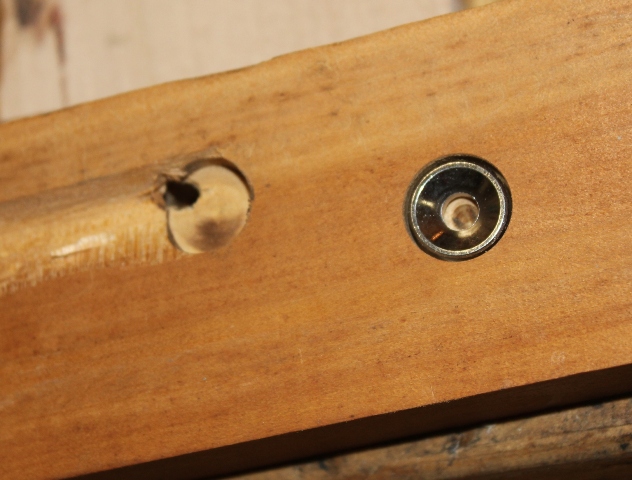
Then I went looking for a 14mm router bit, but of course the local hardware doesn't have that. They have 12.5 and 16, but that's it. In my seaching I came across a 15mm forstner bit. You can see the ferrule has some space around it. This is what I'm concerned about.
What I'm thinking is that space is ok, coz once I oil the body, I'll have a smaller hole and the ferrule should be snug, without being ridiculously tight like before. If this right approach or do I need to start again?
[This invalid link has been removed]
When they arrived (in a record 6 days!) I then started trying to figure out how to put them in. They're 14.2mm in dia, to be precise. Initially I thought drill a 14mm hole in a router guide and using a pattern bit to make the recess would do the trick, but it was so tight, I had to hammer the ferrule in. If you look on the left at the pic below you can see what I had to do to get the ferrule out of the test piece...
Then I went looking for a 14mm router bit, but of course the local hardware doesn't have that. They have 12.5 and 16, but that's it. In my seaching I came across a 15mm forstner bit. You can see the ferrule has some space around it. This is what I'm concerned about.
What I'm thinking is that space is ok, coz once I oil the body, I'll have a smaller hole and the ferrule should be snug, without being ridiculously tight like before. If this right approach or do I need to start again?