
Enjoy the benefits of a premium membership!
Upgrade Account
-
TalkBass has been independent since 1998. Add your voice.
Create a free account to reply to discussions, view embedded media, and browse with fewer display ads.
Join free Log in
Want zero display ads or expanded classifieds tools? Compare plans.
You are using an out of date browser. It may not display this or other websites correctly.
You should upgrade or use an alternative browser.
You should upgrade or use an alternative browser.
Humidity level for winter
- Thread starter fokof
- Start date
More options
Who Replied?



November-March, I keep a bucket of water next to the register in the music room. It’s not a perfect solution, but it’s an improvement over not using one.

It doesn't need to be next to the register to do its job. If it's in an exposed location, more it to a corner so it won't get kicked or knocked over.November-March, I keep a bucket of water next to the register in the music room. It’s not a perfect solution, but it’s an improvement over not using one.

Dissenting opinion:
If the guitar cannot live in the same environment that I live in I don't want that guitar. Neither should you.
Is the guitar going to fly apart because the humidity drops to ten percent? No, it will not. Don't believe it? Ask anyone who lives with guitars in the desert. Same goes for guitars that are in humid environments.
The worst that can happen is that after the first year, or in rare cases a second year, the frets will require trimming at the fingerboard edges. Except in the rarest of circumstances once the task is performed it will not have to be performed again. Otherwise, the only thing that needs to be done is seasonal set up.
There is an argument to be made that acoustic instruments will suffer more. Cracks can be found in the top or the back. The counter argument to this thinking is that the maker, whether factory or individual, chose the wrong wood or did not season it properly. If the wood cracks it due to environmental changes and/or there was internal stress in the wood.
Most people do not remember this. At the beginning of the century a number of major guitar factories issued a statement to their dealers that they would not honor the warranty for any guitar kept in an uncontrolled environment e.g. between forty and sixty percent relative humidity. They knew that due to the speed of their production and the woods they were choosing would not stand up to normal changes across different climates. For a short period of time it fell to the dealers to remedy the consumer's complaints, sometimes by giving them a new guitar and taking the loss. Dealers rebelled and it came to a quick end.
By the way, the little humidifiers that go in the case don't work. First of all, the case must provide a seal that does not permit air and vapor to be exchanged with the outside environment. Unless you spend big money they don't, and bags are worse. If you remove the instrument from the case or the home environment, like gigging or taking it to a friend's for a session, the guitar quickly starts to adapt to the new surroundings. It's a constant battle.
So leave it alone. No more worries when the temperature drops or the when it rains for a couple of weeks. Just do a little bit of set up work and be done with it.
Respectfully submitted.
If the guitar cannot live in the same environment that I live in I don't want that guitar. Neither should you.
Is the guitar going to fly apart because the humidity drops to ten percent? No, it will not. Don't believe it? Ask anyone who lives with guitars in the desert. Same goes for guitars that are in humid environments.
The worst that can happen is that after the first year, or in rare cases a second year, the frets will require trimming at the fingerboard edges. Except in the rarest of circumstances once the task is performed it will not have to be performed again. Otherwise, the only thing that needs to be done is seasonal set up.
There is an argument to be made that acoustic instruments will suffer more. Cracks can be found in the top or the back. The counter argument to this thinking is that the maker, whether factory or individual, chose the wrong wood or did not season it properly. If the wood cracks it due to environmental changes and/or there was internal stress in the wood.
Most people do not remember this. At the beginning of the century a number of major guitar factories issued a statement to their dealers that they would not honor the warranty for any guitar kept in an uncontrolled environment e.g. between forty and sixty percent relative humidity. They knew that due to the speed of their production and the woods they were choosing would not stand up to normal changes across different climates. For a short period of time it fell to the dealers to remedy the consumer's complaints, sometimes by giving them a new guitar and taking the loss. Dealers rebelled and it came to a quick end.
By the way, the little humidifiers that go in the case don't work. First of all, the case must provide a seal that does not permit air and vapor to be exchanged with the outside environment. Unless you spend big money they don't, and bags are worse. If you remove the instrument from the case or the home environment, like gigging or taking it to a friend's for a session, the guitar quickly starts to adapt to the new surroundings. It's a constant battle.
So leave it alone. No more worries when the temperature drops or the when it rains for a couple of weeks. Just do a little bit of set up work and be done with it.
Respectfully submitted.
Last edited:
If the guitar cannot live in the same environment that I live in I don't want that guitar.
I'd like to think that also, but I'm closely monitoring my new bass & if it shows signs of fret sprout I will be the proud owner of a humidifier.
Problem is that a humidifier won't fix a shrinking fingerboard.
Just trim the fret ends and be done with it.
Just trim the fret ends and be done with it.
Yeah, pay $100 to the local luthier to file the fret ends or $50 for a nice new humidifier.
If it's shrinking due to low humidity, surely solving the humidity problem would solve the shrinkage problem.
People solve this problem by bringing their instrument into the bathroom when they take a steamy shower.
If it's shrinking due to low humidity, surely solving the humidity problem would solve the shrinkage problem.
People solve this problem by bringing their instrument into the bathroom when they take a steamy shower.
IMO a dish of water in an out of the way location is a better solution, first it's cheaper, second you aren't forcing moisture into the air. My house is heated with radiators and they have reservoirs on them that I fill as needed, usually only necessary once a year.I'd like to think that also, but I'm closely monitoring my new bass & if it shows signs of fret sprout I will be the proud owner of a humidifier.
Maybe I’ll empty an old cab and fill it full of water.It doesn't need to be next to the register to do its job. If it's in an exposed location, more it to a corner so it won't get kicked or knocked over.
Yeah, pay $100 to the local luthier to file the fret ends or $50 for a nice new humidifier.
If it's shrinking due to low humidity, surely solving the humidity problem would solve the shrinkage problem.
People solve this problem by bringing their instrument into the bathroom when they take a steamy shower.
So the choice is between constant vigilance and maintenance or fixing the problem once and for all? Seems that a once and done solution is the best way to go!
By the way, if the local guy is charging a hundred bucks in 2018 dollars for trimming fret ends (less than twenty minutes work) and people are willing to pay it, please forward your zip code. A lot of good techs would like to relocate there.
The local guy seems to to throw a $100 price tag on everything.
So, once they're filed down & the humidity is back to normal, won't the frets be too short?
A year ago there was a great "stringed instrument repair" shop & the guy had reasonable prices, but he closed down a year & one month ago.
So, once they're filed down & the humidity is back to normal, won't the frets be too short?
A year ago there was a great "stringed instrument repair" shop & the guy had reasonable prices, but he closed down a year & one month ago.

I have multiple whole house humidifiers running and still have trouble keeping it above 20% in all the rooms. Set at 45% in the main room but doesn't reach the corners - guess I need distribution fans.

It all depends on how much maintenance you want to do, and the type of bass you have. I live in the Mojave Desert and it's +/-16% humidity in the house and that's where the guitars and basses stay, very seldom do they leave the house for jam sessions. And that 16% is through the year (all 4 seasons). When it rains the humidity bumps up to 24% indoors. With solid body guitars and basses made of maple necks and ash or swamp ash with heavy poly coating, the instrument can survive the winter without any humidity control indoors.
Check out any retail guitar store in the Mojave Desert and you'll see they have all their semi hollow body, and solid body guitars & basses and even acoustic wood drums in the regular open air. And that environment is AC in the summer and Heated in the winter, and more importantly as dry as any house without a humidifier in the Mojave desert. With that said, they do have a humidity controlled room where they keep their high end acoustic hollow body guitars. Much like the cigar shops.
So, unless you have a hollow body acoustic bass with solid wood and no poly finish, you really don't need to spend time and money humidifying your solid body instrument. A humidifier in the desert facilitates mold and mildew.
Anyway, that's my experience with humidity at 16% and below.
Check out any retail guitar store in the Mojave Desert and you'll see they have all their semi hollow body, and solid body guitars & basses and even acoustic wood drums in the regular open air. And that environment is AC in the summer and Heated in the winter, and more importantly as dry as any house without a humidifier in the Mojave desert. With that said, they do have a humidity controlled room where they keep their high end acoustic hollow body guitars. Much like the cigar shops.
So, unless you have a hollow body acoustic bass with solid wood and no poly finish, you really don't need to spend time and money humidifying your solid body instrument. A humidifier in the desert facilitates mold and mildew.
Anyway, that's my experience with humidity at 16% and below.
So, once they're filed down & the humidity is back to normal, won't the frets be too short?
No. The fingerboard will stabilize at equilibrium with the environment. On rare (less than 5%) occasions it might take a second trimming the following year.
Somewhere along the line another myth has been created. The new myth is that is that a fingerboard is like a sponge. Some folks have the idea that a fingerboard takes on water and releases it like a sponge in a bucket. It just ain't so.
The fingerboard will swell or shrink a little bit the first year. (The first year the wood is a guitar is right after the lumber has been milled into parts. Sort of the same as being cut anew therefore it takes some time to settle. So it makes sense.) Then it comes to equilibrium and it's pretty much done.
One thing is certain: Fingerboards shrink more readily the first year in a new environment but they do not swell back to their original size later. At least not enough to make enough difference that action need to be taken.
Last edited:
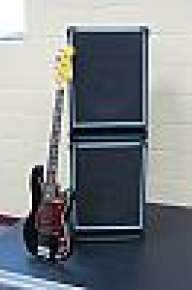
I used to be paranoid but being in the north east I have my office on the third floor of a 120 year old house. No AC in the summer and just house heat in the winter with no humidifier. I have 7 basses and one acoustic all hung on the wall all the time. I’ve found that as long as the temperature transitions slowly, the basses have time to adjust just fine. It obviously not ideal but the big fuse with temperatures and humidity is always talked about when in reality temperature changes are what to be concerned most about.
It must be necessary for acoustics or GC wouldn't bother. Although, in some of the acoustic rooms of GC, I've seen their humidifiers were not functioning.

I haven’t measured the humidity (and in the Deep South, it’s considerable in the summer, but a whole lot lower with the heat in the winter. All of my basses (Fenders, Music Mans (Men?), and now a Mike Lull. I have to loosen the truss rods slightly in the winter and the tighten them back in the summer.
Other than that, there seems to be no ill effects with the basses.
Other than that, there seems to be no ill effects with the basses.


