
Enjoy the benefits of a premium membership!
Upgrade Account
-
TalkBass has been independent since 1998. Add your voice.
Create a free account to reply to discussions, view embedded media, and browse with fewer display ads.
Join free Log in
Want zero display ads or expanded classifieds tools? Compare plans.
You are using an out of date browser. It may not display this or other websites correctly.
You should upgrade or use an alternative browser.
You should upgrade or use an alternative browser.
i have this idea...
- Thread starter ILLINOX
- Start date
More options
Who Replied?



If the resistors are within an appropriate range then a few may have worthwhile results. Others will cause ridiculous noise (especially if they have DC on them) or lack of any sound at all. Most won't be musical. Conceivably some may destroy something.
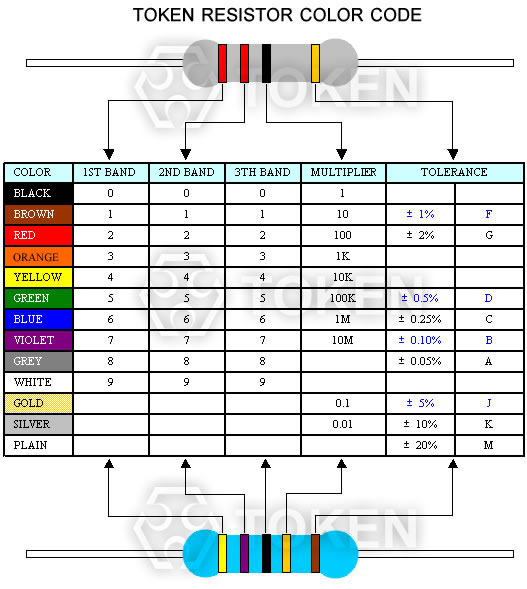
Learn how to read their markings & if they're of a value in the range you can buy pots in, go for it. You'll only fry it once.
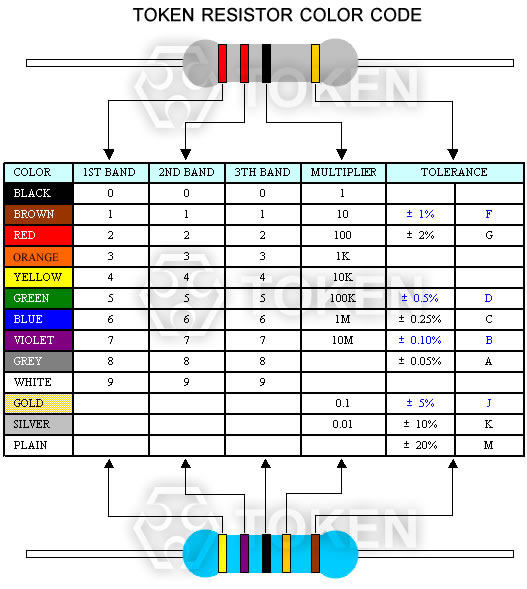
Also, if you want to learn about electronics, you can read all about the basics here:
Invalid Link Removed
I can't think of a scenario where reducing the resistance to zero could cause the device to fry, but I would bet money there are many of such scenarios.
Invalid Link Removed
I can't think of a scenario where reducing the resistance to zero could cause the device to fry, but I would bet money there are many of such scenarios.
I can't think of a scenario where reducing the resistance to zero could cause the device to fry, but I would bet money there are many of such scenarios.
Any time you add resistance (or change any other value) in a circuit, if you don't know exactly what you're doing, there is potential for damage to the circuit.
Not enough resistance, and other components can be over-taxed, resulting in failure- 'Frying'.
Too much resistance, and other components further in the chain/circuit do not have enough current for their designed function. Ever run a large TV with a too-small generator in/after a hurricane? You'll only do it once with that TV.

What are you trying to accomplish?
This is still the burning question.
EDIT: You could also replace all the caps with variable ones.
Last edited:
Terrible idea. First: Transistors must be operated within certain parameters--it's called biasing--and that's given by voltage values around the transistor, and resistor values are calculated to yield that bias point. Run the transistor outside that area, it may not work, or you may even fry it with excess current if the circuit gets too whacked out.
Second, pots can be very noisy, they can pick up stray EMI and RF noise if not grounded or implemented properly. In some cases this can set up parasitic high-frequency oscillations in the circuitry, again potentially frying components.
Third, pots are quite large compared to the resistors they replace. Where you gonna put a dozen or more pots?
Fourth, how are you going to determine the best combination of values with a dozen or more knobs to twist? An infinite number of settings means an infinite number of wrong ways to set it. Biasing a transistor means a little bit of specialized test gear is on-hand, you can't just "listen" for example.
So exactly what are you trying to accomplish? Believe it or not, there actually are mathematical models for circuits-- they are designed and components are selected accordingly. Parts aren't merely thrown into a circuit randomly. May I suggest some of the many online electronic courses, such as the Navy course, and you can begin to learn a little theory. Then you'll see how a transistor or IC or tube (valve) is implemented, with associated components that are chosen accordingly. There also are advanced modelling programs, like Pspice, that can even simulate circuits for the designer now.
Second, pots can be very noisy, they can pick up stray EMI and RF noise if not grounded or implemented properly. In some cases this can set up parasitic high-frequency oscillations in the circuitry, again potentially frying components.
Third, pots are quite large compared to the resistors they replace. Where you gonna put a dozen or more pots?
Fourth, how are you going to determine the best combination of values with a dozen or more knobs to twist? An infinite number of settings means an infinite number of wrong ways to set it. Biasing a transistor means a little bit of specialized test gear is on-hand, you can't just "listen" for example.
So exactly what are you trying to accomplish? Believe it or not, there actually are mathematical models for circuits-- they are designed and components are selected accordingly. Parts aren't merely thrown into a circuit randomly. May I suggest some of the many online electronic courses, such as the Navy course, and you can begin to learn a little theory. Then you'll see how a transistor or IC or tube (valve) is implemented, with associated components that are chosen accordingly. There also are advanced modelling programs, like Pspice, that can even simulate circuits for the designer now.
The enclosureWhere are you going to mount the pots to?
Learning. And more control. New sounds.What are you trying to accomplish?
Wait a minute... if this was the case then pots wouldn't have ranges like 0-500ohms. The wiuld have ranges loke 500-550ohmsLearn how to read their markings & if they're of a value in the range you can buy pots in, go for it. You'll only fry it once.
Doom doom doom doom doom doom doom doom doom doom doom doom doom!Terrible idea. First: Transistors must be operated within certain parameters--it's called biasing--and that's given by voltage values around the transistor, and resistor values are calculated to yield that bias point. Run the transistor outside that area, it may not work, or you may even fry it with excess current if the circuit gets too whacked out.
Second, pots can be very noisy, they can pick up stray EMI and RF noise if not grounded or implemented properly. In some cases this can set up parasitic high-frequency oscillations in the circuitry, again potentially frying components.
Third, pots are quite large compared to the resistors they replace. Where you gonna put a dozen or more pots?
Fourth, how are you going to determine the best combination of values with a dozen or more knobs to twist? An infinite number of settings means an infinite number of wrong ways to set it. Biasing a transistor means a little bit of specialized test gear is on-hand, you can't just "listen" for example.
So exactly what are you trying to accomplish? Believe it or not, there actually are mathematical models for circuits-- they are designed and components are selected accordingly. Parts aren't merely thrown into a circuit randomly. May I suggest some of the many online electronic courses, such as the Navy course, and you can begin to learn a little theory. Then you'll see how a transistor or IC or tube (valve) is implemented, with associated components that are chosen accordingly. There also are advanced modelling programs, like Pspice, that can even simulate circuits for the designer now.
But answer my question, yes it's possible. But I need to learn a lot more than I already know.
Or more accurately, to answer my question, in your opinion its a terrible idea. But in others' opinion its not a bad idea but its advisable that i learn more than i now know.
Cheers all

Learning. And more control. New sounds.
As nashvillebill pointed out, many of the components in pedals are not chosen arbitrarily. They are calculated based on mathematical models that dictate the behavior of the circuit. What you are trying to do carries a high risk of damage to transistors and opamps, and a great probability of simply sounding terrible. Before you randomly change things, you need to understand the purpose of each component, and determine that it is safe to alter it. Even then, don't expect worthwhile results. I am fairly sure that 90% of the time, your knob settings are going to be either unusable, or not different enough from stock to be worth having control over.
Wait a minute... if this was the case then pots wouldn't have ranges like 0-500ohms. The wiuld have ranges loke 500-550ohms
You can make a pot with a 500-550 ohm range. Wire a 500 ohm resister in series with a 50 ohm pot. That way you could get a 'safe' area that you can play with without damaging - but you need to know a bit more about it before you just charge in and guess ranges.
I think you would get more out of actually making some pedals from scratch, more variation in sound by having more pedals to begin with.

Can I recommend you start on a broken piece of equipment or something you don't mind losing? It's very easy to mix things up. Especially with resistors, some of those color bands look mighty similar though their values differ greatly. Good luck.I have built a couple from GGG. Though i could just alter some easily
Latest posts
-

-
-

-
-
 Misled by Talkbass Seller on Recent Trade
- Latest: beaglesandbass