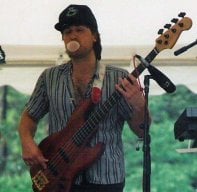
Background: I'm a middle aged guy who messed around with bass on & off in the past, but never had any formal instruction.
A few months ago I decided to get back into it and find a teacher. I could play covers from downloading TAB and learning it, but had no understanding of why the notes in a song worked together. This was one of the tasks I gave my teacher (yep - I didn't just say "Teach me bass", but gave him specific goals I had in mind) - to have enough of a grasp on the fundamentals that I could get together with a couple guys and just jam.
He asked me for a list of songs I'd like to learn, and he's been teaching me the notes that go with chords and explaining how they work together. Good.
However, I spent 21 years in the USAF in aircraft maintenance. What was drilled into us was "Do this task EXACTLY the way you were shown." After all, when it comes to large, complex jet aircraft, you can't have maintainers just winging it. I realized that mentality has carried over as a bass student. I've been focusing on trying to play things just the way my teacher showed me. Over the last couple of lessons he's been coaching me toward "finding my own voice"; that is, while playing a cover keep the essence of the song, but don't just be a parrot.
This brings me to my epiphany: I've been thinking too hard.
You know the scene in "The Last Samurai" where Tom Cruise is sparring with sword fighting and getting his butt kicked? Then the young guy steps in and tells him, "Too many mind." In other words, "You're thinking too hard."
This week I'm going to try and relax, let it flow, and be more flexible. Oh yeah - and have fun, too!
A few months ago I decided to get back into it and find a teacher. I could play covers from downloading TAB and learning it, but had no understanding of why the notes in a song worked together. This was one of the tasks I gave my teacher (yep - I didn't just say "Teach me bass", but gave him specific goals I had in mind) - to have enough of a grasp on the fundamentals that I could get together with a couple guys and just jam.
He asked me for a list of songs I'd like to learn, and he's been teaching me the notes that go with chords and explaining how they work together. Good.
However, I spent 21 years in the USAF in aircraft maintenance. What was drilled into us was "Do this task EXACTLY the way you were shown." After all, when it comes to large, complex jet aircraft, you can't have maintainers just winging it. I realized that mentality has carried over as a bass student. I've been focusing on trying to play things just the way my teacher showed me. Over the last couple of lessons he's been coaching me toward "finding my own voice"; that is, while playing a cover keep the essence of the song, but don't just be a parrot.
This brings me to my epiphany: I've been thinking too hard.
You know the scene in "The Last Samurai" where Tom Cruise is sparring with sword fighting and getting his butt kicked? Then the young guy steps in and tells him, "Too many mind." In other words, "You're thinking too hard."
This week I'm going to try and relax, let it flow, and be more flexible. Oh yeah - and have fun, too!