

Enjoy the benefits of a premium membership!
Upgrade Account
-
TalkBass has been independent since 1998. Add your voice.
Create a free account to reply to discussions, view embedded media, and browse with fewer display ads.
Join free Log in
Want zero display ads or expanded classifieds tools? Compare plans.
You are using an out of date browser. It may not display this or other websites correctly.
You should upgrade or use an alternative browser.
You should upgrade or use an alternative browser.
I use different basses
- Thread starter Randy Tupper
- Start date
More options
Who Replied?
I play in churches, where we do everything is every friggin' key (different singers). I do have basses tuned in E standard, D standard, and B standard (AKA BEAD), but I don't chase different keys with a different bass - i have to be able to play the whole set on one bass. All those keys and tunings is part of keeping things challenging, thereby building "mental plasticity" as they say.



Pedaling open Eb and Ab most likely. Tons of riffs are written on guitar with open strings.
Definitely an issue for guitars sounding a specific way (ie, open chords ring out a bit differently than bar chords)
I’d challenge anyone to tell the difference between a 1/2 step downtuned E string and an Eb played on the B string though. I always got a chuckle out of my lead guitar player who insisted that all guitars must be tuned the same... he really had no concept of how the bass is different.

Definitely an issue for guitars sounding a specific way (ie, open chords ring out a bit differently than bar chords)
I’d challenge anyone to tell the difference between a 1/2 step downtuned E string and an Eb played on the B string though. I always got a chuckle out of my lead guitar player who insisted that all guitars must be tuned the same... he really had no concept of how the bass is different.
Its not about the sound, its more about stuff like doubling riffs that bounce off or drone low open strings.
For heavier stuff, palm muting open notes while adding licks above it can be pretty tricky depending on how the riffs are written.
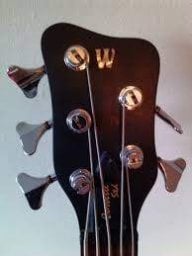
All those keys and tunings is part of keeping things challenging, thereby building "mental plasticity" as they say.
This is exactly how I look at playing in standard while the band is down-tuned. I transpose everything a whole step, tenor sax players do it, why not me?


Just curiosity...why would you detune a 5 string bass down a 1/2 step to play in Eb?
It's easier to have conversations with the guitar players that way, when you're both thinking in the same key.
When I played in a band where they used drop tuned guitars about a third of the time, I just transposed. But if they were drop tuned all the time, it'd be easier to follow suit.
Kudos to the op for using standard tuning to accommodate guests.

Yup. I play a six because not only do I not like open strings, I don't like moving my left hand up and down the neck very much. It's nice having two octaves under your fingers in one position.Eb. Reason #856 I only play 5's....Though I don't tune down. I try and avoid open strings when possible, tough sometimes they are necessary.

The one tuned to Eb is still tuned to 440 Hz.
Get one of these:

Our guitarist/fiddler uses one for his electric (non-acoustic) fiddle. He claims that there are certain keys that are simply difficult to play a fiddle, so he uses this gadget. Works in real time. I cannot tell when he is using it and when he is not.

All my basses are tuned down a whole step and have been since the 80s, no matter what the band tunes to. I find a capo is handy for the odd song that requires open strings.
I understand having a second bass when playing at sessions. Nobody ever wants to sit in using my bass, even when I helpfully offer to attach the capo for them. It always amazes me how experienced players can be so dependent on the dots.
I understand having a second bass when playing at sessions. Nobody ever wants to sit in using my bass, even when I helpfully offer to attach the capo for them.
It always amazes me how experienced players can be so dependent on the dots.
It's easier to have conversations with the guitar players that way, when you're both thinking in the same key.
When I played in a band where they used drop tuned guitars about a third of the time, I just transposed. But if they were drop tuned all the time, it'd be easier to follow suit.
Kudos to the op for using standard tuning to accommodate guests.
Learn something new every day! That makes perfect sense!
I just know what hey something is in for me....but if cats are calling things on the fly...I can see where that would be useful!
Cheers!
I find it easier as we do a lot of jam tunes and I dont have to thinkHi Randy,
Let's see those basses!
Do you need to de tune a 5 string to play in eb?
Im lazyHi Randy,
Let's see those basses!
Do you need to de tune a 5 string to play in eb?

Just curiosity...why would you detune a 5 string bass down a 1/2 step to play in Eb?
Im lazy
LOL
I’m not lazy, but if I don’t tune down to Eb, my guitarist won’t be able to follow my fingers.

LOL
I’m not lazy, but if I don’t tune down to Eb, my guitarist won’t be able to follow my fingers.
To each their own lol! I just play the 4th fret on the B String..

Cave Puppy
"Humph Bo, he's wond!" - John Lennon
I like to use open strings for effect!To each their own lol! I just play the 4th fret on the B String..


