I'd advise a new saddle too.
There are a lot of reasons a screw might bind in a threaded hole, some of them fixable. Heat has been suggested by another member, which is a go to technique for guys like me who have encountered lots of stuck fasteners. Heat will soften any thread locking compound that may have been used.
To cut to the chase, a screw used in an application like this experiences a different kind of damage than other, more typical applications. The screw goes through the saddle and bears against the plate beneath it. That can cause the screw to become mushroomed on the end over time, and a screw damaged that way can only be removed safely by cutting or grinding off the damaged end before attempting to remove the screw. If you don't do that, the screw will stick and you will damage the saddle threads if you manage to get it out by backing it out.. If enough of the screw end is accessable (not the head end, the point) you could try to unscrewing the thng by turning in a counter clockwise direction (as if you were tightening it) so the screw goes through the saddle and comes out the other side. This may work since the screw head is busted off and could pass through the saddle. I would also run an appropriate sized tap through the hole to chase the thread and bring it back to spec.
Another possibility is that someone in the past either crossthreaded the screw on installation or used some sort of super stud grade thread locking compound, or maybe even used the wrong thread sized screw. In any event, these fixes may work if the saddle threads aren't damaged, but replacing the saddle will save you lots of effort and frustration.
Good luck!
Tom

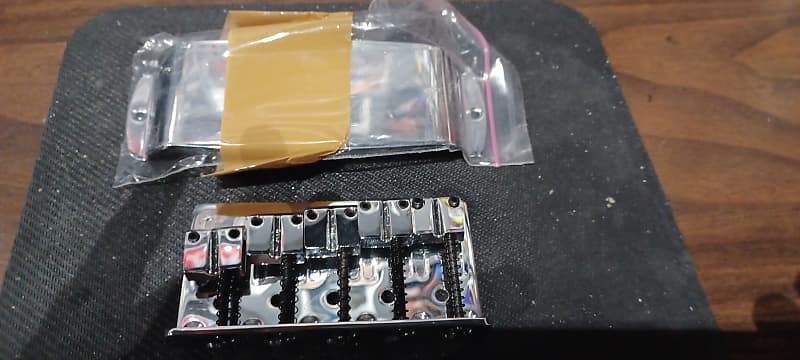










 . Usually you will round the + first but he managed to twist the head off. That is some cheap pot metal screw for that too happen, I think we are working with substandard materials here. I'd just replace the bridge


