• TalkBass has been independent since 1998. Add your voice.
    Create a free account to reply to discussions, view embedded media, and browse with fewer display ads.
    Join freeLog in
    Want zero display ads or expanded classifieds tools? Compare plans.

Is this a good jazz practice plan?

Been playing bass for 5 years now, and I feel pretty mediocre. I am changing my priorities to be a decent jazz improvisationalist. My first goal is to learn how to walk well, and then solo around a melody. My biggest flaw is that I don't have a great ear for pitch.

I have created a three month plan, that should hopefully get me into a decent shape:

JANUARY
- Work through Ed Fuqua's "Walking Bassics". This will be combined with arpeggio exercises.
- 15 minutes of daily work on how to really learn a tune
- 15 minutes of daily work on learning to sing on pitch with "Singing Coach". I will believe this will help my ear out, and when I do ear training later on which involves singing intervals, I will be singing the intervals on pitch.
- doing scale exercises courtesy of how to really learn a tune
- work through "Scales, Intervals, Keys, Triads, Rhythm, and Meter".

FEBRUARY
- Study various versions of "Autumn Leaves" with Ed Fuqua's method on Invalid Link Removed
- continue same ear training work.
- continue scale exercises.
- work through "Basic Harmonic Progressions"

MARCH
- continue scale exercises
- Study another jazz standard, using the same method. Song is not determined yet.
- Start doing the Ear Training work from Invalid Link Removed, which is supposed to help me master my intervals in 28 days.
- Work through "The Jazz Theory Book" by Mark Levine.

Does this look like a good plan?

Where do you take the time to listen to some jazz music??
It is the most important aspect of all for your goals imo.

Good luck and don't get "lock" too much in your routine if you feel it needs to be change over time.
 
As an Amazon Associate, TalkBass may receive commissions from qualifying purchases made via links on this site.
Many good helpful tips...but also emerse yourself in live jazz music...listen, listen, listen... as a bass player or musician, ...nothing will advance your playing like playing live!!.Read about jazz/music...with any tuff schedule...you are always looking for a little inspiration, read biographys, inspirational books...philosophy etc.
...What always pushes me to play further..is the unknow...I hate not knowing things...
try to play with better players...ups your game!!!
With your daily practice schedule which should be upwards of 3 hours...break each sub section into that 3 hours....practice hard and slow at first....but stick to the schedule...
ie...15 disciplines in 3 hours..each one should be played for 12 minutes..some days you will have an hour to practice and some days you will have 6 hours etc.
remember to breathe,,, your exercising your brain heavily...eat/drink and sleep properly...
 
Ed,
I don't have your book in front of me, and I believe you. The tracks I've been working on are predominantly 2 bars per chord.
And the reason I'n working on them is because The one chord per bar has a more or less set vocabulary based on what I've picked up, but 2bars per chord or more actually requires some creativity.
I can only imagine what an event Paul Chambers work with Miles was for bass players of that era.
 
I (perhaps mistakenly) decided I wanted to learn walking bass having never even played bass. I've been at it about a year. I had to learn to read etc bjah, blah, blah

Here's my take on walking
You can pick up a certain vocabulary for walking fairly readily for one bar patterns: using scalar or chord tones and the different approach methods to the next (usually root) target, chromatic above or below, scalar above or below, 5ths above, 4th below.
Todd Johnson and Ed Friedland books cover this material very well.

Where the 'art' of this enters is setting up a musical intention. Otherwise it just sounds pretty much like vanilla book exercises -- still I get a bit of a thrill just from that. With a chord across 2 bars or 4 bars, the musical intention and theme development gets to be a real task. I don't think there's any track in Ed Fuqua's book that has one chord per bar changes. My sense is Mr Fuqua did that book to help bring about the intentional breakthrough necessary for real counter melody walking. Another book you may find helpful is Jay Hungerford's. Mr Hungerford doesn't bother with much theory talk, but does offer a lot of examples for typical chord progressions -- a very different approach -- and very useful to me once I could recognize the walking vocabulary in his examples. Also his book has a lot of useful 'standard' backing tracks.

Just about everybody who knows more about this than I do, tells me playing aliong to backing tracks or even better live music is the best and fastes way to get better. I'm right at the brink of getting that set up.

Best of luck. It's a great goal and I'm having a lot of earned fun getting there.

Thanks Wrench. I just just looked at my copy of Ed's book, and he does indeed play one chord through numerous bars, and teaches how to approach these instances. One of the tracks in the booklet is actually nothing but Bb7 for four measures, and then Eb7 for four measures.

I've been doing some thinking, and I want to get into songs as fast as possible, but I think it may be better to work fully through this book first. I will work through the first section going through the book. But when I get to the second section, I may listen to each song and transcribe it, and then compare notes with the sheet music in the book. This will help me transcribe and verify what I thought I heard. Once I complete this, I should be able to transcribe tunes accurately.

Does this sound like a better method than getting right into songs? It does to me, but I lack experience.
 
One of Ed's key points is having the song and the song's changes in your head when you play. If transcription helps you with that, so be it.

I find playing standards I'm most familiar helps with this, but I suspect playing along over and over would help the most.
 
Interesting. I've been playing about the same amount of time and feel the same. I'm doing a similar schedule. I've found I need a set plan to keep me motivated. I'm going to try and video tape my process as well. Hopefully this can provide some inspiration a few months own the road to show I've made improvement

I like Scott Devine's website. I also like the books from MI Press.

Good luck!

Keep us updated!
 
Where do you take the time to listen to some jazz music??
It is the most important aspect of all for your goals imo.

Good luck and don't get "lock" too much in your routine if you feel it needs to be change over time.

To my untrained, but studious, ear, a lot of jazz music that people tell me to listen to, sounds like a horn connected to a random note generator. I think that people learning jazz need a listening path, and that concentrated, directed listening is needed for learning. Just listening to a lot of random tunes on the traditional jazz station is frustrating.

I think that playing with experienced musicians will help move you forward. It has for me and it should be part of the plan. I had a plan that was similar to the OP's plan for the beginning of 2012. Then later in 2012, I started started a Latin group and play percussion for a jazz group. One day, the bassist for the jazz group could not make it, and it was my chance to play bass with the group. I had to learn 10 songs in a week. Learning those 10 songs and playing with the group was a huge step in learning.

There are huge gaps between books and playing with a group of more experienced musicians. I generally attribute that to copyright issues for published music. I think that the goal should be playing with other musicians anyway. I will jam with anyone who will have me. But everyone has their own goals.
 
To my untrained, but studious, ear, a lot of jazz music that people tell me to listen to, sounds like a horn connected to a random note generator. I think that people learning jazz need a listening path, and that concentrated, directed listening is needed for learning. Just listening to a lot of random tunes on the traditional jazz station is frustrating.

I think that playing with experienced musicians will help move you forward. It has for me and it should be part of the plan. I had a plan that was similar to the OP's plan for the beginning of 2012. Then later in 2012, I started started a Latin group and play percussion for a jazz group. One day, the bassist for the jazz group could not make it, and it was my chance to play bass with the group. I had to learn 10 songs in a week. Learning those 10 songs and playing with the group was a huge step in learning.

There are huge gaps between books and playing with a group of more experienced musicians. I generally attribute that to copyright issues for published music. I think that the goal should be playing with other musicians anyway. I will jam with anyone who will have me. But everyone has their own goals.

My point about listening to some jazz music is to get the feel and the vibe of it, which is not obvious from a bass book. Trying to cop the feel and sound of a real walking bass and the phrasing of horns is very important imo.

And yes I agree with playing with others and better musicians also is a very good thing to do ;-)
 
Thanks. I'm partially hoping that somehow posting the plan on here will make me more determined to complete it.

I realized though that I am likely pushing myself too fast in regards to the theory books, particularly the first two. They are exercise books and it can take half an hour to get through ten pages. I figured that ten pages a day is a good pace. I'm halfway through the first one, and should get an early start on the second, but it will likely take me until near the end of March to complete that, which includes listening to examples and working things out on a keyboard.

This should make it much more manageable for me, and less likely for me to drop it.

Seems like a good plan. Jazz is what you want to play. Janek Gwizdala has a nice site which you may want to check out also.
 
Walking the same chord for two or four measures is challenging. At first, of course, it's a relief to see an "easy" patch, but artfully playing thru the change really requires a melodic agenda or a strong pattern.

I have trouble walking two chords per bar because sometimes I feel I can only
do "what the chords want me to," and creatively deviating from that path can leave me in a funny corner where it may be difficult to connect to the next chord with a stepwise connection.

When I was first learning to walk, my teacher really enforced connecting chords with half and whole stps. Before I played songs, I practiced on eight bar changes that sometimes had what I considered at the time to be nonsense changes.
 
My point about listening to some jazz music is to get the feel and the vibe of it, which is not obvious from a bass book. Trying to cop the feel and sound of a real walking bass and the phrasing of horns is very important imo.

And yes I agree with playing with others and better musicians also is a very good thing to do ;-)

Yes, I'm with you on the feel and vibe. I believe "Groove" is missing from the plan.

I had groove on my list for the start of 2012; in addition to the theory books, I bought a few books on groove exercises. When I played with the more experienced musicians, I didn't have a whole lot of experience, but I brought some simple grooves. They liked the groove and didn't kick me out.

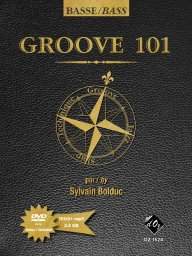
[Space for a plug for Groove 101, even though I didn't buy it yet;)]