• TalkBass has been independent since 1998. Add your voice.
    Create a free account to reply to discussions, view embedded media, and browse with fewer display ads.
    Join freeLog in
    Want zero display ads or expanded classifieds tools? Compare plans.

Is this Overkill?

A question from a long time lurker and occasional poster...

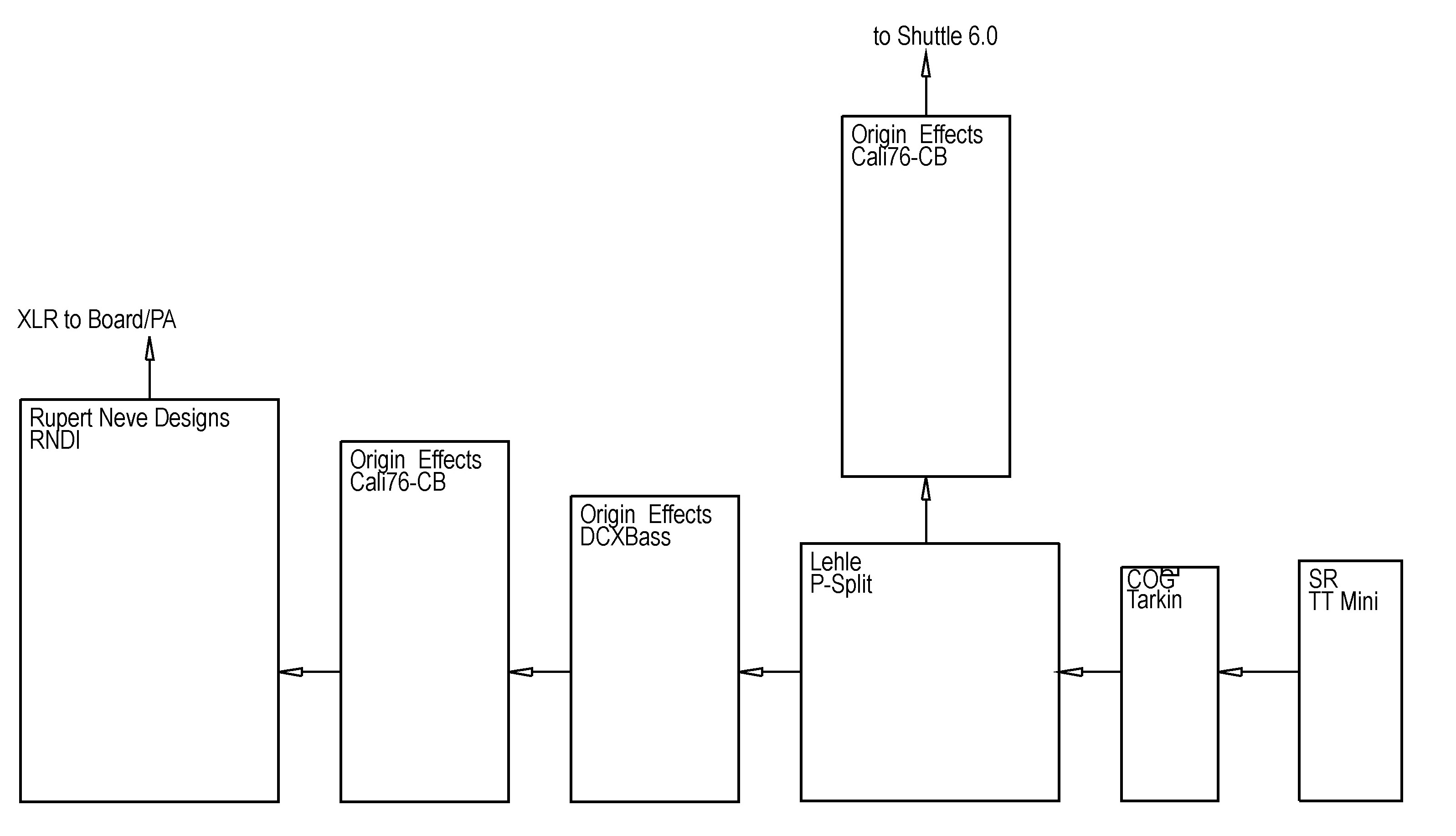
Creating a pedalboard for use with a Shuttle 6.0 and/or DI to mixer/PA. The goal is to have some flexibility for different situations:
  • Direct to mixer/PA with no amp
  • Direct to amp with no PA support
  • Signal to both mixer/PA and to amp.
The DCX Bass is to add some warmth to the DI signal without affecting the signal sent to the amp.

I'm bit of a novice at what is expected when playing live.

option 1.jpg


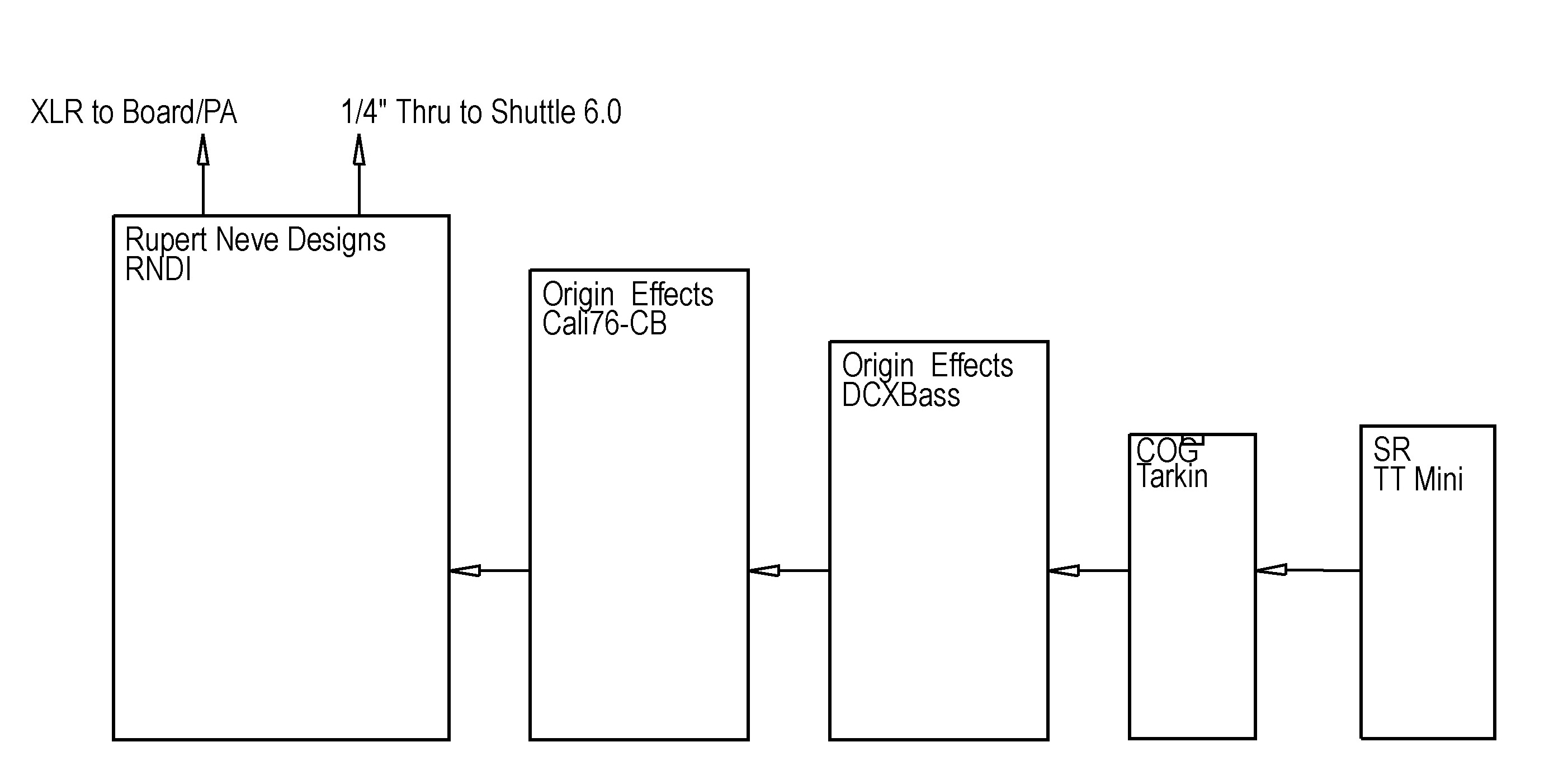
Or would a simpler solution work by just using the 1/4" Thru from the DI to the Amp and adjust the amp to accommodate the DCX Bass when using the amp?

option 2.jpg


Any suggestions would be greatly appreciated.

Thanks.
 
Number 2 gets my vote, much simpler, and therefore, less expensive, less things to go wrong, easier to set up/tear down at gig time, etc.

For me, the only reason I would go with something like number 1 is if I had a cab sim on the line to the PA. I would only want that going to the PA. And, even then, I wouldn't bother with two Cali-76s. I'd run it like number 2 but split off to my amp right before the cab sim. Since you're using a straight ahead (though very nice) DI, no need to worry about that.
 
I would also opt for the second solution here, for the reasons @eeyorebass and @bassbrad have brought up. As well, the DCX sounds mighty fine running into the front end of an amp, so I see no reason not to accommodate its sound into your on-stage EQ. Keep in mind that your amp is literally just there for you, and any bandmates, to hear bass on stage. It is not something the audience will hear, so if the amp requires a radical EQ curve (which I doubt would even happen just by adding a DCX to the equation) then it's nothing to worry about.

Unless it's a band that is super busy and everyone has an involved setup, I think keeping things as simple and streamlined as possible, even with a whole bunch of pedals, makes a lotta sense!
 
What's your goal here? I played for years without a pedalboard DI option...in fact, I've never gone direct from board to PA. 90% of my shows mic'd my cab, the rest took a DI from the amp. So until you KNOW you need any of these options, I'd say you're overthinking it.
 
I've always had a good DI on my board but never had an engineer who didn't want to use their own or take a DI directly from the amp. Its handy for home recording etc but for live I never got to use it.

Having a very recognisable quality DI like a JDI or RNDI might help though rather than fancy bass preamps like the JF Capo as engineers might have a little more confidence in it.
 
I'm avoiding chores - so this will be a long ramble....

TLDR1 - go for option 2
TLDR2 - a sound guy is going to do the easiest thing to guarantee a half-decent consistent sound
TLDR3 - make sure you can get the FOH sound you want out of both DI box's 1/4", XLR and your amp's XLR out (if it has one).

A lot of this depends on what sort of gigs you will be doing. If you're going to be the only act and/or you're hiring the PA / sound guy directly - then what you say goes. But as you say you're a bit of a novice playing live, I would guess the venue will have it's own FOH or regular PA team they hire in.

Of course, if it's a small pub gig, then the PA will probably only be for vocals so it's then down to what's coming out of the amp.

Let me paint a picture....

Let's say it's a university venue on the college/indie circuit. 500 capacity. It's the regular indie night where they get an up and coming national band to headline and two or three local support acts. It's not a silent stage and for room, it's expected that a lot of the backline is shared. Often, the headliners will refuse to share their gear so the main support will have to.

The main act roll in with attitude and a lot of vintage valve gear. The bass player has a fridge of an old Traynor - with no pedals. the sound guy will run an XLR cable to the back of the stage, use a passive DI box (on phantom power), with its 1/4 output plugged straight into the amp. Then gets the bass player to plug into the Di box.

Sound check done - it's your turn. 99 times out of a 100, he is not going to unplug the XLR, move the cable across stage, wait for you to set up your pedals and check they're working before plugging in to your DI box - and then go back to the desk to turn off phantom power. Also knowing that the next band to sound check will not be using your pedals and so will need the house DI box set up again. There are too many possible problems/delays there. You may be lucky, he may want to set up separate channels on the desk for each band's instruments - and so have a different XLR cable for each, but I doubt that will happen in most cases.

So either, at change overs, it's expected all bass players uses the same DI box - or if you're lucky, as the other support acts are sharing your amp, he'll unplug the XLR from their DI box and plug it into your amp's XLR out if it has one.

So I would say, regarding your signal chain, the most important thing would be to get a consistent sound out of both the XLR and 1/4" of your RNDI. If you're using a house DI to FOH, consider using your DCX and keep the stage amp reasonably flat for monitoring. If the XLR is from your amp, do the same but make sure the XLR out is pre-EQ (or have it post with possibly no DCX).

End of ramble....
 
  • Like
Reactions: gillento
Do you already own the pedals? If not, option 2 is really just option 1 with less pedals. You could try it out and add later. But, I suspect that you'd be very satisfied with option 2. It also depends on the types of gigs that you are doing. For original gigs, I just plugged into the DI that was provided at the venue. Like 900se, said, time isn't a luxury when there are 3 or 4 bands playing an event. For cover gigs, we had more time for sound check. We played the whole night and I had a lot more time to get everything dialed in correctly. I used all my own gear (including DI) and could try different setups. For pit orchestra gigs, my amp covered the room and didn't have to worry about PA support. At church, we are ampless, so I spent a lot of time getting the right combination of pedals.
 
  • Like
Reactions: EliasA
If you really like the preamp tone of the shuttle, sending the DCX to house PA only is an option. That gives you some control of both house and amp sounds while keeping the house signal mostly clean. You can do that with a signal splitter.

I’d go: cog - tuner - cali76 - split A to amp - split B to DCX and RNDI