I've use Fralins, Fender Super 55's, and Dimarzio Model J's - all good.
Ehhhhhxcellent choices!

TalkBass has been independent since 1998. Add your voice.
Create a free account to reply to discussions, view embedded media, and browse with fewer display ads.
Join free Log in
Want zero display ads or expanded classifieds tools? Compare plans.
I've use Fralins, Fender Super 55's, and Dimarzio Model J's - all good.
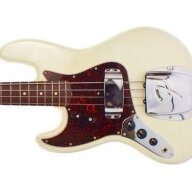
Don't overlook Nordstrand. I replaced my Jazz pickups with them and I can't believe the improvement. Sound is the same, but absolutely no buzz and hum. NJ4SV to be precise.
What's really cool about these pickups is that you have the choice between ordering them for a standard fingerboard radius or for 7.25".

I would look into a stacked coil if anyone makes one. They seem to keep their single coilness the most out of the humbucking pickup configurations.After having a snow day yesterday, and spending much time with my Jazz bass, i'm really hung up on my Lollars that are in it.
They really sound great, had some time to really dial in some cool tones.
I know splits will eliminate all the noise, but as some say, splits are close, but don't sound like singles.
I'm not in any rush to do anything, just keeping the options open.
I would look into a stacked coil if anyone makes one. They seem to keep their single coilness the most out of the humbucking pickup configurations.
I have never done a direct comparison, but the vintage 64's seem to have a lot more low end and low mid punch. So far, they are my favorite jazz pickups, but I haven't tried Nordstrands.
I would look into a stacked coil if anyone makes one. They seem to keep their single coilness the most out of the humbucking pickup configurations.
Actually, I think side-by-side humbuckers retain more single-coilness than the stacked pickups.
I had a mismatched set of split coils in one bass, neck a dimarzio and bridge an NJ4SE. They were lacking a bit of top end and I wasn't blown away by then soloed. They really sounded fantastic centred though (where there's no hum anyway lol)I find the opposite with side by side humbuckers. Not only does the comb filtering affect the way the top end responds, but the increased aperture size really affects the focus. However, even in when the side by side is the same size as a single coil, like those from Joe Barden, the difference in the top end response is very noticeable. They just are not as snappy or quacky as a single coil. Even with a split coil you may have almost identical sound qualities when soloed, but once you start mixing them there is a noticeable difference. The J bass in center position is a very distinct sound and it is very much to do with physics.

No doubt you will want to hang me high from the yardarm after this, but here goes.
Looking at Jazz bass single coil pickups. Randomly picked examples.
Nordstrand NJ4 £140.
Lindy Fralin Jazz Bass £150
Tonerider Jazz plus £58.90
Nordstrand blurb:
Made with 60s era correct Heavy Formvar wire and Alnico V magnets. In winding these pickups we use a simulated hand wound pattern.
Coil resistance ~8K
Lindy Fralin blurb:
Using ALNICO V magnets and 42 gauge Heavy Formvar wire, they are all hand wound to vintage specifications.
Coil resistance ~8K
Tonerider blurb:
High-Grade "Smooth-Top" Alnico V Pole pieces - no sharp edges!
42 gauge Heavy Formvar wire
All coils scatter wound on our 999-step CNC winding machines.
Coil resistance ~8K
The parameters from a pickup that matter are output voltage and frequency response.
The output voltage depends on the magnet dimensions and field strength, the wire diameter and number of turns on the coil. The frequency response depends on the inductance of the coil.
If the magnetic field is too strong, it will influence the string and reduce the sustain of the guitar. If it is to weak, the output level will be low.
So there is an optimum field strength to aim for.
The greater the number of turns on the coil, the greater the coil resistance, the higher the output voltage.
The greater the number of turns on the coil, the higher the inductance of the coil, reducing the high frequency response. A compromise between output and frequency response.
So there is an optimum number of turns to aim for.
Three makes of pickup, all with the same physical dimensions.
All use Alnico V pole pieces of the same diameter with similar field strengths.
All use 42 gauge wire with similar number of turns.
All use simulated hand wound patterns.
It is a basic electronic component, magnets and wire, a coil, no magic involved.
How much difference in sound could there possibly be?
Can one sound sweeter? How?
Could you tell the difference in a blind listening test?
Is this a case of the Emperors new clothes?
Different output levels? Doesn't matter, plug into an amp and adjust the gain.
Different frequency response? Doesn't matter, plug into an amp and adjust the tone controls.
So, you got to ask yourself, where's the best bang for your buck?



Posted in a separate thread but got no response....thought I would ask the "experts" here:
"I have a 1985/86 MIJ Jazz Bass....great bass and all original, but really looking at upgrading to Nordstrand NJ4's. Will i have any issues with the "fit"? Also, I only have jazz pickup experience with the stock 80's MIJ pickups, they sound fine but sort of dark, no balls, and can get lost in the mix sometimes....what can I expect from nj4's in comparison?"

Perhaps the Fender Pure Vintage 74' Jazz Bass pickups?Nordy 70s vs Aguilar 70s?
Any opinions on which one would suit my geddy lee jazz bass. Looking for a sizzle high end with a nice round bottom and, of course. a lot of growl.
Will probably pair it up with an East J Retro.
EDIT: Couldn't wait, ordered the Nordy's will report back when they arrive and I have them installed with the J Retro.