
"Penguin takes his car into the shop and the mechanic says he needs an hour to check it out ..."
Sorry, I couldn't resist.
Sorry, I couldn't resist.

TalkBass has been independent since 1998. Add your voice.
Create a free account to reply to discussions, view embedded media, and browse with fewer display ads.
Join free Log in
Want zero display ads or expanded classifieds tools? Compare plans.

While we’re at it, horses don’t chomp at the bit — they champ at the bit.
The Rolls Mo2020 Testoscillator set to 20hz running into a 30 watt amp without a HPF may blow some 1100 watt rated speakers:It has everything to do with power (watts).
30 watt amp into an 1100 watt (RMS) rated speaker is going to be VERY hard pressed to damage a woofer. This is a wager with very good odds in my favor!
Not if the speaker rating is anything close to realistic.The Rolls Mo2020 Testoscillator set to 20hz running into a 30 watt amp without a HPF may blow some 1100 watt rated speakers:
Rolls Corporation - Real Sound - Image - MO2020
Would a speaker handle a few hours with a 15 Watt unit that goes down to 1HZ?Not if the speaker rating is anything close to realistic.
In fact, I routinely use a 25-100 watt RMS signal from 15Hz-500Hz for aging testing of LF drivers in QC.
No HPF used for these tests.

They most surely chomp and chew (though there are no teeth present where the bit sits in the mouth)
 Point made! The phrase as originally coined is "champing at the bit." Champing is "making a biting or chewing action with the jaws or teeth." Apparently horses do this before races as they're waiting for the gun/bell, and that's why the phrase came to be used to imply impatience. Like so many other phrases, this one has been "commonized" over the years, much like "proof is in the pudding."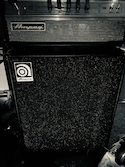


Well, moving on to fixes:
How about some suggestions for a good way to get the amount of cleanliness, volume, and low end I want from this amp. I know it's in there, because I heard it the first time I played through the cab at lower volume (about noon on the master) with more lows dialed in. The tone was great; the volume didn't cut it. I just need the right cab/s to let it out. I will get this little guy fixed up for lower intensity situations, or maybe use my friend's PF-350 through it, and find a better cab for gigs.
I'd love it if the solution was within the Portaflex line, but I could be open to something outside the line. That Ampeg 2x12 does look tempting (almost bought it initially instead of the PF-115HE). The 4x10 Portaflex cab would probably be my next trial. Hope it fits in a Challenger. That is a consideration for me. Would love it to be flip top, but I guess that ain't in the cards with the PF-800.
Just set my PF-800 and PF-115HE to the same settings in #111 and lightly played a passive Fender Jazz through the rig for a quick test. It doesn't sound like it's being pushed all that much, but I'm not going to chance it
However, I can't get the red peak input light to go on at all with the gain set that low. Even with really heavy picking or popping/slapping (and setting the volume back to very low), I can't trip that light until the 'gain' is set just below 1 o'clock. If you're seeing the peak light start to go on with the gain at the setting shown in #111 with a passive bass (and the compressor at 10 o'clock and there's nothing else in your signal chain), then I'd say there's something wrong with that amp.
Is it a capacitor that died ? Chinese brand ? Can we get a pic of the insides ?

Is it a capacitor that died ? Chinese brand ? Can we get a pic of the insides ?


How you got a sine wave from a dummy load, I'll never know.If you push an amp into severe clipping you end up with very close to a DC level voltage into the speaker which can toast a speaker pretty fast. I fried one Electrovoice EVM15B in a two-speaker cab. The amp was a 1970s GK 400B with 250 watts.
I put a sine wave into the amp with a dummy load and checked it with a scope.It clipped severely with beautiful square waves at high output.


