

Enjoy the benefits of a premium membership!
Upgrade Account
-
TalkBass has been independent since 1998. Add your voice.
Create a free account to reply to discussions, view embedded media, and browse with fewer display ads.
Join free Log in
Want zero display ads or expanded classifieds tools? Compare plans.
You are using an out of date browser. It may not display this or other websites correctly.
You should upgrade or use an alternative browser.
You should upgrade or use an alternative browser.
Left hand cramping when playing near nut
- Thread starter EricOnTheBass
- Start date
More options
Who Replied?

For me practicing with little or no thumb pressure on easier songs helps me learn how the hand feels when it's strained and try to minimize that. It's not easy close to the nut, for sure.
Before anything else, I'd get the bass set up by a pro. In particular, I'd make sure that the nut slots are cut to the proper depth
This^^^there is nothing worse than trying to play any bass that isn't setup right. I don't care if it's a $5,000 bass or a $500 bass, setup is the most important.


This was my experience. I played a Warwick Corvette for 20 years and my hand cramped in the same positions as the OP stated. The Corvette was not only heavy as hell, but it has thin neck profile, like a Jazz bass. A few years back I switched to Spectors which have a thicker neck profile and I no longer have cramping in those low notes.How thin is the neck, front to back? I had a MIJ Geddy Jazz for years. Great bass, fun to play. Very thin neck front to back. When I started playing out live, I realized after a few hours of playing my hand would start to feel crampy and hurt. Moving to thicker necks made a huge difference. No more issue.

Or get a 5 string and shift some of the parts to the B and E strings.OK, I'll volunteer to be that guy who proposes the most simplistic solution: get a short-scale 4-string.
I found a few songs took a toll on my wrist and that’s what I did. Like Late in the Evening - all F, Bb and C triads. Eventually I staying playing the F on the B string and the Bb and C on the E string. My hand is now in a far more comfortable position on the neck. I liked it so much I started doing this with more songs. It should work with Love Shack - I’ll have to give it a try the next time we play it.
Combination of all of these.
- Adjust the nut
- Work up hand strength
- Could be economics of bass don’t work for you
- Try a medium or short scale

everyone has to find what works best for themselves, but i wouldn't be surprised if some amount of cramping potential comes from several circumstances, all at once, for most players:
- questionable/problematic technique, including arm/hand postures.
- non-optimal setup, including:
- incorrect nut slot depths.
- playing too hard (e.g., not relaxed enough).
- neck shape/profile.
- failure to change up repetitive, 'crampy' basslines in the first place (takes practice!).
- other (as mentioned).
if you can eliminate an issue like the OP's by correcting just one variable = you're lucky IME/IMO!
- questionable/problematic technique, including arm/hand postures.
- non-optimal setup, including:
- incorrect nut slot depths.
- playing too hard (e.g., not relaxed enough).
- neck shape/profile.
- failure to change up repetitive, 'crampy' basslines in the first place (takes practice!).
- other (as mentioned).
if you can eliminate an issue like the OP's by correcting just one variable = you're lucky IME/IMO!


I usually hike my neck up and hold my bass at a higher angle.
As do I, It can be seen in my avatar pic.
Neck angle is often missing these discussions.
It's the thing that strap height is supposed to impact
but if you keep your neck horizontal to the floor
strap height alone won't really do the trick
The Adam Neely video in post #2 has the procedure correct:
position your hand to be comfortable and adjust the bass position to serve it.
The same holds true for arms, shoulders and overall posture.

This sounds all to familiar. I had a 35" scale wide neck 5 string as my only instrument. It hurt my L hand to play, especially near the nut. The pain was at the base of the thumb. The cause? Arthritis. This was over 20 years ago and the issue is still there.
My solution was to quit playing 5 stringers and to quit playing scale lengths above 34". I'm fine with a Jazz bass. 3 of my 4 instruments are 32" scale.
The benefits of an extra-long scale are not worth playing through pain.
My solution was to quit playing 5 stringers and to quit playing scale lengths above 34". I'm fine with a Jazz bass. 3 of my 4 instruments are 32" scale.
The benefits of an extra-long scale are not worth playing through pain.

Regarding neck profile/thickness. The Warwick Thumb I mentioned was a year 2000 model that had a huge and fat baseball bat neck. I've also had Yamaha Attitude Std with a wide thin neck that I didn't get on with at all, but I didn't get hand cramp when playing it.
Whilst, I prefer a slightly chunkier neck, I firmly believe the hand cramping issue I experienced playing the same song was down to the small body making it a stretch to reach the nut. As others have said, I can only imagine the Dingwall's fan fret design is causing the same problem.
FWIW, I thought for a while that the problem may have been the nut width and therefore string spacing, causing my hand to close up, and when I moved to my wide and fat-necked Attitude LTD2 the problem went away. But I moved to a G&L JB2 with a slightly chunky J style neck more recently and I haven't experienced any issues with string spacing or cramping. This again makes me think that hand cramping when playing repetitive lines in the first position must be due to the extended reach to the nut of certain bass designs.
Whilst, I prefer a slightly chunkier neck, I firmly believe the hand cramping issue I experienced playing the same song was down to the small body making it a stretch to reach the nut. As others have said, I can only imagine the Dingwall's fan fret design is causing the same problem.
FWIW, I thought for a while that the problem may have been the nut width and therefore string spacing, causing my hand to close up, and when I moved to my wide and fat-necked Attitude LTD2 the problem went away. But I moved to a G&L JB2 with a slightly chunky J style neck more recently and I haven't experienced any issues with string spacing or cramping. This again makes me think that hand cramping when playing repetitive lines in the first position must be due to the extended reach to the nut of certain bass designs.

When I'm playing first few frets of the E and A string (or low B) I'll sometimes "lead" with my middle finger instead of my index finger if the part isn't especially complex. While everyone is built differently, this seems to generally allow me to hold my hand in a position that is a little more ergonomic, and also just switching anything up during longer periods of playing can be good to move the stress around a bit.

It just takes proper hand adjustment and practice. Although my wife never seemed to have that problem.

Perpendicular! Fingers to fretboard!
I suppose it depends if you mean perpendicular in both planes or not, but if you do, then that can cause problems, as Adam Neely points out in that video that was posted earlier. You want your thumb to be further down the neck than your fingers, which tends to mean fingers not being perpendicular when playing near the nut.

The players that can play on the lower frets for hours probably don’t have stronger wrists or fingers than you. They just exert less force. Take some time to experiment and you may be surprised how little force it takes to fret as bass string.
Also, the thumb is for balance and not for strength. Don’t squeeze the neck between thumb and finger. Instead use the weight of your arm and the muscles in your back to pull your arm back to provide the pressure. You should be able to play without your thumb even touching the neck. It might take a while, but train yourself to play this way it it will get much easier.
But to be fair, Dingwalls are harder to play in the lower frets. Even with good ergonomics, 37” is a long scale.
Also, the thumb is for balance and not for strength. Don’t squeeze the neck between thumb and finger. Instead use the weight of your arm and the muscles in your back to pull your arm back to provide the pressure. You should be able to play without your thumb even touching the neck. It might take a while, but train yourself to play this way it it will get much easier.
But to be fair, Dingwalls are harder to play in the lower frets. Even with good ergonomics, 37” is a long scale.
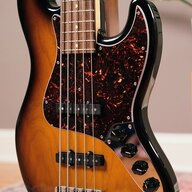
Hey everyone, thanks a lot for the replies so far, this is really helpful!
I practiced the song a bit on my Fender J-bass (4-string 34"), which also has a slightly lower nut and action than the Dingwall. The Jazz has just been set up recently. The song is easier to play on that instrument, as one might expect, but I still get some discomfort. So I think it's probably related more to positioning and technique than the setup, and the fact that several others have had the same problem on this song seems to back this up.
I practiced the song a bit on my Fender J-bass (4-string 34"), which also has a slightly lower nut and action than the Dingwall. The Jazz has just been set up recently. The song is easier to play on that instrument, as one might expect, but I still get some discomfort. So I think it's probably related more to positioning and technique than the setup, and the fact that several others have had the same problem on this song seems to back this up.

Left hand cramping when playing near nut
Invalid Link Removed
Invalid Link Removed
Latest posts
-
-
 The Bartolini BH2: Why Does It Sound So Dark? My EHB1265MS Experiments
- Latest: Riff Ranger
-
-

-