• TalkBass has been independent since 1998. Add your voice.
    Create a free account to reply to discussions, view embedded media, and browse with fewer display ads.
    Join freeLog in
    Want zero display ads or expanded classifieds tools? Compare plans.

Lefty beginner - learn left or right?

OP reporting in....

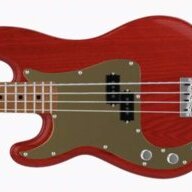
In the end, he decided to go by feel as the main deciding factor and decided on a lefty. He just took delivery of a very nice used Ibanez GSR200L in a nice dark red (every other lefty bass available locally was black).
And it begins...with the almost nothing but black and burst gear curse lol. Ibanez is particularly bad for this so good on the score of a nice red one. As I don’t believe that I’ve ever seen a lefty Ibanez bass that wasn’t black, can your friend post a pic of it pls? And when he joins to post the pic he can join the Lefty Union.

Unless it plays and feels really good I now avoid black basses like the plague. Black gets really old about 10 minutes after deciding that you’re a lefty player. Message to Fender in particular, you don’t HAVE to offer literally every single lefty model in black and burst. Have more red, blue (not tidepool though, Sonic, LPB, or Daphne), and white offerings. Also instruct your dealers to actually listen to their lefty customers on what to stock. Trust me on this.;)

The newer lefty models have been around for a few years now and my local L&M still refuses to stock anything but black and burst unless I pay for it up front. Then they wonder why the stock doesn’t move ffs.:sour:

That being said, there’s a black NOS condition rental return MIM Standard that I’m looking at because it plays really well and it has a particularly nice neck on it with a (no longer available for non-MIA/MIJ’s) rosewood board on it. Pups aren’t as clear as the newer Player series ones but the bass as a whole seems to have gotten the better end of Fender QC than most. So yeah, when the rubber meets the road the pretty colours are nice but a solid player still gets the win...& maybe a tort pick guard or a refin later if it becomes a permanent member of the stable lol.:D

I’d imagine a lot of lefty instruments get refinned relative to others.

Since 2017, Fender in particular has improved their lefty offerings throughout the line. They still have a ways to go but they’re definitely going in the right direction. They need to start offering lefties both neck options for a given colour like the righties because Fender now has developed a nasty knack for offering a nice colour with the neck that looks less nice on it. Example, Players P bass in white. I would’ve bought one upon release if they had offered it with a maple board but so far it’s been almost 4 years and still only pao ferro. They also need to offer us some of the trick stuff too like the modern Elite/Ultras (currently no active lefty offerings) and especially the vintage inspired Vintera series (hint hint ;)). A good five string P, a short scale, and a fretless would be nice too. If I could pick one of above for production it would be the Vintera 50’s P in Dakota Red as I would like to try out a more vintage spec bass with the 7 1/4” radius board and I love P basses in general.

It’s a far cry now though from before 2018 when the only option for a lefty wanting a P bass was to bite down and spend an the big bucks to get a MIA. There wasn’t even a lefty Squier P until 2019 (at which time I promptly scooped my CV60).

Anyways, congrats to your friend for starting the path.:thumbsup:
 
Last edited:
And it begins...with the almost nothing but black and burst gear curse lol. Ibanez is particularly bad for this so good on the score of a nice red one. As I don’t believe that I’ve ever seen a lefty Ibanez bass that wasn’t black, can your friend post a pic of it pls? And when he joins to post the pic he can join the Lefty Union.

Unless it plays and feels really good I now avoid black basses like the plague. Black gets really old about 10 minutes after deciding that you’re a lefty player. Message to Fender in particular, you don’t HAVE to offer literally every single lefty model in black and burst. Have more red, blue (not tidepool though, Sonic, LPB, or Daphne), and white offerings. Also instruct your dealers to actually listen to their lefty customers on what to stock. Trust me on this.;)

The newer lefty models have been around for a few years now and my local L&M still refuses to stock anything but black and burst unless I pay for it up front. Then they wonder why the stock doesn’t move ffs.:sour:

That being said, there’s a black NOS condition rental return MIM Standard that I’m looking at because it plays really well and it has a particularly nice neck on it with a (no longer available for non-MIA/MIJ’s) rosewood board on it. Pups aren’t as clear as the newer Player series ones but the bass as a whole seems to have gotten the better end of Fender QC than most. So yeah, when the rubber meets the road the pretty colours are nice but a solid player still gets the win...& maybe a tort pick guard or a refin later if it becomes a permanent member of the stable lol.:D

I’d imagine a lot of lefty instruments get refinned relative to others.

Since 2017, Fender in particular has improved their lefty offerings throughout the line. They still have a ways to go but they’re definitely going in the right direction. They need to start offering lefties both neck options for a given colour like the righties because Fender now has developed a nasty knack for offering a nice colour with the neck that looks less nice on it. Example, Players P bass in white. I would’ve bought one upon release if they had offered it with a maple board but so far it’s been almost 4 years and still only pao ferro. They also need to offer us some of the trick stuff too like the modern Elite/Ultras (currently no active lefty offerings) and especially the vintage inspired Vintera series (hint hint ;)). A good five string P, a short scale, and a fretless would be nice too. If I could pick one of above for production it would be the Vintera 50’s P in Dakota Red as I would like to try out a more vintage spec bass with the 7 1/4” radius board and I love P basses in general.

It’s a far cry now though from before 2018 when the only option for a lefty wanting a P bass was to bite down and spend an the big bucks to get a MIA. There wasn’t even a lefty Squier P until 2019 (at which time I promptly scooped my CV60).

Anyways, congrats to your friend for starting the path.:thumbsup:

Here is the one he bought....
41116-S000023646-2.jpg

41116-S000023646-4.jpg

And I'll definitely encourage him to join.
 
I have a left-handed friend who has decided to take up the bass. He doesn't have any experience with guitar or other stringed instruments. He's asked me to help him find a first bass and he thinks he needs a left handed bass.

Since he's new to stringed instruments my thoughts are that he could learn on a right handed instrument just as easily but I don't know if that's true. There would be more availability and choice for instruments. Thoughts? Especially from other lefty's.

I'm wondering why the hell I get an email today, for an almost year old discussion. What is the problem Talk Bass?!?
 
If he can play or learn to play right handed...huge benifit!
Left hand basses are not in the mainstream with most manufacturers and only a handful of models are available on a regular basis. The really cool - re issues and specialty basses are
not to be found in lefty except on very rare ocassions.
Playing right handed,.just about everything in existence is available and you'll never be in this
conversation.
Myself, having played left handed for 30 years, I quickly learned how to build my own through the parts (necks,bodies,etc) available on the market,
so I too could enjoy other than the limited available styles to choose from.
Right handed if you can, left handed if you must!
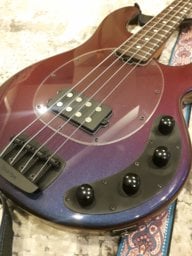
(photo below - my latest Tele bodied build up with Rosser and Fender parts.


I have a left-handed friend who has decided to take up the bass. He doesn't have any experience with guitar or other stringed instruments. He's asked me to help him find a first bass and he thinks he needs a left handed bass.

Since he's new to stringed instruments my thoughts are that he could learn on a right handed instrument just as easily but I don't know if that's true. There would be more availability and choice for instruments. Thoughts? Especially from other lefty's.
IMG_2060.JPG
 
Last edited:
I have a left-handed friend who has decided to take up the bass. He doesn't have any experience with guitar or other stringed instruments. He's asked me to help him find a first bass and he thinks he needs a left handed bass.

Since he's new to stringed instruments my thoughts are that he could learn on a right handed instrument just as easily but I don't know if that's true. There would be more availability and choice for instruments. Thoughts? Especially from other lefty's.

Advice from a lefty? Here goes...
Tell your friend to try - really HARD - to play right handed. Not just mess around a little, but really, honestly try to play right handed. An awful lot of left handed people can do a lot of things right handed with little/no trouble - including play stringed instruments. I really hope he's one of them, and not like me. About the only thing I can do right handed is feed myself; wipe my butt; and use a computer mouse. I've tried to play bass/guitar right handed, off and on, since I was 10. Couldn't do it for more than about 8-10 minutes without getting a sick headache then; still can't do it at 70. If I try to push it? After about 15 minutes, the headache reaches the point where I have to put the instrument down, and go throw up. So, I'm doomed to be a lefty player 'till I die... Hopefully, your friend will be fortunate, and won't wind up in my shoes...:whistle:
 
Last edited:
I'm aware that the new bass player ended up buying a left hand bass, but I wanted to drop my .02 cents here.

I'm a lefty at nearly everything but began my bass playing days learning to play with a standard righty bass at age 18.

I'm very glad that I did, and not just because of the much greater availability and options for instruments, but mostly due to the fact that the electric bass depends so heavily on the fretting hand.

My playing has definitely benefitted from having a nimble and precise left hand. I truly believe that if I learned to play a lefty bass, then I wouldn't have the level of skill on the fretboard that I currently have.
 
Well said.


I'm aware that the new bass player ended up buying a left hand bass, but I wanted to drop my .02 cents here.

I'm a lefty at nearly everything but began my bass playing days learning to play with a standard righty bass at age 18.

I'm very glad that I did, and not just because of the much greater availability and options for instruments, but mostly due to the fact that the electric bass depends so heavily on the fretting hand.

My playing has definitely benefitted from having a nimble and precise left hand. I truly believe that if I learned to play a lefty bass, then I wouldn't have the level of skill on the fretboard that I currently have.
 
I know this is an old topic but here's something to think about: You're only hearing from people who stuck with it.

I'm a lefty and my parents bought me a righty bass when I was 12 and I HATED it! I wanted to play bass but it just felt wrong and it was hard to get my right hand to do what I wanted.

I eventually sold it for a drum set and years later got an acoustic bass that I strung lefty. I still love playing bass, but I often think what would have happened if I got a lefty first.

I agree that leftys should try righty, especially if they can borrow one for a while. But if it doesn't click, don't force it, that is what makes people quit playing.
 
Updated from the OP....he's almost a year into playing lefty and seems to be sticking with it and making progress. I give him a lesson about once a month which seems to work okay. Face to face like we are looking in a mirror which seems to work well. Whereas with a righty student I like to sit side by side.....weird.
 
I'm a lefty for a few things (writing, eating, any detail work) but everything else I'm right-handed. When I started to learn how to dj and scratch, I used the hand with the most "technical" ability, so I would control the record with my left hand, while the mixer fader would be controlled by my right hand. This wasn't influenced by anyone, it's just what felt natural.

When I started to learn the guitar and bass, I felt that playing right-handed, my left hand was doing the most technical parts. The right hand, which was used to moving in rhythm, so there was little change. But I was always confused why right handed, was the right hand strumming not the right hand fretting. It seems like histroically fretting is more complex, over strumming.
 
  • Like
Reactions: hbarcat
I highly disagree that the fretting hand has the more complex task out of the two. I learned to fret a note in a matter of hours after being handed my first guitar. My ears eventually pointed out to me if notes were ringing out and after putting a bit of time into correcting that, muting is a reflex more than a thought at this point. Almost 3 decades later the majority of my struggles, and the majority of my time spent practicing has been spent developing some technique or trick with my strumming hand, or slowing down to analyze what I was doing wrong with my right hand while trying to play at speed.

As a bassist you tend to be able to get away with leaving space, and not playing the most technical music in the world. But at least in my experience, as you begin speeding up, if you have any it's likely going to point out flaws in your strumming technique.

My ears mostly dictate what my left hand does, and can hear when that doesn't go the way I planned. This can be figured out via process of elimination even given enough time. Learning scale and arpeggio patterns wasn't the hard part for me.. learning to play them with any kind of speed and accuracy was.. and most of that work was my strumming hand and my god if there's still not room for improvement in that regard, where "how to fret a note" and "how to mute a string with my left hand" are rarely a thought on my mind, just something that happens.

I've spent time analyzing exactly what order what finger on my right hand is striking which string more times than I can count. Where in the timeline it's striking. And sometimes I really have to slow down whatever I'm playing to see what I did wrong, but 9 times out of 10.. my Index or my middle finger on my right hand tripped over the other or cut in line and my task for the rest of that session is spent fixing that.

Fretting hand kind of gets to paint by numbers, and you know.. it might cause you a little grief when you try to speed up as well.. but at least in my experience? My strumming hand seems to require a lot more conscious thought and effort than some of you like to give it credit for.

That being said.. I'm cross dominant and have often wondered if it would have been any easier if I'd been handed a left handed guitar as my first instrument.

At the same time.. playing cross handed on a drum kit for my brief experience with drums felt way more comfortable to me than playing open handed.. which means I seemed to prefer playing righty.

Cross dominance is a weird thing that throws a whole different dynamic to the original conversation from back when the OP posted this. I didn't even know it was a thing and that I was inflicted with it until recent years.

Long story short, IMO there's a lot more to learn in strumming/plucking technique than there is in fretting hand techniques, or at least, I've had to spend a lot more time thinking about my strumming hand than what my left hand is doing in my own experience.

List of things that took me way longer to learn than how to fret a note, or left hand muting -

Artifcial harmonics (guess which hand)
Alternate picking (guess which hand)
Economy picking (guess)
Fingerstyle bass
Thumb/index plucking,
Slap bass..
All of the above, I can do but have room for improvement with still.

And this list goes on and on with stuff i can't even do and have tried so hard, and its all right hand technique that requires the correct "feel", where theory and my ear guide my left hand's actions.
 
Last edited:
I highly disagree that the fretting hand has the more complex task out of the two. I learned to fret a note in a matter of hours after being handed my first guitar. My ears eventually pointed out to me if notes were ringing out and after putting a bit of time into correcting that, muting is a reflex more than a thought at this point. Almost 3 decades later the majority of my struggles, and the majority of my time spent practicing has been spent developing some technique or trick with my strumming hand, or slowing down to analyze what I was doing wrong with my right hand while trying to play at speed.

As a bassist you tend to be able to get away with leaving space, and not playing the most technical music in the world. But at least in my experience, as you begin speeding up, if you have any it's likely going to point out flaws in your strumming technique.

My ears mostly dictate what my left hand does, and can hear when that doesn't go the way I planned. This can be figured out via process of elimination even given enough time. Learning scale and arpeggio patterns wasn't the hard part for me.. learning to play them with any kind of speed and accuracy was.. and most of that work was my strumming hand and my god if there's still not room for improvement in that regard, where "how to fret a note" and "how to mute a string with my left hand" are rarely a thought on my mind, just something that happens.

I've spent time analyzing exactly what order what finger on my right hand is striking which string more times than I can count. Where in the timeline it's striking. And sometimes I really have to slow down whatever I'm playing to see what I did wrong, but 9 times out of 10.. my Index or my middle finger on my right hand tripped over the other or cut in line and my task for the rest of that session is spent fixing that.

Fretting hand kind of gets to paint by numbers, and you know.. it might cause you a little grief when you try to speed up as well.. but at least in my experience? My strumming hand seems to require a lot more conscious thought and effort than some of you like to give it credit for.

That being said.. I'm cross dominant and have often wondered if it would have been any easier if I'd been handed a left handed guitar as my first instrument.

At the same time.. playing cross handed on a drum kit for my brief experience with drums felt way more comfortable to me than playing open handed.. which means I seemed to prefer playing righty.

Cross dominance is a weird thing that throws a whole different dynamic to the original conversation from back when the OP posted this. I didn't even know it was a thing and that I was inflicted with it until recent years.

Long story short, IMO there's a lot more to learn in strumming/plucking technique than there is in fretting hand techniques, or at least, I've had to spend a lot more time thinking about my strumming hand than what my left hand is doing in my own experience.

List of things that took me way longer to learn than how to fret a note, or left hand muting -

Artifcial harmonics (guess which hand)
Alternate picking (guess which hand)
Economy picking (guess)
Fingerstyle bass
Thumb/index plucking,
Slap bass,
and this list goes on and on with stuff i can't even do and have tried so hard, and its all right hand technique.

I don't disagree with what you have said, but out of curiousity, I just picked up one of my basses and flipped it upside down to play it left handed and my plucking hand (in this case my left hand which would normally be my plucking hand) and my left hand felt a lot more comfortable plucking compared to my right hand trying to do the fretting.
 
  • Like
Reactions: hbarcat
I don't disagree with what you have said, but out of curiousity, I just picked up one of my basses and flipped it upside down to play it left handed and my plucking hand (in this case my left hand which would normally be my plucking hand) and my left hand felt a lot more comfortable plucking compared to my right hand trying to do the fretting.

Bro both my hands felt like I was slapping my chest and biting my ear the first instrument I picked up. One of them over like 27ish years of playing stringed instruments has required more focus than the other.

My point is there is less to learn with the fretting hand, Press, release, mute, avoid. Hammer on, pull off. Your strumming hand is doing pretty much everything else, while keeping time. Your hand doesn't learn what note to play, your ears and whats between them do. once you've developed that muscle memory and some understanding of how notes relate to each other it simply reacts.

So sure.. you might find fretting harder with your non dominant hand at first.. but that can be developed over time. Why give the easier job to the strong hand?
 
Last edited:
  • Like
Reactions: N4860
Bro both my hands felt like I was slapping my chest and biting my ear the first instrument I picked up. One of them over like 27ish years of playing stringed instruments has required more focus than the other.

My point is there is less to learn with the fretting hand, Press, release, mute, avoid. Hammer on, pull off. Your strumming hand is doing pretty much everything else, while keeping time. Your hand doesn't learn what note to play, your ears and whats between them do. once you've developed that muscle memory and some understanding of how notes relate to each other it simply reacts.

So sure.. you might find fretting harder with your non dominant hand at first.. but that can be developed over time. Why give the easier job to the strong hand?

I'm not disagreeing with your premise at all. I don't actually know what my dominant hand is to be honest. I play bass and most sports right handed but I write left handed so that might be a big factor as to why my left hand feels fine to pluck when I flip my bass over. When I flipped it over, it felt very foreign to try and pluck with my right hand; almost like I didn't know how to hold the neck and position my hand correctly. I am not saying this in any way to argue your point, just my own initial experience which I understand is not the same as someone that is naturally left handed trying to learn right handed. One other thing of note is that flipping a right handed instrument over and trying to play it left handed is disadvantagous as it is a lot less ergonomical which might be leading to my difficulties.
 
I'm not disagreeing with your premise at all. I don't actually know what my dominant hand is to be honest. I play bass and most sports right handed but I write left handed so that might be a big factor as to why my left hand feels fine to pluck when I flip my bass over. When I flipped it over, it felt very foreign to try and pluck with my right hand; almost like I didn't know how to hold the neck and position my hand correctly. I am not saying this in any way to argue your point, just my own initial experience which I understand is not the same as someone that is naturally left handed trying to learn right handed. One other thing of note is that flipping a right handed instrument over and trying to play it left handed is disadvantagous as it is a lot less ergonomical which might be leading to my difficulties.


You are cross dominant. I used to think my cross dominance made me unique.. then one day got a wild hair to ask google about it and apparently, we're prone to all kinds of issues like anxiety and poor organizational skills. and the cross dominance is actually a defect in the brain compared to your average left or right handed joe.

I've often wondered if I should try lefty, because like you I write and eat left handed, but did mostly everything else righty. I picked up a lefty once and it felt like biting my ear and slapping my chest again.. so I put it back down.

But I'm still often curious how I'd fair if I put time into it, whether I'd still be thinking about what my plucker is doing so much, or if I'd get why people act like the fretting hand is the hard part.

There's really only one way to know, my man. Grab the most inexpensive lefty you can while still being playable and put a few months into it. I've read more than one story about a lefty who hit a plateau playing righty, and after about a year or two of playing lefty found themselves progressing passed that plateau.
 
Last edited:
It all depends on your life style. I am a former flute player (since the age of 6 years) and a former waitress (as a righty I put the tray and the piles of plates on the left side). There is no difference between my hands or arms. In addition, as a child I did a lot of sports and coordination training in the fencing club.