
I don't know man, you seem a little obsessed with using turpentine.

Enjoy the benefits of a premium membership!
Upgrade Account
-
TalkBass has been independent since 1998. Add your voice.
Create a free account to reply to discussions, view embedded media, and browse with fewer display ads.
Join free Log in
Want zero display ads or expanded classifieds tools? Compare plans.
You are using an out of date browser. It may not display this or other websites correctly.
You should upgrade or use an alternative browser.
You should upgrade or use an alternative browser.
Lemon oil question
- Thread starter Sunset Shalom
- Start date
-
- Tags
- oil
More options
Who Replied?
That's what I read. Cool stuff.
Pretty crazy the things people would use as medicine back in the day
 I am fascinated by a lot of traditional medicine though as we have much to learn from it still.
@Sunset Shalom No, I meant the glue joint that attaches the rosewood of ebony fingerboard to the neck material. Oil penetrates the board, compromises the glue, fingerboard falls off.
Why would you condition finished wood?
Turp would eat your finish. It eats paint. There's no "I guess" about it.
And the alcohol that is used for instrument finishes is basically Everclear, nearly pure ethanol into which flakes of shellac and colorant are dissolved and applied to the wood. Not the same thing at all as turpentine.
Wouldn't it take some serious penetration to soak in enough to cause an issue? People use turpentine and other solvents so clearly it can work...
Why condition finished wood? Well for one not all finishes last forever, as I have said the main reason I bought lemon oil was to clean and lubricated a guitar with a gunky fretboard that is starting to dry out. So using a slight solvent mix of oils might help re finish it and keep it from drying out longer. I am just considering it.
I only have 1 painted guitar anyways and if I try it out it will not be on that one, should be easy to avoid the pain for the most part anyways. Even if I messed up and damaged the paintjob it seems pretty simple to fix when its a simple black coat like I have. Solid colors are common and seem easy to work on I would think.
I didn't say alcohol is the same as turpentine but alcohol is flammable and can be very toxic especially the purer it is so I don't see a huge difference.
I don't know man, you seem a little obsessed with using turpentine.
I don't even have any and am undecided as to if I will even try it, I just hate seeing people write things off without a good reason.
Someone out there uses turp + lemon and linseed oil and it works for them so clearly there may or may not be something there. That is all I am saying.
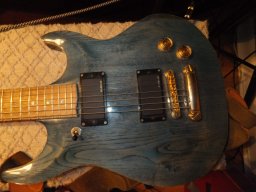
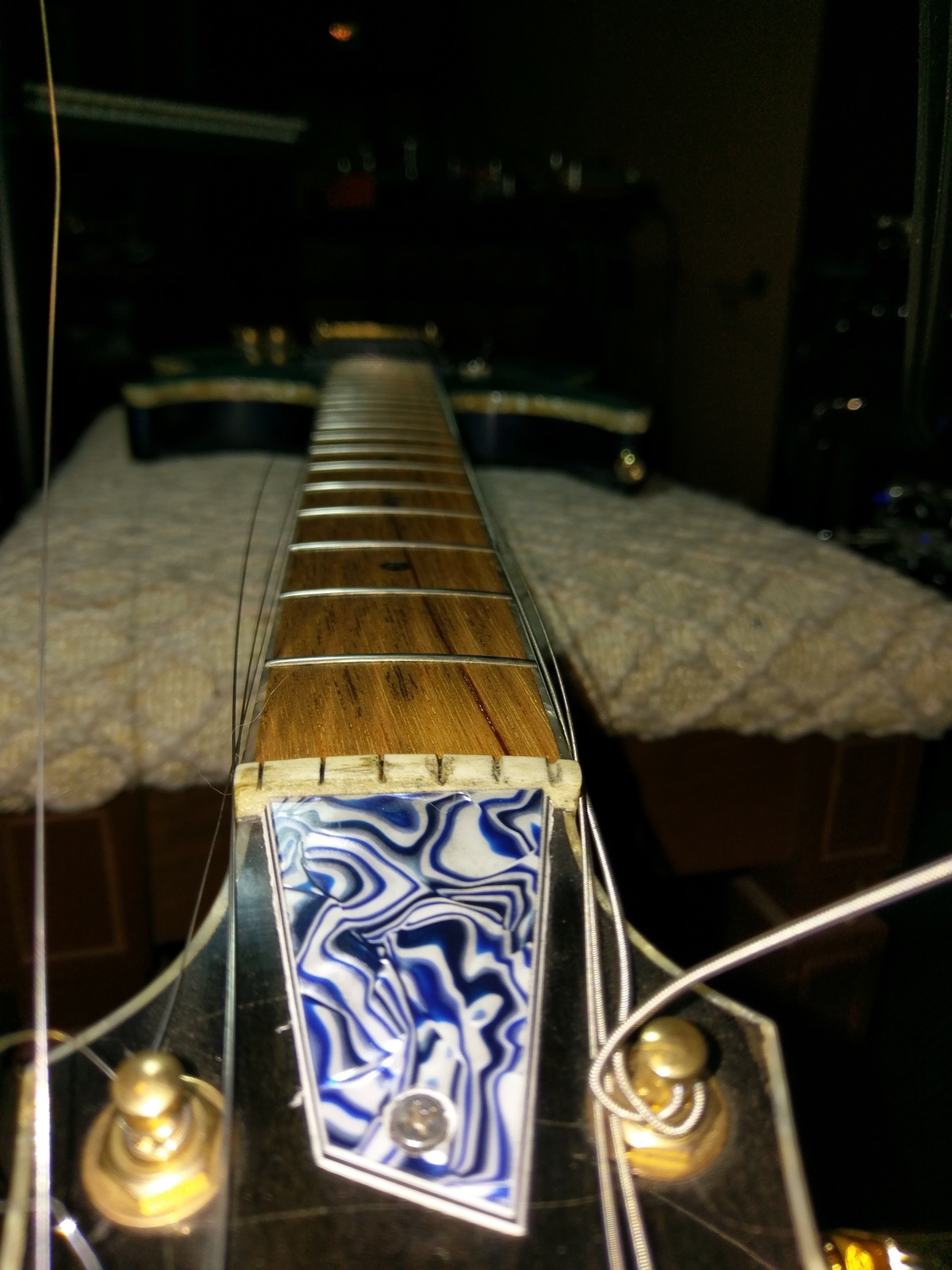
Anyways here are some pics of the 2 guitars I just tried it out on, I had like 5+ pics to upload but it is only letting 2 full sized pics load for some reason:
Before/ After custom SG style guitar:

After only, slightly modded epiphone SG special with rosewood fretboard:
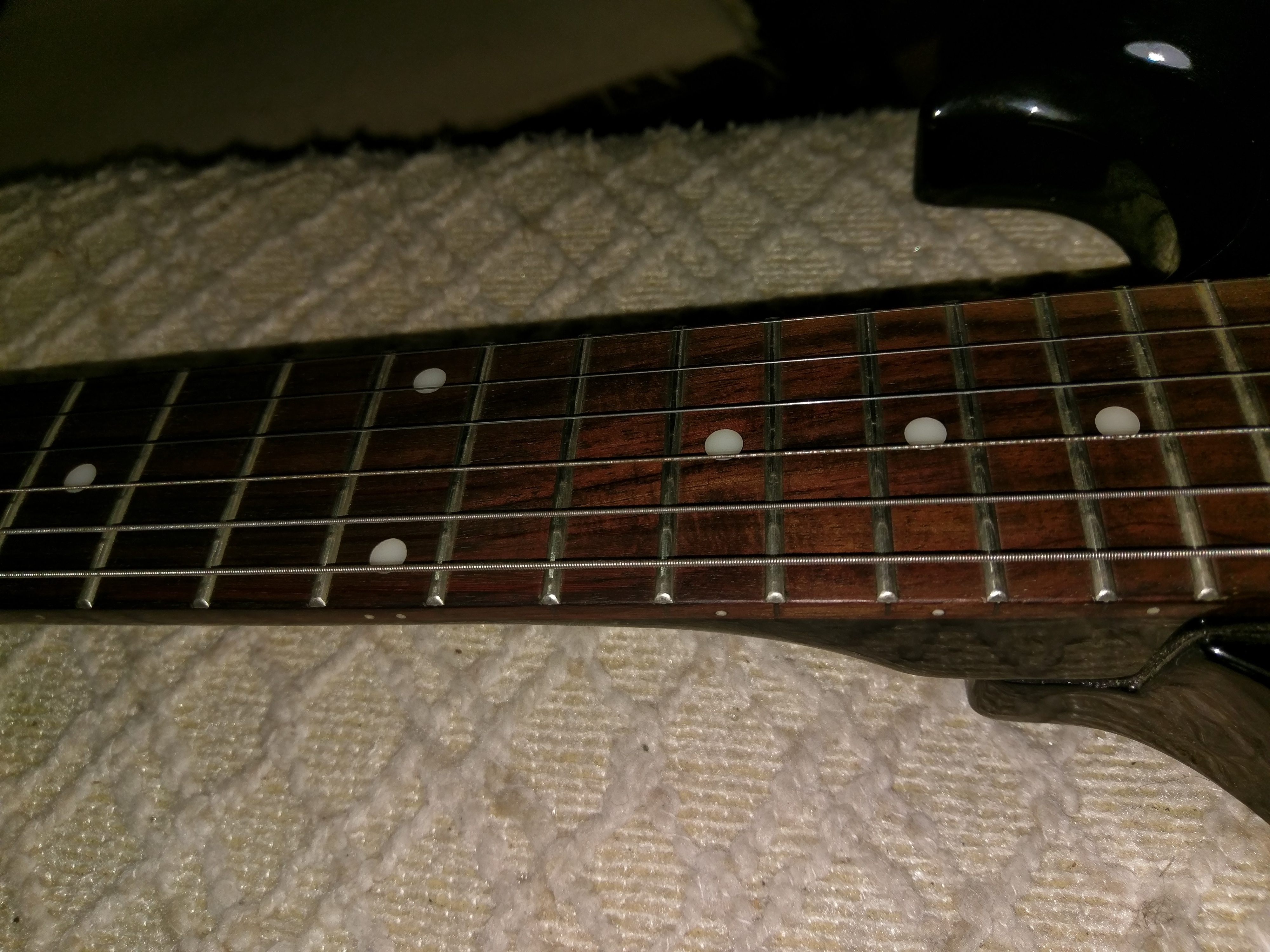
I wish I took a before of the epiphone as it brought out the rosewood much nicer then the maple or whatever the nicer SG has.
The custom SG was much much dirtier though from lots of neglect, it still made it look and feel much nicer though and seemed to help the dry frets.
Clearly I won't be able to tell if it dries out and causes any problems for a little but I am satisfied for now. Should hold the custom SG over until I can re finish the dried out frets or whatever it may need.
Before/ After custom SG style guitar:
After only, slightly modded epiphone SG special with rosewood fretboard:
I wish I took a before of the epiphone as it brought out the rosewood much nicer then the maple or whatever the nicer SG has.
The custom SG was much much dirtier though from lots of neglect, it still made it look and feel much nicer though and seemed to help the dry frets.
Clearly I won't be able to tell if it dries out and causes any problems for a little but I am satisfied for now. Should hold the custom SG over until I can re finish the dried out frets or whatever it may need.
Last edited:
OK, for starters, nearly all of the products that are labeled "Lemon Oil" are nothing but mineral oil with color and scent added. I used it for some time, not knowing the truth. I have switched to Howard's Feed and Wax (Feed-N-Wax Wood Polish & Conditioner - Howard Products). I think it gives a better finish and lasts longer that the "lemon oil". After the first use on a guitar, I applied it to some mahogany furniture I have. The transformation was startling. I use a Q-tip to apply it and start wiping it off as I go when I reach the 10th fret, using a paper towel. Take care to use your fingernails to get in next to the frets and make sure all of the excess is removed. And you can buy 16oz at Lowes for about $8. Way less than the $12 I gave for 8oz at the "Luthier's Supply" store.

The reason to not put oil on a finished fingerboard is that the wood is sealed by the finish and oil can't penetrate. So the oil would just sit there on the surface of the lacquer and make the fingerboard oily without doing a bit of good to the wood.
With an unfinished fingerboard, the wood is exposed --- some believe you should oil it so it doesn't dry out and crack others say it's better to leave it dry and the oil does no good. I don't know how to prove it one way or the other. I've had very old instruments that have never had the fingerboard oiled and they haven't cracked - but a dab of oil certainly makes them look pretty for awhile.
But personal experience of testing various things for the past 50 years -- I like a very tiny bit of Scott's Liquid Gold on a cloth to clean the fingerboard. Most products that say "Lemon Oil" are actually mineral oil with a tiny bit of lemon fragrance ... and lots of people say Mineral Oil is what you should use anyway. Again - I don't know, but personally I don't like mineral oil or lemon oil. I've tried almond oil and avocado oil and I like those - but plenty of people worry that those will go rancid in your board (I've never found that to be so). But I always come back to Scott's Liquid Gold - just a tiny bit goes a long way. And it's great for cleaning the grunge off too.
With an unfinished fingerboard, the wood is exposed --- some believe you should oil it so it doesn't dry out and crack others say it's better to leave it dry and the oil does no good. I don't know how to prove it one way or the other. I've had very old instruments that have never had the fingerboard oiled and they haven't cracked - but a dab of oil certainly makes them look pretty for awhile.
But personal experience of testing various things for the past 50 years -- I like a very tiny bit of Scott's Liquid Gold on a cloth to clean the fingerboard. Most products that say "Lemon Oil" are actually mineral oil with a tiny bit of lemon fragrance ... and lots of people say Mineral Oil is what you should use anyway. Again - I don't know, but personally I don't like mineral oil or lemon oil. I've tried almond oil and avocado oil and I like those - but plenty of people worry that those will go rancid in your board (I've never found that to be so). But I always come back to Scott's Liquid Gold - just a tiny bit goes a long way. And it's great for cleaning the grunge off too.

I think it looks pretty good! Definitely a lot cleaner than before. You just used the lemon stuff from MF? It seems to have worked!Anyways here are some pics of the 2 guitars I just tried it out on, I had like 5+ pics to upload but it is only letting 2 full sized pics load for some reason:
Before/ After custom SG style guitar:
After only, slightly modded epiphone SG special with rosewood fretboard:
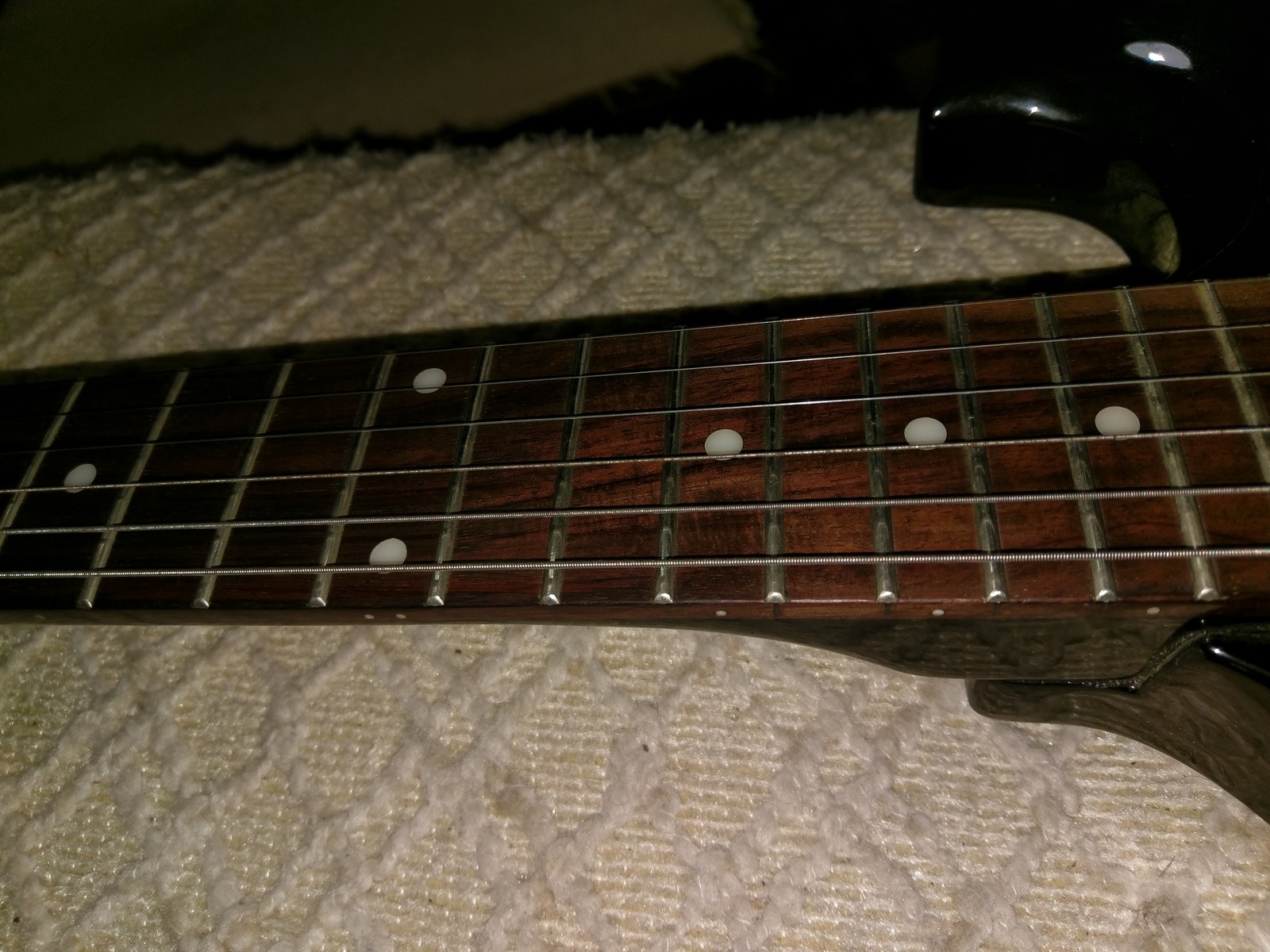
I wish I took a before of the epiphone as it brought out the rosewood much nicer then the maple or whatever the nicer SG has.
The custom SG was much much dirtier though from lots of neglect, it still made it look and feel much nicer though and seemed to help the dry frets.
Clearly I won't be able to tell if it dries out and causes any problems for a little but I am satisfied for now. Should hold the custom SG over until I can re finish the dried out frets or whatever it may need.

Wouldn't it still depend on the kind of finish and wood? I have a few guitars with thicker finishes that probably don't need oil and may not ever.
But at least 1 has a thinner fretboard finish and the oil definitely helped re lubricate it which I was hoping it would as I don't want the wood getting too dry and cracking.
Thanks! Yeah I just used the dunlop lemon oil and a washcloth to scrub and wipe it all down.
Getting rid of all the built up grime alone was a huge improvement but it helped slick the fretboard up too and now it plays better, the difference was even more noticeable on the rosewood fretboard of the sg special. Now its easy to slide up and down the neck even with big chords Pretty sweet I would say.
Will have to see how it holds up over the next few weeks but it sounds like most people only need to reply apply it once or twice a year.
But at least 1 has a thinner fretboard finish and the oil definitely helped re lubricate it which I was hoping it would as I don't want the wood getting too dry and cracking.
I think it looks pretty good! Definitely a lot cleaner than before. You just used the lemon stuff from MF? It seems to have worked!
Thanks! Yeah I just used the dunlop lemon oil and a washcloth to scrub and wipe it all down.
Getting rid of all the built up grime alone was a huge improvement but it helped slick the fretboard up too and now it plays better, the difference was even more noticeable on the rosewood fretboard of the sg special. Now its easy to slide up and down the neck even with big chords
Pretty sweet I would say.Will have to see how it holds up over the next few weeks but it sounds like most people only need to reply apply it once or twice a year.
With an unfinished fingerboard, the wood is exposed --- some believe you should oil it so it doesn't dry out and crack others say it's better to leave it dry and the oil does no good. I don't know how to prove it one way or the other. I've had very old instruments that have never had the fingerboard oiled and they haven't cracked - but a dab of oil certainly makes them look pretty for awhile.
I have a couple old Warwicks with the unfinished all-wenge neck and I've always wondered what to do with them... They never seem to dry out the way the Rosewood does but I do use the lemon stuff on them whenever the board needs cleaning. Works well enough.

The product you bought may have a tiny trace of lemon oil but probably just has lemon fragrance added to a mineral oil base, with a few other things added.
Real Lemon Oil (especially 100%) is not something you want to apply to a fretboard.
The product you bought will probably work fine on your raw wood fretboards (Rosewood & Ebony).
A finished Maple fretboard is not raw wood and only needs a wipe with a clean damp cloth once in a while and a clean dry cloth after every use.
Scott's Liquid Gold is Mineral Oil with Lemon Fragrance, just like all the other lemon oil products.
If your fretboard is really grungy, you can clean it with Naptha (from Home Depot) or Simple Green Max from the auto store or Murphy's Oil Soap and water.
If you're going to used the Max or the Murphy's don't keep the fretboard wet for long, scrub it and wipe it off, then apply the linseed oil.
Do not apply turpentine to your instruments.
Linseed oil is a drying oil, mineral oil is not, you want a drying oil.
Mineral oil goes in the pores and does not dry so comes back out (on your fingers) over time, linseed oil goes in the pores and dries after some time and protects the wood.
The best linseed oil comes from art supply shops, it does not have the chemical drying agents they put in Home Depot boiled linseed oil.
Linseed oil no more than once a year if needed, ten drops up and down the board, wipe it in circles until evenly distributed and then wipe it off with a clean rag.
Leave it on for a minute, no need to let it sit there any longer before wiping.
Avocado oil, Olive oil, Coconut oil and other edible oils will go rancid.
Real Lemon Oil (especially 100%) is not something you want to apply to a fretboard.
The product you bought will probably work fine on your raw wood fretboards (Rosewood & Ebony).
A finished Maple fretboard is not raw wood and only needs a wipe with a clean damp cloth once in a while and a clean dry cloth after every use.
Scott's Liquid Gold is Mineral Oil with Lemon Fragrance, just like all the other lemon oil products.
If your fretboard is really grungy, you can clean it with Naptha (from Home Depot) or Simple Green Max from the auto store or Murphy's Oil Soap and water.
If you're going to used the Max or the Murphy's don't keep the fretboard wet for long, scrub it and wipe it off, then apply the linseed oil.
Do not apply turpentine to your instruments.
Linseed oil is a drying oil, mineral oil is not, you want a drying oil.
Mineral oil goes in the pores and does not dry so comes back out (on your fingers) over time, linseed oil goes in the pores and dries after some time and protects the wood.
The best linseed oil comes from art supply shops, it does not have the chemical drying agents they put in Home Depot boiled linseed oil.
Linseed oil no more than once a year if needed, ten drops up and down the board, wipe it in circles until evenly distributed and then wipe it off with a clean rag.
Leave it on for a minute, no need to let it sit there any longer before wiping.
Avocado oil, Olive oil, Coconut oil and other edible oils will go rancid.
Last edited:

A word to the wise about linseed oil...
The Spontaneous Combustion Risk of Linseed Oil, Other Common Products
Invalid Link Removed
The Spontaneous Combustion Risk of Linseed Oil, Other Common Products
Invalid Link Removed
I use mineral oil on my fretboards. I believe there have been several threads on this topic. Do a search I'm sure you'll get all kinds of answers.
Mineral oil is best. But sparingly.
Apply a very light coat and then wipe it right back off. Don't let it get into any cracks in the fretboard nor let it seep into the frets slots.
FRETS.COM
Mineral oil is a non drying oil and comes back out without drying.
Not bad but not best.
The linseed oil rags fire stories links above have nothing to do with applying ten drops of linseed oil from and art supply store to a fretboard.
Piles of rags soaked with a number of things should not be left sitting in a bin in a garage or basement after use.
Not bad but not best.
The linseed oil rags fire stories links above have nothing to do with applying ten drops of linseed oil from and art supply store to a fretboard.
Piles of rags soaked with a number of things should not be left sitting in a bin in a garage or basement after use.
Last edited:

I've use "Fender's "Fretboard Remedy" on my bases for about 5 years and on my strats for a bout 15. Its a blend of lemon oil and beeswax, used to be marketed by Maguire's, the car wax people. Works well, fret boards still almost like new except for wear. Otherwise, some good advice already given; solvents and food products don't belong on your guitar. Personally I also avoid silicone products-nice for your wife's furniture but if you ever need to use glue anywhere it can cause problems.

Means2nEnd
Supporting Member
[Invalid or Expired Link Removed]
Nuff said... I would never ever use anything else. You clog the pores of the woods with all the heavy oils and it's no good. Food grade oils go rancid and soften the wood and frets move. This is the best stuff I have ever found for non lacquered fingerboards.
Nuff said... I would never ever use anything else. You clog the pores of the woods with all the heavy oils and it's no good. Food grade oils go rancid and soften the wood and frets move. This is the best stuff I have ever found for non lacquered fingerboards.
No silicone on furniture or guitars.
Fender's product is very likely not just lemon oil and bees wax, it will have a tiny amount of lemon oil if any at all.
The reason I know what is in the Scott's Liquid Gold is because I read the MSDS sheets, it's mostly mineral oil.
Unfortunately, guitar companies are not providing access to MSDS sheets because they don't make the stuff so they don't have to know what's in it, the companies they buy it from do.
Lemon oil is not good for your guitar, it very occasionally is used for fragrance and 99% of the time these products have artificial lemon fragrance and no lemon oil at all.
If you talk to a person who has made a lot of custom furniture, he/she will tell you what is good for wood and furniture, the companies selling many of these products are not wood/furniture experts.
Fender's product is very likely not just lemon oil and bees wax, it will have a tiny amount of lemon oil if any at all.
The reason I know what is in the Scott's Liquid Gold is because I read the MSDS sheets, it's mostly mineral oil.
Unfortunately, guitar companies are not providing access to MSDS sheets because they don't make the stuff so they don't have to know what's in it, the companies they buy it from do.
Lemon oil is not good for your guitar, it very occasionally is used for fragrance and 99% of the time these products have artificial lemon fragrance and no lemon oil at all.
If you talk to a person who has made a lot of custom furniture, he/she will tell you what is good for wood and furniture, the companies selling many of these products are not wood/furniture experts.
Last edited:
According to Wikipedia, the term "Mineral Oil" is used for any of various colorless, odorless, light mixtures of higher alkanes from a mineral source, particularly a distillate of petroleum.
The Scott's MSDS says Hydrotreated Petroleum Distillates Process oil (and Naptha and Almond fragrance) - So it may well be a type of mineral oil, but it doesn't behave like the stuff that is labelled "Mineral Oil".
It is much thinner than any mineral oil or lemon oil furniture polish I've ever tried. And it cleans much better. Regular stuff from drug store labelled "Mineral Oil" is thicker and so is all the furniture stuff I've tried that was labelled "Lemon Oil". What I like about the Scott's is that a tiny bit on a cloth and then wipe the fingerboard will dissolve the finger goo and crud (just as quickly and easily as cleaners like Simple Green does - but smells better) - it cleans the fingerboard really quickly (maybe because it has Naptha?) and it wipes off easily afterwards without leaving the oily feel that most other oils leave (just enough that the wood looks good) --- and I like the Almond fragrance better than other things I've tried.
It's a topic that everyone has strong feelings/opinions about - and even if you ask professional furniture people they will tell you different things. I don't know any source to get a 100% sure answer. The really expensive Fretboard specific products don't reveal what they are made of (no MSDS that I can find) - and I seriously doubt if the people selling it know what's in it - whether or not it's actually better than mineral oil or not (or even if fingerboards really need to be oiled in the first place). So I think this is something you just have to decide which expert you want to believe.
The Scott's MSDS says Hydrotreated Petroleum Distillates Process oil (and Naptha and Almond fragrance) - So it may well be a type of mineral oil, but it doesn't behave like the stuff that is labelled "Mineral Oil".
It is much thinner than any mineral oil or lemon oil furniture polish I've ever tried. And it cleans much better. Regular stuff from drug store labelled "Mineral Oil" is thicker and so is all the furniture stuff I've tried that was labelled "Lemon Oil". What I like about the Scott's is that a tiny bit on a cloth and then wipe the fingerboard will dissolve the finger goo and crud (just as quickly and easily as cleaners like Simple Green does - but smells better) - it cleans the fingerboard really quickly (maybe because it has Naptha?) and it wipes off easily afterwards without leaving the oily feel that most other oils leave (just enough that the wood looks good) --- and I like the Almond fragrance better than other things I've tried.
It's a topic that everyone has strong feelings/opinions about - and even if you ask professional furniture people they will tell you different things. I don't know any source to get a 100% sure answer. The really expensive Fretboard specific products don't reveal what they are made of (no MSDS that I can find) - and I seriously doubt if the people selling it know what's in it - whether or not it's actually better than mineral oil or not (or even if fingerboards really need to be oiled in the first place). So I think this is something you just have to decide which expert you want to believe.
I wasn't directing the info in those links to your post regarding linseed oil.Mineral oil is a non drying oil and comes back out without drying.
Not bad but not best.
The linseed oil link above has nothing at all to do with the linseed oil that comes from an art supply store and is good for fretboards.
Rags soaked with a number of things should not be left sitting in a garage or basement after use.
Again, has nothing to do with bass guitars.
Either way though how many people obtain linseed oil from art supply stores ?
Ebony and Rosewood contain oils and resin naturally. These woods don't need to be fed oil of any sort. The purpose is to clean grime off the fretboard and leave a pleasant look. It's not a matter of any of these oils being good for the fretboard.
Last edited:


I've used the Dunlop stuff for years on my rosewood boards, no issues. Cleans them and makes them look good. I do this twice a year and have never had any issues.
That's good enough for me.
That's good enough for me.

I wouldn't use lemon oil as a cleaning product, in much the same way that I would use oil to clean up my kitchen either. Lemon oil is used to condition rosewood, and occasionally other, unfinished fretboards after the board has been cleaned by other means. I use lighter fluid, but in the main I let my rosewood boards 'get on with it' unless they are visibly ashy-dry or visibly dirty.
A high Amazon score doesn't mean anything, if we know that people are using lemon oil in a vague manner to fix vague problems. It smells nice, but doesn't seem to leave much once the solvents have evaporated off. What is it actually doing? I think some people simply think a gopping, dark-coloured and sticky rosewood fretboard is optimal. The darker the colour the better quality the wood. Les Paul owners want to flash their near-black, shiny fretboards for whatever reason. I also think some people believe wood takes on totally different properties when used in an instrument rather than a piece of furniture, tea tray or coffin, and thus requires a totally different set of bespoke products to deal with it. As such I would trust the word of wood-turners and cabinet makers over guitar forums; especially those with commercial users with some ridiculous luthiery oil for sale at $50 a bottle.
I see no foul in using turpentine to cut a thicker oil to make it more penetrating, if that is your desire.
A high Amazon score doesn't mean anything, if we know that people are using lemon oil in a vague manner to fix vague problems. It smells nice, but doesn't seem to leave much once the solvents have evaporated off. What is it actually doing? I think some people simply think a gopping, dark-coloured and sticky rosewood fretboard is optimal. The darker the colour the better quality the wood. Les Paul owners want to flash their near-black, shiny fretboards for whatever reason. I also think some people believe wood takes on totally different properties when used in an instrument rather than a piece of furniture, tea tray or coffin, and thus requires a totally different set of bespoke products to deal with it. As such I would trust the word of wood-turners and cabinet makers over guitar forums; especially those with commercial users with some ridiculous luthiery oil for sale at $50 a bottle.
I see no foul in using turpentine to cut a thicker oil to make it more penetrating, if that is your desire.
Latest posts
-

-
 Curious what the percentage of bass players use rounds vs flats is.
- Latest: MultiScaleMale
-

-
 Help me darken my Tort guard that is too red!
- Latest: Hoochie Coochie Man
-
