Hi,
My take on linseed oil as a wood finish - it's particularly good on a neck and gives a nice tactile finish. You have the choice of satin or high gloss depending on how many coats you apply.
I use boiled linseed oil - it's inexpensive, readily available and quality should not vary too much, no matter where you buy it.
I've been using this tin of oil for about two years now. I suppose it'll go off eventually - if I live that long....
Linseed oil takes a long time to cure, unlike Tru-oil or poly varnish. It is applied in very thin coats - actually I find the best way to apply it is to rub it in and wipe it off so that only a thin residue remains. The residue cures by oxidising in the presence of air. This takes about 24 hours. Then give it a buff and repeat the process.
Important - you must make sure the oil is dry before you recoat. Coating over oil that isn't dry will stop the air getting to the previous coat - it can stay tacky for months if you don't allow each coat to cure completely.
This is my current project neck after about 15 coats.
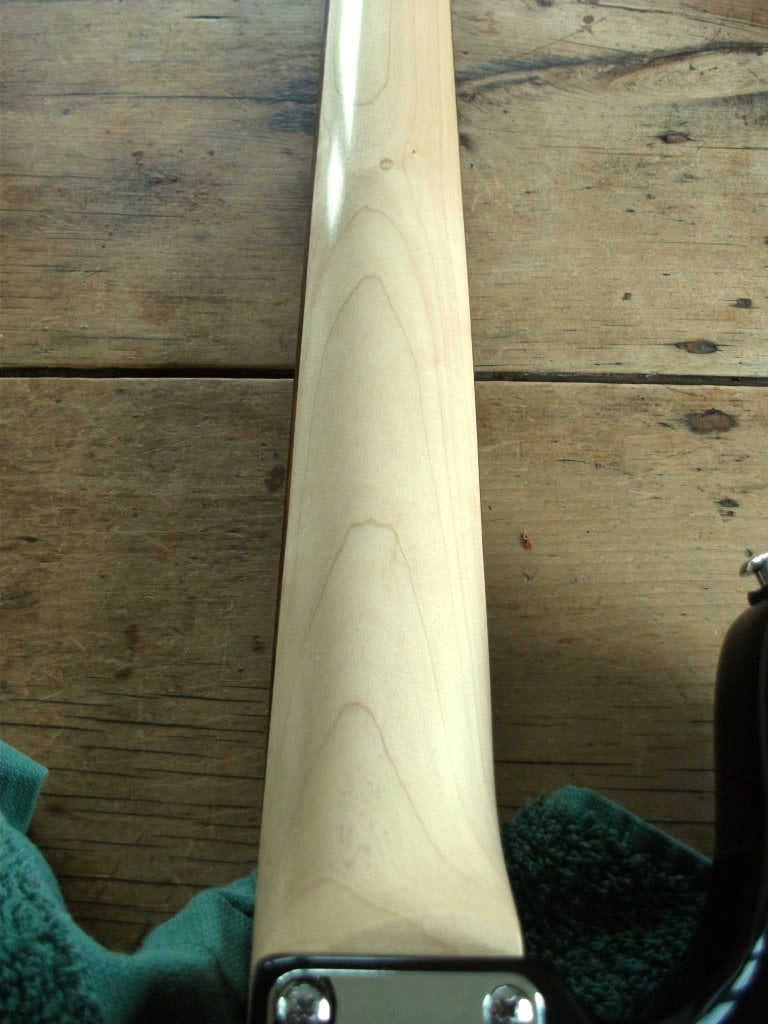
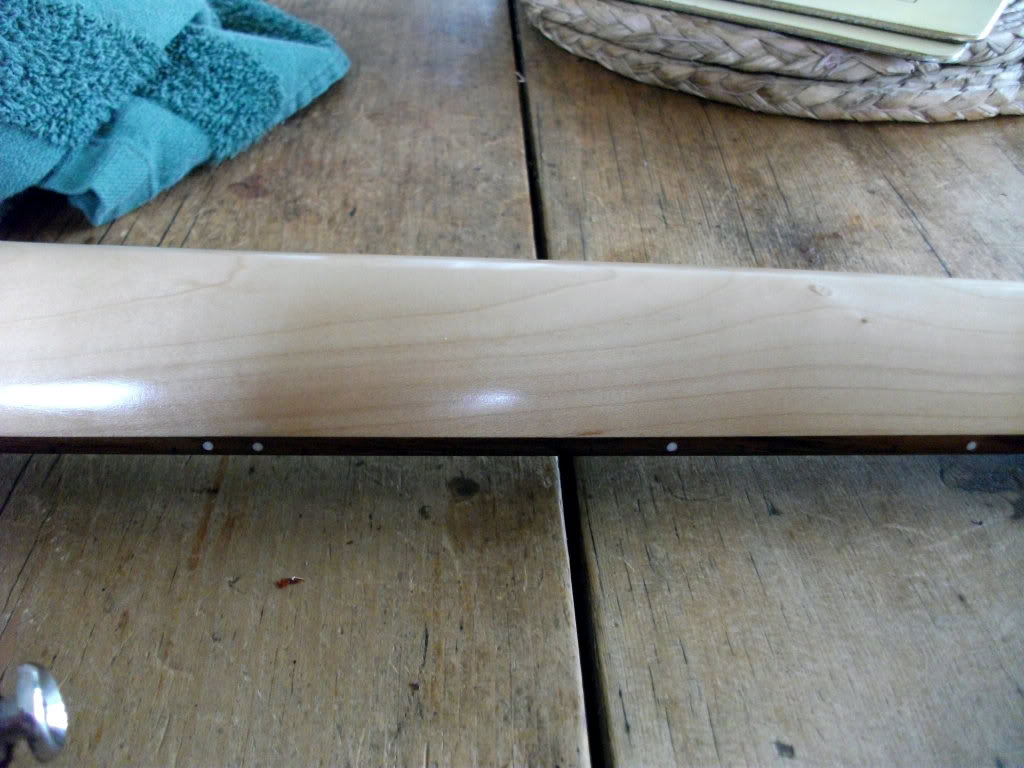
This is satin, not gloss finish at the moment - still super smooth though.
Linseed oil high gloss finish on a guitar neck.

I'm going for a high gloss finish on my project bass neck, so it will probably have another 15 coats or so.
One advantage of using linseed oil is that it is non-messy.
Spill some on your fretboard?
Wipe it off - no problem. It also allows for a nice smooth finish over the fretboard/neck joint. If you're fixing up a project neck be sure to address any sharp tangs before starting to oil.
The linseed oil finish is hard and durable. I use linseed oil to treat silk fly fishing lines, and they get much more abuse than the finish on your average bass or guitar.
My take on linseed oil as a wood finish - it's particularly good on a neck and gives a nice tactile finish. You have the choice of satin or high gloss depending on how many coats you apply.
I use boiled linseed oil - it's inexpensive, readily available and quality should not vary too much, no matter where you buy it.
I've been using this tin of oil for about two years now. I suppose it'll go off eventually - if I live that long....
Linseed oil takes a long time to cure, unlike Tru-oil or poly varnish. It is applied in very thin coats - actually I find the best way to apply it is to rub it in and wipe it off so that only a thin residue remains. The residue cures by oxidising in the presence of air. This takes about 24 hours. Then give it a buff and repeat the process.
Important - you must make sure the oil is dry before you recoat. Coating over oil that isn't dry will stop the air getting to the previous coat - it can stay tacky for months if you don't allow each coat to cure completely.
This is my current project neck after about 15 coats.
This is satin, not gloss finish at the moment - still super smooth though.
Linseed oil high gloss finish on a guitar neck.
I'm going for a high gloss finish on my project bass neck, so it will probably have another 15 coats or so.
One advantage of using linseed oil is that it is non-messy.
Spill some on your fretboard?
Wipe it off - no problem. It also allows for a nice smooth finish over the fretboard/neck joint. If you're fixing up a project neck be sure to address any sharp tangs before starting to oil.
The linseed oil finish is hard and durable. I use linseed oil to treat silk fly fishing lines, and they get much more abuse than the finish on your average bass or guitar.

 .
.
 ).
).