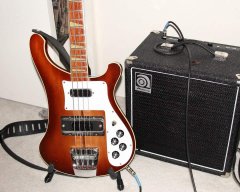
I am a truly mental- obsessed old guy, with studying the work of bass players and their work. I read a lot. And, I LISTEN, carefully to the nuances in tone. It's also part of my other vocation, I'm a Luthier.
I'm playing since 1967, and doing builds and repairs not long after that. We tap tone bass violin tops, to listen for certain things we want, or don't want in graduating areas. It's not science in the sense that we use our ears, and our knowledge of what things sound like, and how to get those results. There are many variables. I've worked on literally, thousands of Fender Jazz basses, from when there were no 're-issues' just stack knobs, and then, of course, the three knob ones. I've heard them all- right up to the elites, player series, professional series, custom shops, and all the other people making their versions of Jazz Basses, too. I own two Sire V7 five string Jazz Basses. I've worked on everything from Squier, Fender American, MIM, MIJ, CIJ, Korea, and even Indonesia and China. I own several Jazz basses- one a Fender Japan, and one a Fender Japan with an Allparts lefty neck, stack knobs and all vintage parts. I can say this conclusively.. even with some 'masking' of the bass in the track, by EQ, and compression- it's not that difficult to hear when someone is playing a Jazz Bass on both pickups full on.
The question you raise about precisely why Joe used both pickups full on, is quite valid. I was asked many times by recording engineers to 'put everything full up.' Noise was always an issue with solo'ed pickups. The solution was really simple, I'd rotate slightly in my playing position, and like a car radio under a bridge, the RF was nearly eliminated. All you need to do, is get a Fender Jazz Bass strung with flats, whip out a pick, and play along with the tracks yourself- switch back and forth from both, to neck only. You'll hear it right away.



 ...)
...)