Go fretless! Though its good to keep a fretted around, currently the only bass I own is a fretless, I've been playing fretless for just under a year and I'm loving it. If you wanna get that Squier VM, go for it cause from what I've seen and heard its a really good instrument. I have major GAS for that LTD B series one too! Mine is an Ibby SR300 which I can also recommend.

Enjoy the benefits of a premium membership!
Upgrade Account
-
TalkBass has been independent since 1998. Add your voice.
Create a free account to reply to discussions, view embedded media, and browse with fewer display ads.
Join free Log in
Want zero display ads or expanded classifieds tools? Compare plans.
You are using an out of date browser. It may not display this or other websites correctly.
You should upgrade or use an alternative browser.
You should upgrade or use an alternative browser.
Looking to go fretless...advice?
- Thread starter merkelbach
- Start date
More options
Who Replied?
Ah. That's kinda odd.
Really easy to get used to, though. I always play unlined fretless basses (if I'm playing a fretless that is). As long as I have the dots, I don't need lines, and then the audience knows I'm playing a fretless.

I'm looking for a fretless 5 and have looked at the Schecter Stiletto and Ibanez SR 505F. Any opinions re. these 2?
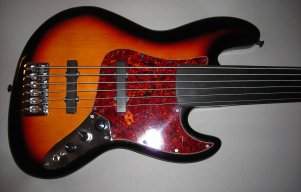
I'm also getting a fretless soon. A few people have told me that when playing, you have to play directly where the fret is supposed to be, not on the dot marker, in order to be in tune. (Mine is lined, so its no issue there)
On a modern unlined fretless the side dots are where those frets are supposed to be. The reason some fretless basses aren't (especially lined ones) is that some companies churn out newbie fretless lined basses simply by taking their usual fretted entry basses and just leaving the frets off. This gives you side dots BETWEEN where the frets go which if you are used to proper side dots on the fret positions can drive you nuts.
Also some older basses before people decided where was the best place for side dots also can have dots in wrong places and usually you have to deal with that by buying a strip of LED markers or something like that.
Anyway, as others have said, you have to train yourself to use your EARS. Generally speaking on a fretted bass you finger it right behind the fret. On a fretless, typically you finger it right on top of the fret position. But there's no set rule because strings aren't perfect you'll find that the true position will vary from fret to fret...sometimes a surprising amount. This is why a couple of basses that I made fretless with new fingerboards I actually positioned the dots using a tuner and the strings I use on that bass rather than the more usual "theoretical" calculated positions. It works great but if I change type or brand of strings, it's likely it will be off again. Dots are just a guide. Your practive and memory of where each note is plus your ears are the things that determine where you play.
And Fretless is fun and not as hard to do as all the talk might lead you to believe. I've loaned my lined Carvin to bass players to "try" who have never played fretless before in their lives and they brought down the house with it!

On a modern unlined fretless the side dots are where those frets are supposed to be. The reason some fretless basses aren't (especially lined ones) is that some companies churn out newbie fretless lined basses simply by taking their usual fretted entry basses and just leaving the frets off. This gives you side dots BETWEEN where the frets go which if you are used to proper side dots on the fret positions can drive you nuts.
Also some older basses before people decided where was the best place for side dots also can have dots in wrong places and usually you have to deal with that by buying a strip of LED markers or something like that.
Anyway, as others have said, you have to train yourself to use your EARS. Generally speaking on a fretted bass you finger it right behind the fret. On a fretless, typically you finger it right on top of the fret position. But there's no set rule because strings aren't perfect you'll find that the true position will vary from fret to fret...sometimes a surprising amount. This is why a couple of basses that I made fretless with new fingerboards I actually positioned the dots using a tuner and the strings I use on that bass rather than the more usual "theoretical" calculated positions. It works great but if I change type or brand of strings, it's likely it will be off again. Dots are just a guide. Your practive and memory of where each note is plus your ears are the things that determine where you play.
And Fretless is fun and not as hard to do as all the talk might lead you to believe. I've loaned my lined Carvin to bass players to "try" who have never played fretless before in their lives and they brought down the house with it!
The only reason I'm buying a lined is because I don't know how to play unlined (can't even play fretless, but I want to learn how to) and because the fretless I'm getting is a 200 dollar Fernandes J, and I don't want to spend a lot of money.
As for the OP, I hear good things about the VM series.

My VM was very good. I cut a nice bone nut and put on threaded saddles, but the neck and electronics were solid. Only sold it because I scored a nice old Sterling fretless which was what I wanted all along.
P.S. the Sterling is much better in every way.
P.S. the Sterling is much better in every way.


Me too. Just bought a made in USA peavey lined FL from guitar center used for 100$. Should be here next week...let you know how it gioes!
I've had a good experience with the VM fretless jazz I bought on CL for $175.
It was my first fretless and right away it was easy to play, much easier than I expected. I don't look down much when I play anyway.
Con #1: take off the electronics plate and check to see if there is a ground wire to the jack. If there isn't I suggest you solder one or you will have issues that will immediately disappear with a ground wire in place.
Con #2: Unlike others in the VM series the body is thin Squier Affinity sized basswood. My fretted VM jazz and my VM Precision both have thick full sized maple bodies.
But it plays great. I put D'Addario nylon flats on it. Sustain and mwah are awesome. It talks nicely.
It was my first fretless and right away it was easy to play, much easier than I expected. I don't look down much when I play anyway.
Con #1: take off the electronics plate and check to see if there is a ground wire to the jack. If there isn't I suggest you solder one or you will have issues that will immediately disappear with a ground wire in place.
Con #2: Unlike others in the VM series the body is thin Squier Affinity sized basswood. My fretted VM jazz and my VM Precision both have thick full sized maple bodies.
But it plays great. I put D'Addario nylon flats on it. Sustain and mwah are awesome. It talks nicely.

I've posted this on quite a few threads. I think it's important, particularly for newer players who value their equipment.
Gouges to neck from round wound strings. This is a Steinberger L2 with phenolic neck, but I have seen this happen to wood as well.
I have played fretless exclusively since 1972. Regardless of "opinions" here and elsewhere - if you use rounds, this will happen.
Varnish helps by the way.


Gouges to neck from round wound strings. This is a Steinberger L2 with phenolic neck, but I have seen this happen to wood as well.
I have played fretless exclusively since 1972. Regardless of "opinions" here and elsewhere - if you use rounds, this will happen.
Varnish helps by the way.
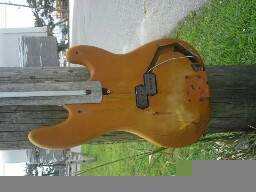
Yes, the gouges are part of life when you like to play fretless with round wounds. Jaco said to practice on your fretted bass and use your fretless for gigs to save the fingerboard wear. He also coated his fingerboard with epoxy resin saying it's easier to re-do the epoxy than plane the board.


