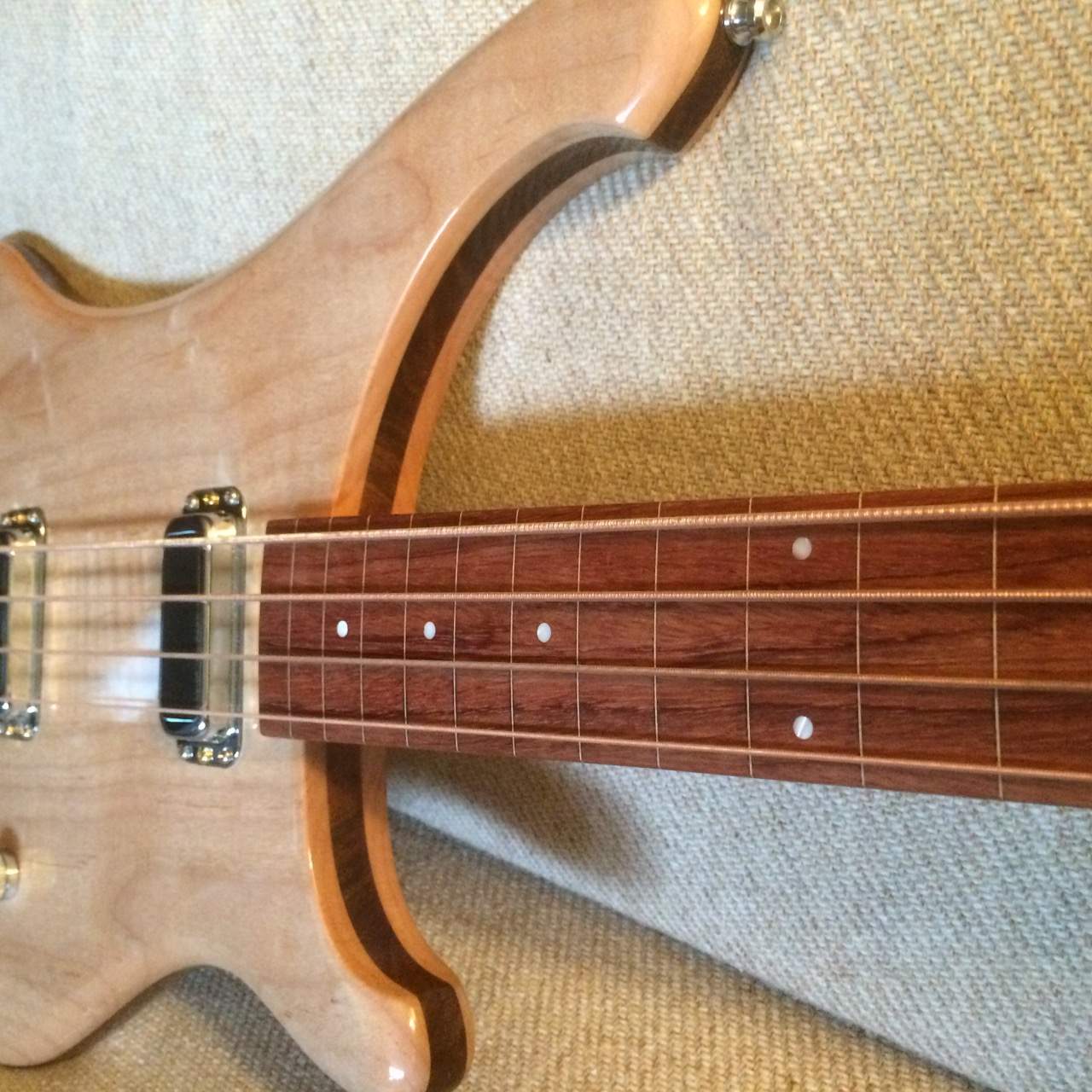
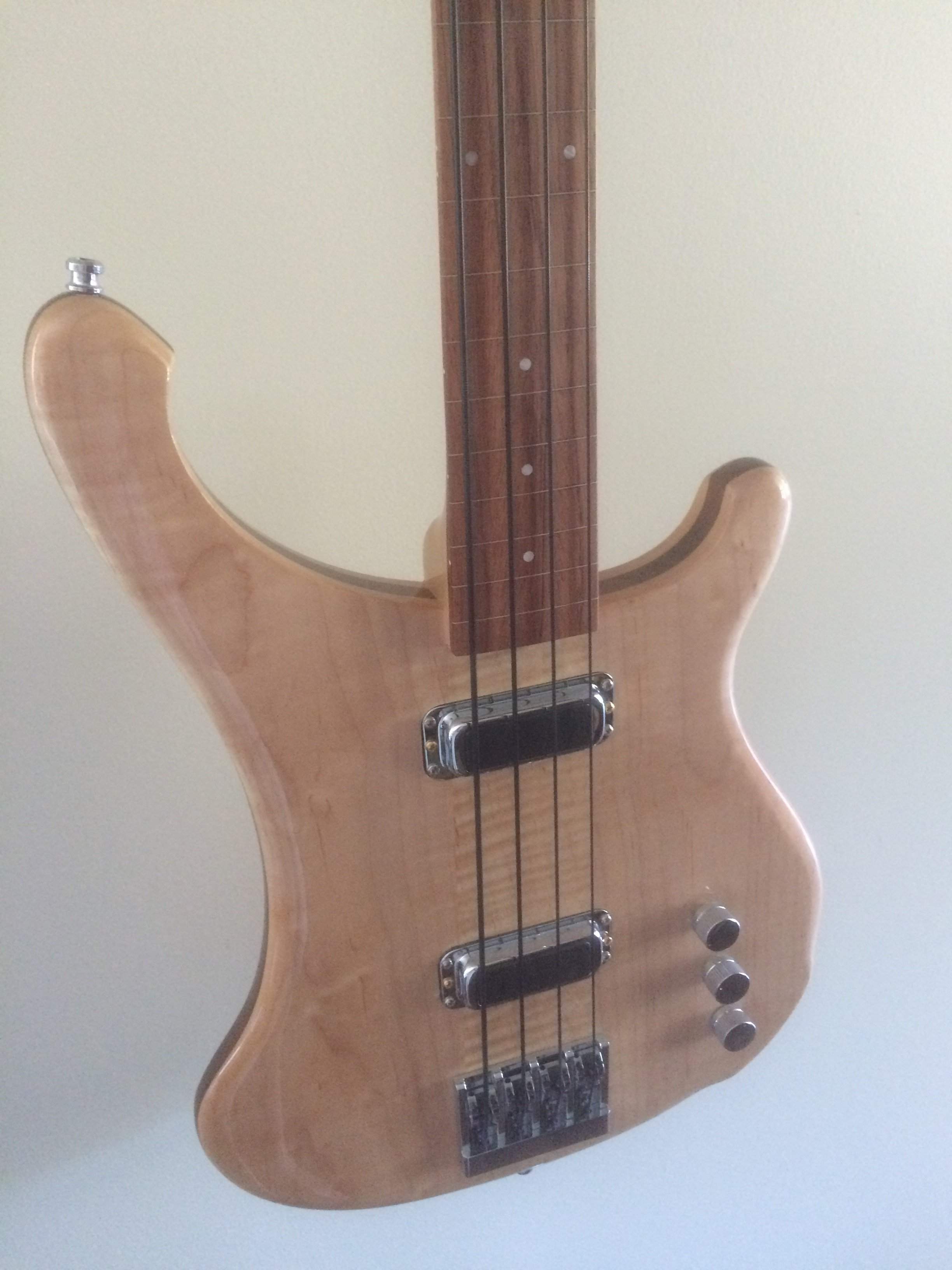
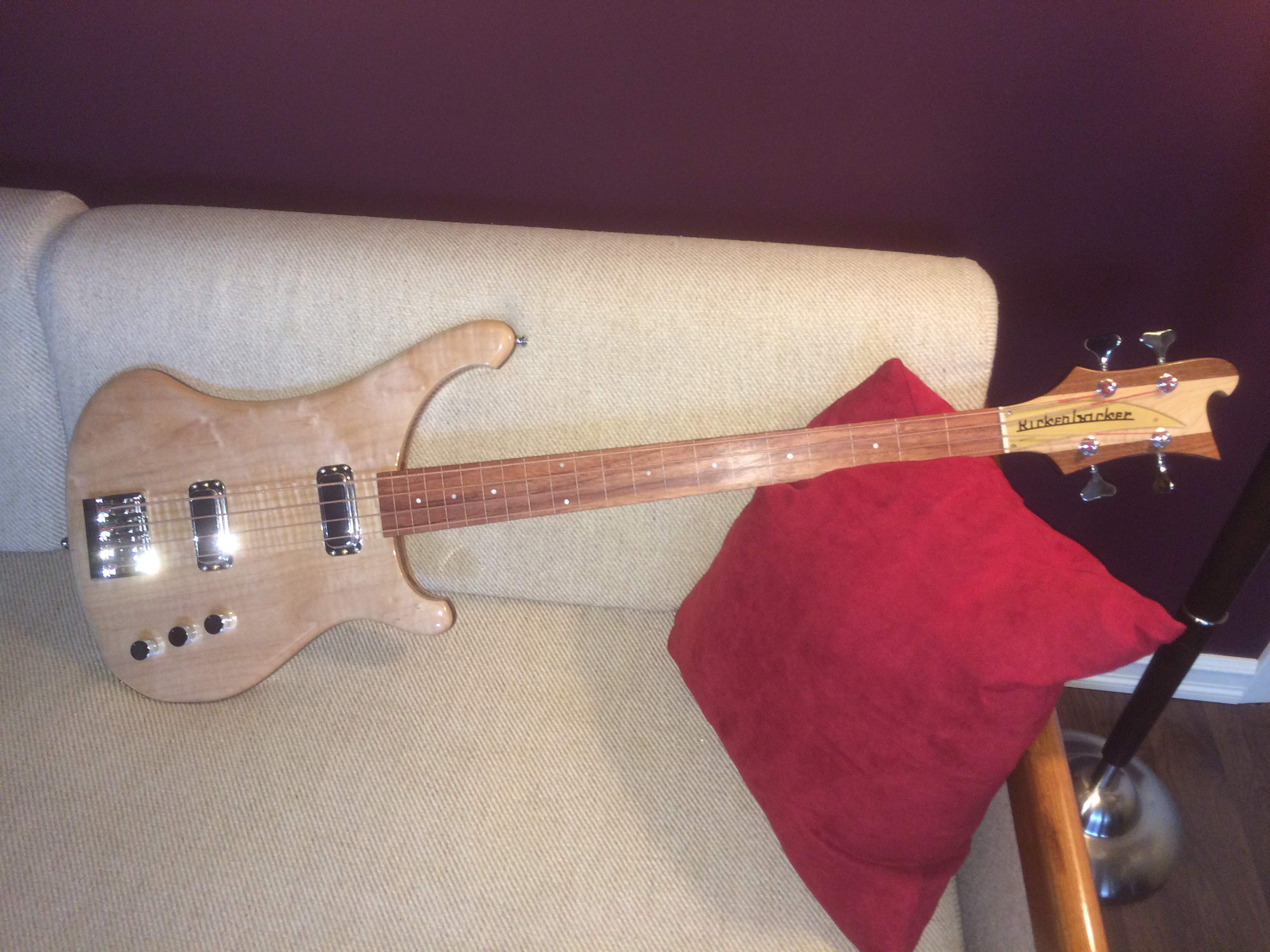
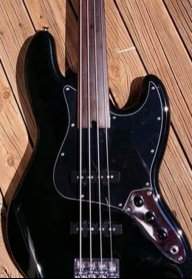
The only issue with rosewood is that it is a bit softer than ebony and somewhat more prone to wear if you use round wounds. Quite honestly, the make of the bass is a good bit less important than getting the conversion done correctly, getting a good setup(including nut adjustment, if necessary), and figuring out fingerboard finish or lack thereof. I had a purple Fernandez 5 string that was a killer.
The finish on the board is a debated topic with a variety of different advocates.
Epoxy is quite different from bare wood, wears well, but is a good bit brighter than bare wood. Polyurethane, as posted earlier, is much closer to bare wood in warmth, but wears like nails. Polyurethane is also a bit easier for a DIY job, even using Minwax brush-on from Home Depot. Just make sure to sand with 400 grit paper between coats, eliminating ALL high spots with a sanding block; and if you finish off with fine steel wool, you get a matte finish that almost looks like bare wood. Or you might want to have someone like Pat Wilkins do it. He is excellent. Or, the tech who does your conversion?
Or, if you are just experimenting, the bare wood is fine for a while too, though you might have to do some leveling if using round wounds after a while. I have rutted an ebony board beyond playability; but, that was after a prolonged (~ 18 mos.) open mic blues gig stint.
And, after you get the conversion done, just have fun with it. We all debate the different approaches on here; but, quite honestly, almost any fretless I've ever picked up with a decent setup was a blast to play. Roundwounds or flatwounds or whatever. Also, be aware to target stops right on the lines. You can't target between the lines, and that is difficult for some players. Some cats just have to have a blank board because of the visual reference issue and do not choose to adjust. If you can learn to target the lines, then that technique, will also, IMO, improve your fretted technique.
Probably TMI. Good luck with the conversion and have fun with it!