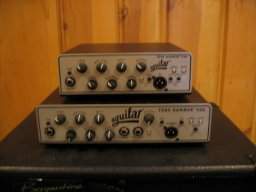
It's helpful to remember these facts about the LMII:
1. The Master Volume control does NOT affect the DI output level - EVER. Changing the DI's jumper from "pre" to "post" EQ makes NO difference.
2. The Gain control ALWAYS affects the DI output level. Changing the DI's jumper from "pre" to "post" EQ, again, makes NO difference.
Whatever your sound man thought he heard in the FOH was not the result of changing the Master. As you suggested, he might have been hearing stage volume changes. IMO, it's always nice when your sound man can tell the difference.

IMHO, I seriously don't agree with Markbass' CS rep Riccardo's suggestion when he says,
"The DI outputs level is controlled by gain level...I suggest to start with the master volume to zero so you can set the DI level to the PA..." That is NOT the purpose of the Gain control! It is not a "dual function" level control; it's only a
side effect that the DI output level also gets affected by the setting of the gain control. The Gain control is soley to set the signal level so your amp will work optimally, and should be set as HitByABlimp explained it, and for the reasons he gave. The sound man should know how to control the DI level
at his mixing board, first by setting the channel's TRIM control for the board to be compatible with the LMII's DI output level, THEN using the channel's fader for actual mix level. Some sound men don't even know what (or where) the gain trim control is! Well, it's essentially for the same purpose as the Gain control is on the LMII: to achieve optimal gain structure!