• TalkBass has been independent since 1998. Add your voice.
    Create a free account to reply to discussions, view embedded media, and browse with fewer display ads.
    Join freeLog in
    Want zero display ads or expanded classifieds tools? Compare plans.

Metal Fingerboards

J Posega

Cat Dad and Dingwall Enthusiast
Inactive
Suspended
Jul 16, 2005
11,796
17,172
38
Portland, OR
Now that we have two talented members epoxying over frets, I’m curious about another fretless fingerboard option—metal.

I don’t care about how much it might weigh, neck dive, blah blah blah. It just interests me to try out a metal fingerboard.

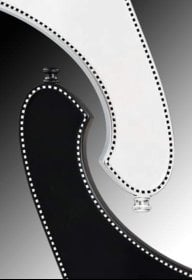
I’ve seen some metal boards from the likes of Vigier
upload_2020-8-11_16-45-22.jpeg


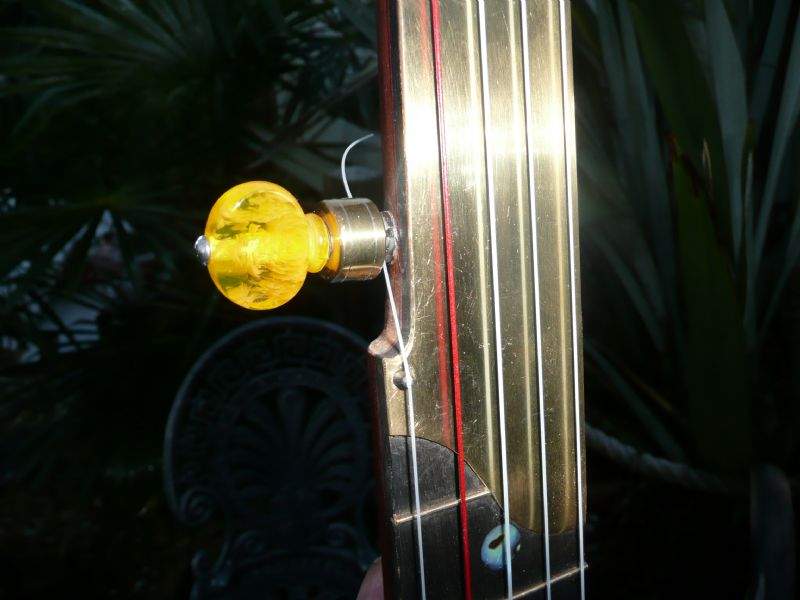
This brass boarded banjo
upload_2020-8-11_16-46-23.jpeg


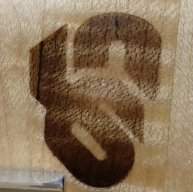
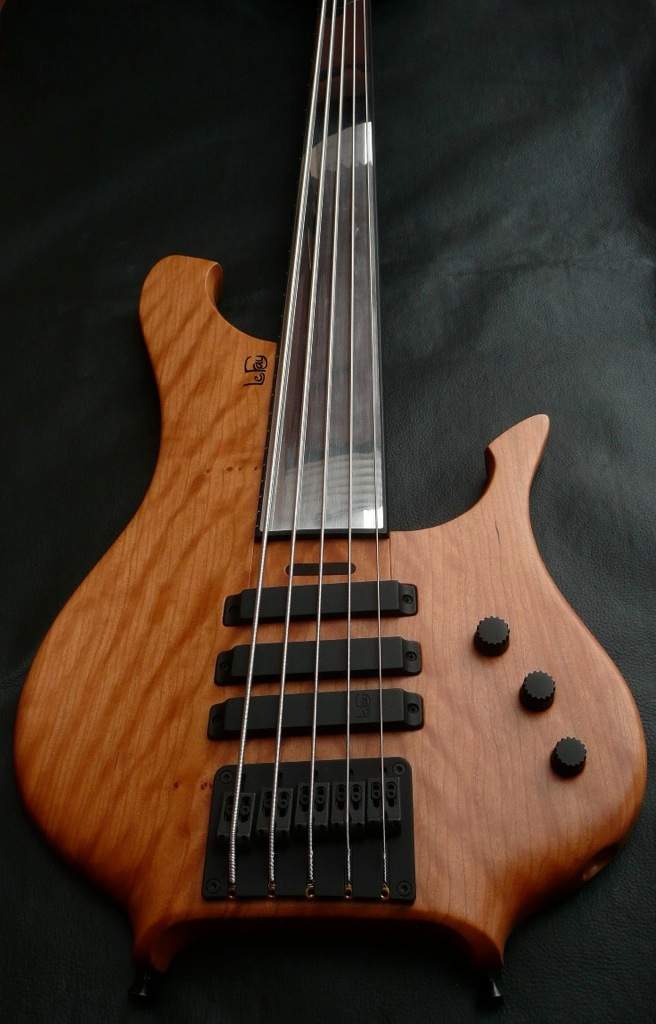
And this Lefay with a stainless steel board
upload_2020-8-11_16-47-52.jpeg


So now my pea brain is churning a little, pondering the easiest way to add a metal layer to a fretless board.

That banjo has a thin sheet of brass laminated on top. This would be easiest to apply to a fingerboard with zero radius.

Vigier doesn’t reveal the composition of their fingerboard but it’s some sort of alloy.

The Lefay also seems to be a laminate on top of the fretboard, stainless steel with a composite ‘binding’ presumably because the steel might be a bit sharp.

What other ways could a metal fingerboard be created? Why? Well, why not? It’s 2020 and the world has gone to poop. Let’s throw tradition to the wind and make something unique.

I’m honestly thinking of buying a cheapo fretless and slapping some aluminum duct tape on the board just to see what happens.
 
It seems like you’d want a metal that doesn’t expand and contract enough to actually bend the neck. That was a primary problem with the old Travis basses with the aluminum necks, they’d literally change relief as your hand warmed them up and go out of tune. I don’t know if a fretless would be more or less forgiving of movement, probably less.
 
  • Like
Reactions: RSBBass
I'd probably make a fretless neck then bend a thin sheet of metal, maybe brass, into a trough that fits the neck wood tightly and tack it on at the 1st 3rd 5th 7th 9th, 12th, 15th and 17th fret
I thought something similar, fixing a thin sheet with countersunk screws at the traditional marker locations. I also like the idea of the metal being inlaid into the board with a narrow binding of wood around the edge like Lefay does, but that’s way beyond my skills.
 
The Novatone replaceable fingerboard system had some similarities...
There, I believe the difference in expansion and contraction between the metal and wood was an issue.


EDIT- apparently, the issue was in the system weakening the neck-


"The changeable fretboard. There are other fretboard mods that are almost forgotten. One is the Novatone Switchboard, developed by Tom Stone. This appeared in the early ’80s, but never got very popular, although it could have great appeal to those needing a fretted and fretless bass in one instrument.

The Novatone was a changeable fretboard that was attached by magnets. Novatone wasn’t making their own line of instruments, so you had to deliver your bass to them and have its original fretboard removed. This was replaced by a metal base plate to which you’d affix different fretboards. Novatone offered a variety of fretboards, including microtonal and a few other temperaments.

Unfortunately, the Novatone system required removing a lot of neck wood to make room for the metal plate and new fretboard, so the modified necks got unstable, especially when the neck ended up having open truss rod channels. The truss then no longer had a solid counterpart to hold up to. Many also complained about the magnets not being strong enough to hold the fretboard in place. Novatone soon went out of business, leaving many with a broken bass. Still, the idea of having one instrument that’s easily converted from fretted to fretless is intriguing."

https://www.premierguitar.com/articles
/Further_Adventures_in_Fretboard_Design


Further fingerboard fun-
Tuning the Fretboard
 
Last edited:
I thought something similar, fixing a thin sheet with countersunk screws at the traditional marker locations. I also like the idea of the metal being inlaid into the board with a narrow binding of wood around the edge like Lefay does, but that’s way beyond my skills.
I'd be worried about delamination after a few seasonal expansion/ contraction cycles with just epoxy holding it on. Maybe machining something into the back of the metal board for epoxy to get into and grab on to could keep that from happening.
 
  • Like
Reactions: TheEmptyCell
I'd be worried about delamination after a few seasonal expansion/ contraction cycles with just epoxy holding it on. Maybe machining something into the back of the metal board for epoxy to get into and grab on to could keep that from happening.
I’d think a really textured back and roughly sanded fretboard would work well in that regard. It’s also why I think that a few screws might help
 
  • Like
Reactions: Will_White
I really like this concept and want to see it explored farther, the real purpose of this thread is how to fashion a metal fretboard without heavy machining equipment and limited resources. I'm really interested in using glass too!

Steps:
1. Best metal to use that can easily be obtained
2. How to shape it
3. How to adhere it to the neck

Outside of the above examples, I know Emmett offers a half metal fretless N/S Stick
Q7FDpIx7NcDOq_t1_pa9QOl2420NKgUi7pIxZ4p4Kp43nKOIEKlEKyeg3_VFOVxdS-zeQKSW7RVgP6vudkowoFrSAvM39JSk.jpg

Stick player Steve Adelson owns a half fretless Stick
hqdefault.jpg

And our boy John McVie owned a fretless Alembic Series 1 with a metal fretboard (deep breath)
_YPJ75C23Va2PKSiTX0g6umNmEwm5FXqECktKFBvUIEyXFWieA97FfYfNALCqrY6cvd2XSOcYMBfYy0w-6pnsGUTCCi2MA.jpg


*Note: Ive asked Steve how the half fretless stick plays, he told me its super hard to play in tune and Emmett hates having to make them lol
 
  • Like
Reactions: TheEmptyCell
A local guitarist I've known since school used to have a fretless tenor guitar with a metal fretboard. I'll have to track him down and see if he still has it, this is a really cool idea for a bass. I remember his guitar sounding kind of like it was being played with a slide but it had an angry edge, not as "sweet" if that makes sense.
 
Aight I've fashioned out how I'd do it

1.Get ahold of a 1/4" sheet of aluminum long enough
2. Cut it down with a jigsaw
3. Recess holes @3,7,12, and 24th frets; these are for mounting screws and having enough room for simple inlay dots to cover them up (If I had to take off the fretboard I could just drill em out)
4. Set up bass for a dead flat radius

You wouldn't need a truss rod because it would be totally useless, the fingerboard would be adequate reinforcement anyways... Any kind of flex in the neck could separate the fingerboard from the neck
 
That sounds good but having no truss rod would worry me. There's a difference between stiffness and stability. A neck with a big hunk of metal on top would probably be the perfect example of one without the other (it'll be stiff but not stable). Aluminum experiences more change in dimensions due to temperature than wood does, but wood experiences more change in dimensions due to humidity than aluminum does. So by laminating the two, you've got a neck that's sensitive to pretty much any change in either environmental parameter, one component will move with with changes in one, and the other component with changes in the other. I don't really know if there's a good way to solve that but hopefully tracking down known examples from the past would help.

I could see one approach being to have the thinnest possible metal layer so it's less "significant" in the structure. Or screwing but not gluing so there's no glue joint to stress and pop off (the screws could allow for minute movement between the materials). But for any plan, I think you'd really want a truss rod so you can keep the neck in good playing shape when it does move.

I guess the good news is it's real easy to try these ideas out...
 
About 18 years ago, I helped build a metal fingerboard acoustic guitar for John Mclaughlin. It started out as as a Godin 12-string Acoustic, and we converted it into an 11-string strange thing. A flat 1/4" aluminum fingerboard, chrome plated. If I remember correctly, there were six normal guitar strings down the center, fretless, with scribed lines in the aluminum. Then there were three fretless drone strings off to the treble side, with no scribed lines under them. And two lower strings on the bass side with short frets under them.

I made up the fingerboard and attached it to the neck. Plenty of fun problems with scribing the lines and installing the frets in the aluminum. We were very concerned about the differential expansion due to temperature. I fastened the fingerboard down with silicone rubber caulking glue, and two strong machine screws up at the nut end. At the heel end, I put in two more screws, but in elongated slots. We decided to allow for some movement as the wood neck and the aluminum expanded at different rates.

We finished the instrument, and I understand that it played great. I never heard if John used it much or what ever happened to it.

Technical tip: use 1/4" Aluminum Cast Tooling Plate, rather than regular 6061 rolled plate stock. The Tooling Plate is more dimensionally stable, and it's less expensive too.
 
Last edited:
I've personally had a lot of problems with thin fretless fingerboards in the past so I'd avoid that at all costs. As for the metal itself, I don't think temperature would pay a huge part in flex unless the instrument wasnt stored in a temperature controled environment. I also don't think a truss rod would make a lick of difference but it could be built in for piece of mind... The issue is to reduce flex as much as possible, so the use of a flop book matched laminate neck or graphite would be essential. All in all a heavy duty thick af neck. These are just my opinions.
 
  • Like
Reactions: TheEmptyCell
If you could make the board stiff enough not to flex (perhaps with a spine recessed into the neck) you could just attach it at the nut end and leave it floating over the rest of the neck, or perhaps some sort of non-structural retainer at the heel end. That way the relative expansion and contraction of the wood and metal wouldn’t have any impact.

you would probably need to reinforce the wood part to compensate for the stiffness normally provided by the fingerboard.
 
About 18 years ago, I helped build a metal fingerboard acoustic guitar for John Mclaughlin. It started out as as a Godin 12-string Acoustic, and we converted it into an 11-string strange thing. A flat 1/4" aluminum fingerboard, chrome plated. If I remember correctly, there were six normal guitar strings down the center, fretless, with scribed lines in the aluminum. Then there were three fretless drone strings off to the treble side, with no scribed lines under them. And two lower strings on the bass side with short frets under them.

I made up the fingerboard and attached it to the neck. Plenty of fun problems with scribing the lines and installing the frets in the aluminum. We were very concerned about the differential expansion due to temperature. I fastened the fingerboard down with silicone rubber caulking glue, and two strong machine screws up at the nut end. At the heel end, I put in two more screws, but in elongated slots. We decided to allow for some movement as the wood neck and the aluminum expanded at different rates.

We finished the instrument, and I understand that it played great. I never heard if John used it much or what ever happened to it.

Technical tip: use 1/4" Aluminum Cast Tooling Plate, rather than regular 6061 rolled plate stock. The Tooling Plate is more dimensionally stable, and it's less expensive too.
Thank you for your insight Bruce! I've been wanting to attempt this with phenolic as well