• TalkBass has been independent since 1998. Add your voice.
    Create a free account to reply to discussions, view embedded media, and browse with fewer display ads.
    Join freeLog in
    Want zero display ads or expanded classifieds tools? Compare plans.

moving the strap button on an Epiphone Jack Casady bass?

I used to have a DiPinto Belvedere, which is similar, and I hated the long reach to first position. I made a strap button extender with a screw going through a dowel about 1.75" long, which was painted black. I know that doesn't seem like a recipe for stability, but it was really solid, and it made a worthwhile difference.
 
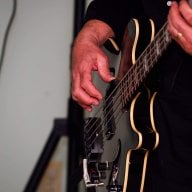
Many Jack Casady bass players purchase 3 inch wide straps with a grippy contact surface to make playing them stable. If you watch Jack, himself, he uses a 4 inch wide strap, and hold the neck at 10 O'clock. I know that didn't answer the question about moving the strap button, but I thought this might be related to your problem.
Holding the bass on the diagonal off of the right hip is crucial to the ergonomics of these basses, in my (and apparently Jack's) opinion. :)
JackCasadyStarfire2.jpg

JackCasady.jpg
 
Thanks:)
which of these tuners are the right ones?
Ultralite Bass Machines > Store > Hipshot Products.

It's been so long that I can't remember. I'm pretty sure it's the 1/2 inch version, and some Google searching seems to confirm.

Hipshot ultralites for jack casady bass?
Hipshot Ultralite tuners - Page 2
Hipshot ultralites for jack casady bass?

You can save few bucks by going with the licensed versions. They aren't easily reversible, so you'd need to order 2 bass and 2 treble side to save yourself a headache. Another thing I had to do was the fill the old tuner holes with toothpicks and wood glue and dab some black paint on them (or was it Sharpie?).
 
I am about to get one of these jewels.
I have played the bass in a studio situation, but I'd like to use it live as well.

Is it possible to move the neck strap button in order to prevent the neck dive?

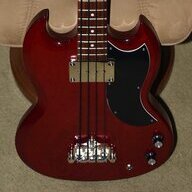
Yes, you can move the strap pin to the tip of the top horn. Moving the pin up to the horn places it about 2" closer to the headstock, which will make a noticeable difference. It also eliminates the Casady's annoying tendency to "lean" outward.

To do it right, you'll need to reinforce the horn from the inside with a block of wood. There was a clever detailed how-to thread on the old Dudepit forum by a member who did the mod to his Casady. Worked great, cost virtually nothing in materials.
 
Yes, you can move the strap pin to the tip of the top horn. Moving the pin up to the horn places it about 2" closer to the headstock, which will make a noticeable difference. It also eliminates the Casady's annoying tendency to "lean" outward.

To do it right, you'll need to reinforce the horn from the inside with a block of wood. There was a clever detailed how-to thread on the old Dudepit forum by a member who did the mod to his Casady. Worked great, cost virtually nothing in materials.
I was going to say that ought to be possible, but getting the reinforcement wood into the right shape and into position might be tricky. I think pre-drilling the pilot hole in the block would help make it obvious when it's in the right spot. Other than that, patience and some metal coat hangers ought to do it.
 
I was going to say that ought to be possible, but getting the reinforcement wood into the right shape and into position might be tricky. I think pre-drilling the pilot hole in the block would help make it obvious when it's in the right spot. Other than that, patience and some metal coat hangers ought to do it.

It's not as tricky as it sounds. From memory, as laid out in the how-to thread, it basically goes something like this:

Materials: A few feet of baling wire and fishing line, glue, a block of wood (doesn't matter what type), a small wood screw.

Tools: Drill & bit, screw driver, band saw or jigsaw, or coping saw to shape the block.

> Use the bass horn itself, as a template to trace the shape for the reinforcement block.
> Cut out the wood block with a band saw, jigsaw, or scroll saw. The block only needs to be an inch or two in length, and a couple inches wide where it contacts the inside of the horn.
> Drill appropriate diameter hole in bass horn where you want the strap pin located.
> Drill same diameter hole all the way through the wood block (front to back), starting at front of block where it will meet the hole in the horn.
> Feed baling wire through hole in the bass horn, and pull it out through the pickup cavity, leaving a few inches or wire sticking out from the hole in the horn.
> Attach a few inches of fishing line to wood block by running it all the way through the hole in the block. Secure the fishing line at the rear of the block with a small wood screw.
> Attach the other end of the fishing line to the baling wire lead.
> Insert the wood block through the pickup cavity, and pull it forward into position with the baling wire. Glue can be applied to the block before pulling it into position, or through the hole in the horn, with a hypo needle.
> With the wood block in place (with glue applied), screw the strap pin onto the horn, and into the wood block. This will hold the block snuggly in place while the glue dries overnight. You can keep tension on the fishing line to keep the block in place while screwing the strap pin on.
> With glue dried, remove strap pin, cut off the fishing line, reinstall strap pin. Voila.
 
It's not as tricky as it sounds. From memory, as laid out in the how-to thread, it basically goes something like this:

Materials: A few feet of baling wire and fishing line, glue, a block of wood (doesn't matter what type), a small wood screw.

Tools: Drill & bit, screw driver, band saw or jigsaw, or coping saw to shape the block.

> Use the bass horn itself, as a template to trace the shape for the reinforcement block.
> Cut out the wood block with a band saw, jigsaw, or scroll saw. The block only needs to be an inch or two in length, and a couple inches wide where it contacts the inside of the horn.
> Drill appropriate diameter hole in bass horn where you want the strap pin located.
> Drill same diameter hole all the way through the wood block (front to back), starting at front of block where it will meet the hole in the horn.
> Feed baling wire through hole in the bass horn, and pull it out through the pickup cavity, leaving a few inches or wire sticking out from the hole in the horn.
> Attach a few inches of fishing line to wood block by running it all the way through the hole in the block. Secure the fishing line at the rear of the block with a small wood screw.
> Attach the other end of the fishing line to the baling wire lead.
> Insert the wood block through the pickup cavity, and pull it forward into position with the baling wire. Glue can be applied to the block before pulling it into position, or through the hole in the horn, with a hypo needle.
> With the wood block in place (with glue applied), screw the strap pin onto the horn, and into the wood block. This will hold the block snuggly in place while the glue dries overnight. You can keep tension on the fishing line to keep the block in place while screwing the strap pin on.
> With glue dried, remove strap pin, cut off the fishing line, reinstall strap pin. Voila.
The fishing line / bailing wire thing is great, should have thought of that myself. (Actually did something similar working on my Jacks, to get the wiring harness back in place after pulling out for resoldering.)
 
Holding the bass on the diagonal off of the right hip is crucial to the ergonomics of these basses, in my (and apparently Jack's) opinion. :)
JackCasadyStarfire2.jpg

JackCasady.jpg

I moved my playing to the right hip a few years ago, and it's a good position for me. I also stopped resting my arm across the top of the body, and just have my thumb anchored on either the corner of the neck, or on the neck pup, depending on the particular bass. The hand is in a different angle, and doesn't stress the wrist, it's more straight.
 
It's not as tricky as it sounds. From memory, as laid out in the how-to thread, it basically goes something like this:

Materials: A few feet of baling wire and fishing line, glue, a block of wood (doesn't matter what type), a small wood screw.

Tools: Drill & bit, screw driver, band saw or jigsaw, or coping saw to shape the block.

> Use the bass horn itself, as a template to trace the shape for the reinforcement block.
> Cut out the wood block with a band saw, jigsaw, or scroll saw. The block only needs to be an inch or two in length, and a couple inches wide where it contacts the inside of the horn.
> Drill appropriate diameter hole in bass horn where you want the strap pin located.
> Drill same diameter hole all the way through the wood block (front to back), starting at front of block where it will meet the hole in the horn.
> Feed baling wire through hole in the bass horn, and pull it out through the pickup cavity, leaving a few inches or wire sticking out from the hole in the horn.
> Attach a few inches of fishing line to wood block by running it all the way through the hole in the block. Secure the fishing line at the rear of the block with a small wood screw.
> Attach the other end of the fishing line to the baling wire lead.
> Insert the wood block through the pickup cavity, and pull it forward into position with the baling wire. Glue can be applied to the block before pulling it into position, or through the hole in the horn, with a hypo needle.
> With the wood block in place (with glue applied), screw the strap pin onto the horn, and into the wood block. This will hold the block snuggly in place while the glue dries overnight. You can keep tension on the fishing line to keep the block in place while screwing the strap pin on.
> With glue dried, remove strap pin, cut off the fishing line, reinstall strap pin. Voila.


Did this method cure your dive? I was under the impression that the button should be located somewhere near the 12th fret to balance the neck. Moving the button as you suggest brings it just slightly more 'up', compared to the stock location and nowhere near the 12th fret. If it worked, great, but it seems like a lot of effort to go through compared to replacing the tuners with ultra lights....
 
Did this method cure your dive? I was under the impression that the button should be located somewhere near the 12th fret to balance the neck. Moving the button as you suggest brings it just slightly more 'up', compared to the stock location and nowhere near the 12th fret. If it worked, great, but it seems like a lot of effort to go through compared to replacing the tuners with ultra lights....

First, I didn't do the mod to my Casady (s), it was more trouble than it was worth to me. But it can be done as outlined above, and it will help the dive problem while eliminating the outward lean issue, and decreasing the long reach issue.

While having the pin at the 12th fret is ideal for a lot of players, the pin location on the Casady is so inconvenient, that even moving the pin a couple inches in the right direction will make a noticeable difference. Is it going to hang like a Fender?....no never. Part of the problem with the Casady is not just neck dive, but also the extended reach to the first fret. Again, a couple inches makes a big difference.

Yes, the pin will move "up", but that's where virtually every other bass on earth has its pin located. Adjust strap length to taste.

Tuners; The stock tuners on the Casady are already lighter (read: "flimsy") than a typical Fender-style open gear tuner. You'd have to weigh a Casady tuner to know how much weight Ultralite tuners will actually save. Still, any weight savings will help with neck dive, even an ounce or two. The question for me is/was "how much" weight is actually saved for a ~ $100 investment, spent on a $500 bass. I'm a fan of Hipshot Ultralites and especially Gotoh Reso-lites, but I'd want the Casady's strap pin moved first ($0.00), then see if the Ultralites are still worth having for a little more help with balance.

Upgrading the Casady tuners would be nice, but that won't change the reach issue, nor the outward lean issue, which for me, are more important than neck dive. In my case, neither of my Casady's had much neck dive to begin with.

In the end, I liked the Casady bass, but not enough to pour time and money into it. If I absolutely loved it like many do, I'd have done the mod for sure. Cheers.