
Enjoy the benefits of a premium membership!
Upgrade Account
-
TalkBass has been independent since 1998. Add your voice.
Create a free account to reply to discussions, view embedded media, and browse with fewer display ads.
Join free Log in
Want zero display ads or expanded classifieds tools? Compare plans.
You are using an out of date browser. It may not display this or other websites correctly.
You should upgrade or use an alternative browser.
You should upgrade or use an alternative browser.
NBD - 38" Scale 6 string (Carl Thompson Content)
- Thread starter Zentner
- Start date
More options
Who Replied?
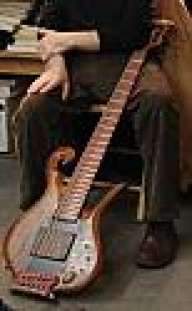
OK, WARNING, lots of pics.
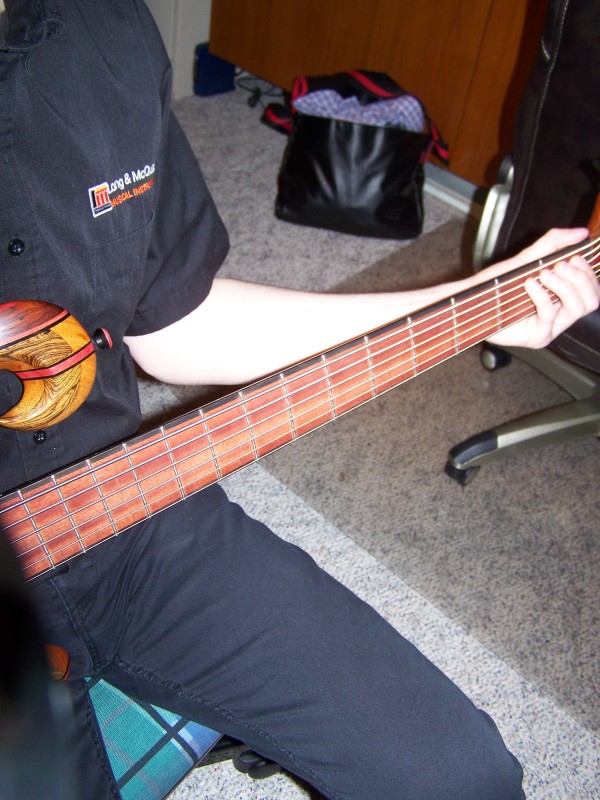
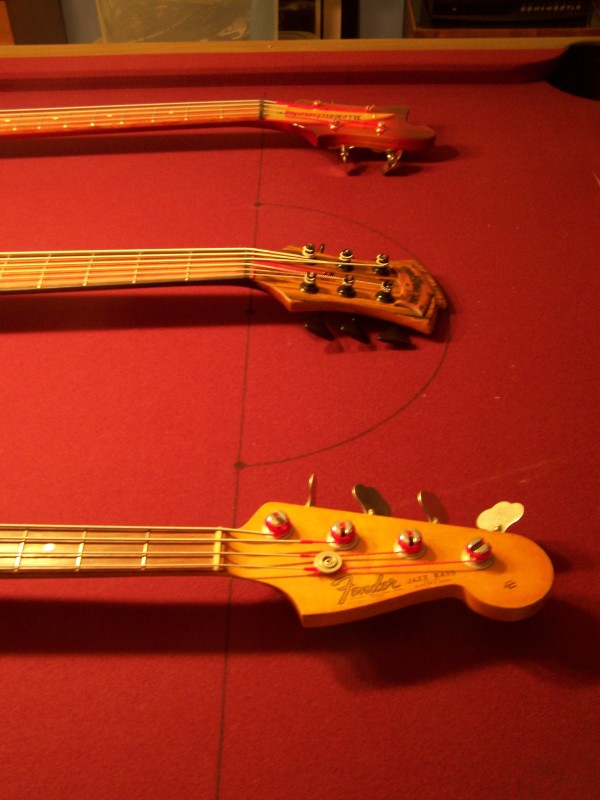
To answer a few questions... there are pictures of the reach to the first fret of a ric, a jazz bass, and the CT.
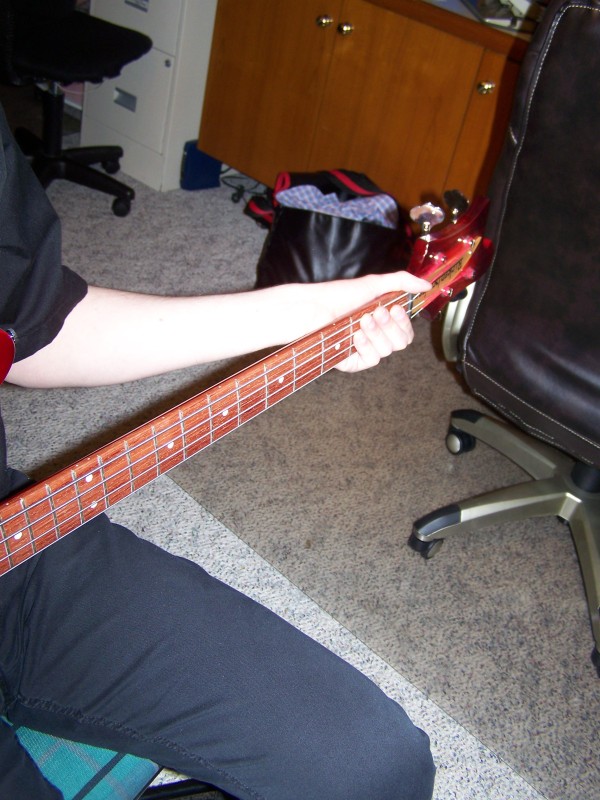
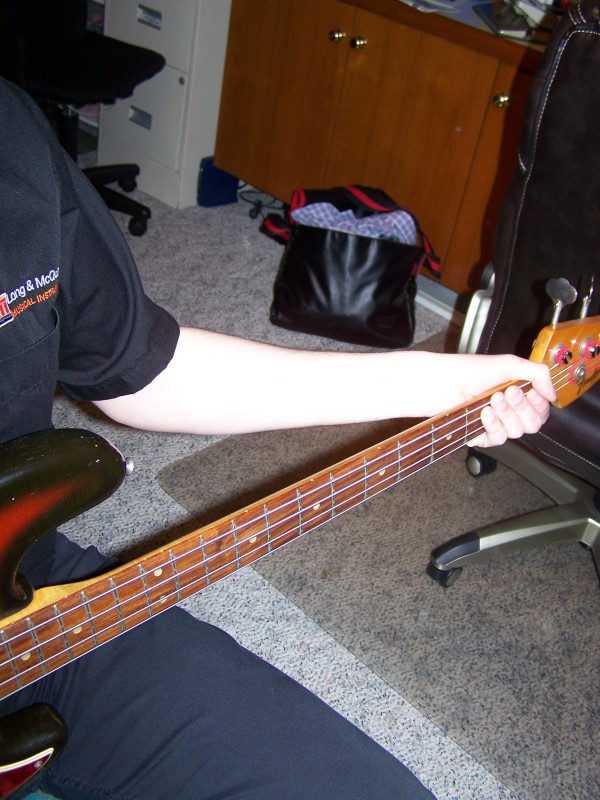
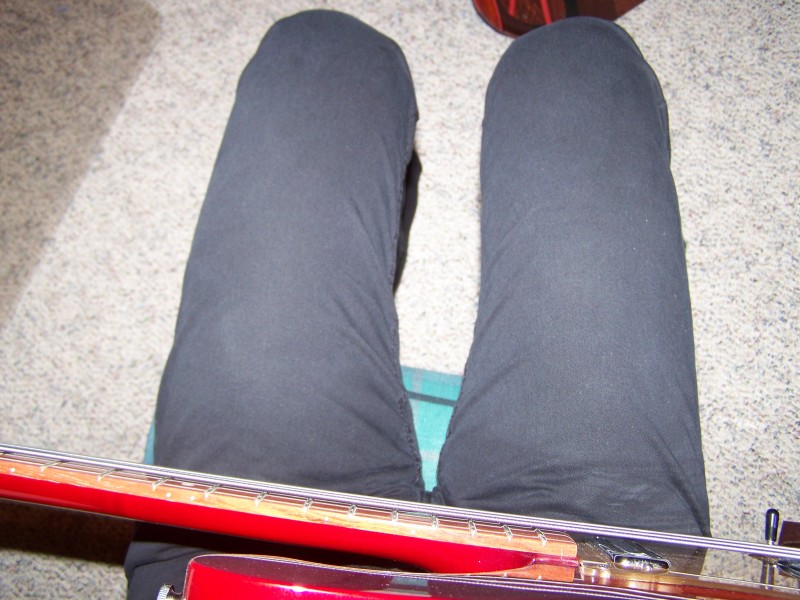
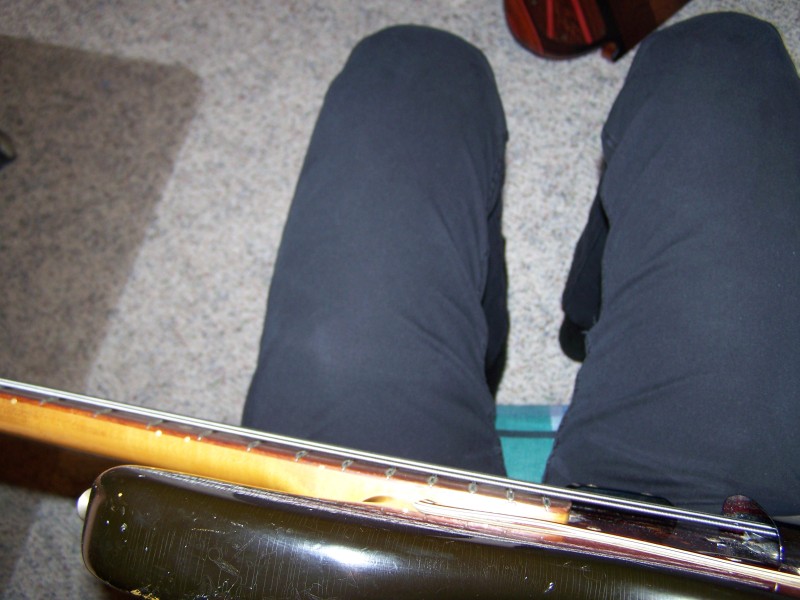
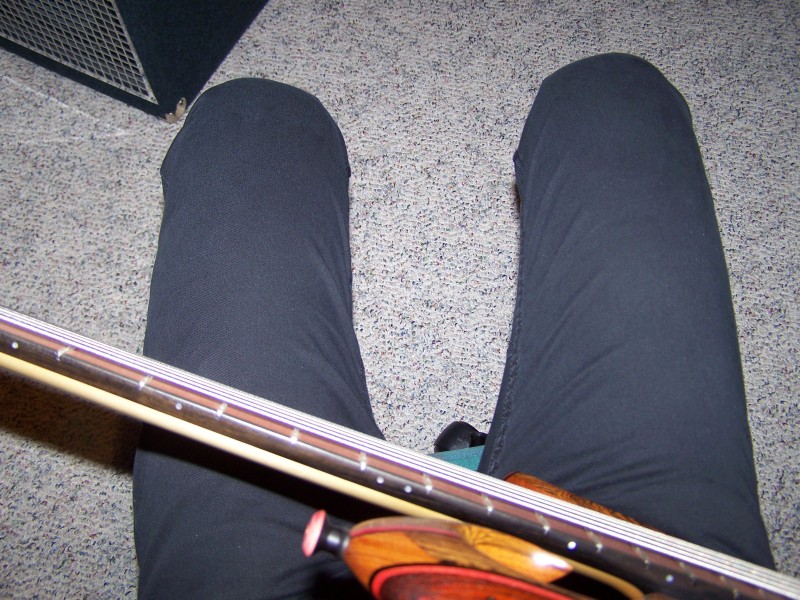
Next you'll see where the 12th fret falls on each bass when in the same sitting position.
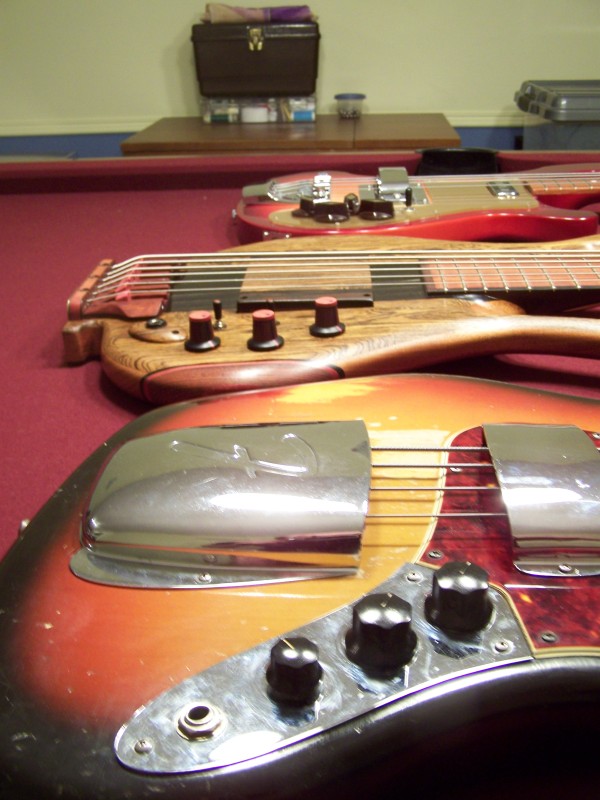
Next is some shots of how the three line up.
Then I got some pictures of the scale length compared to the ric.
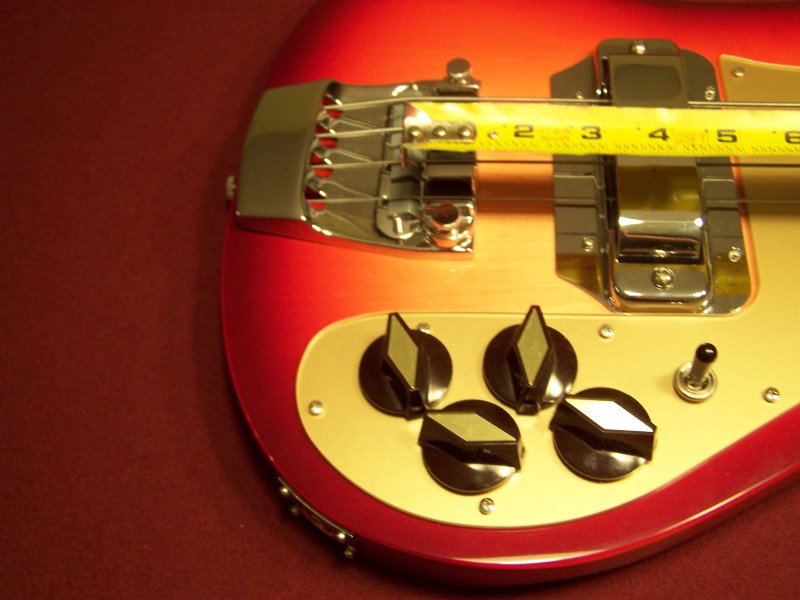
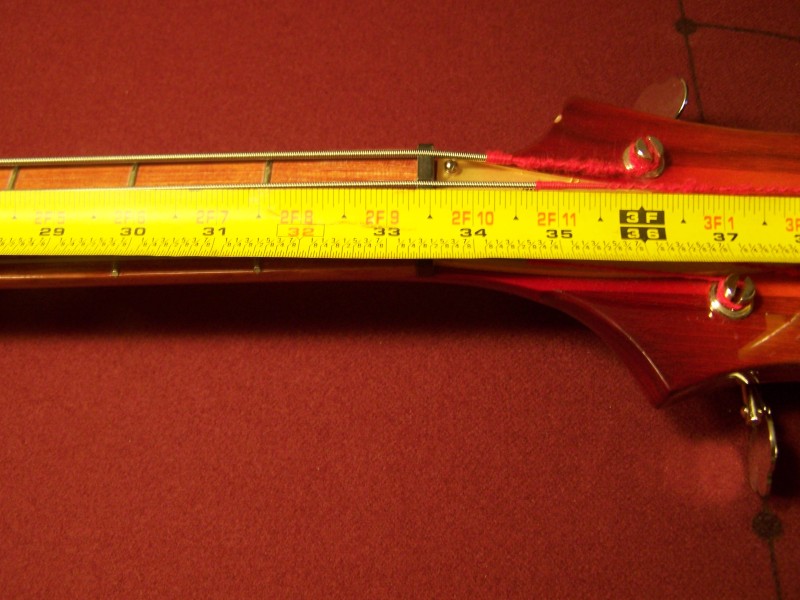
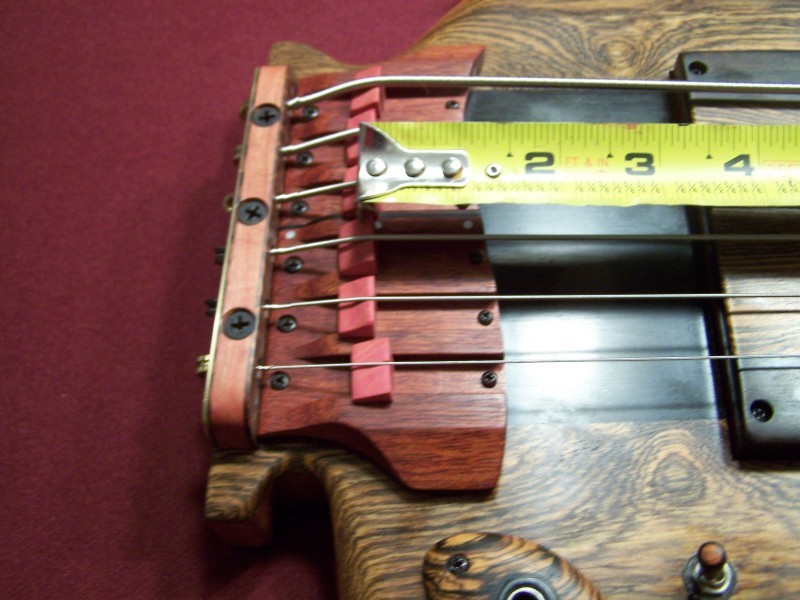
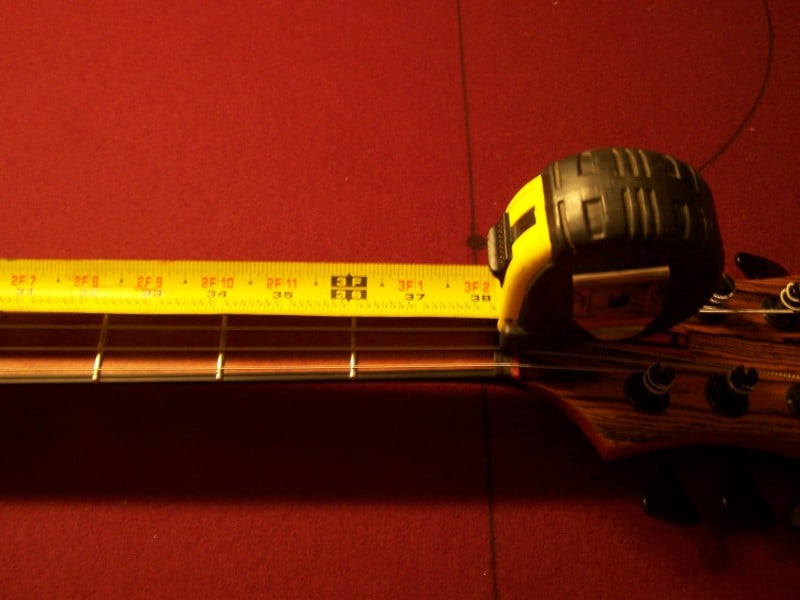
And the two lined up at the nut, and at the bridge...
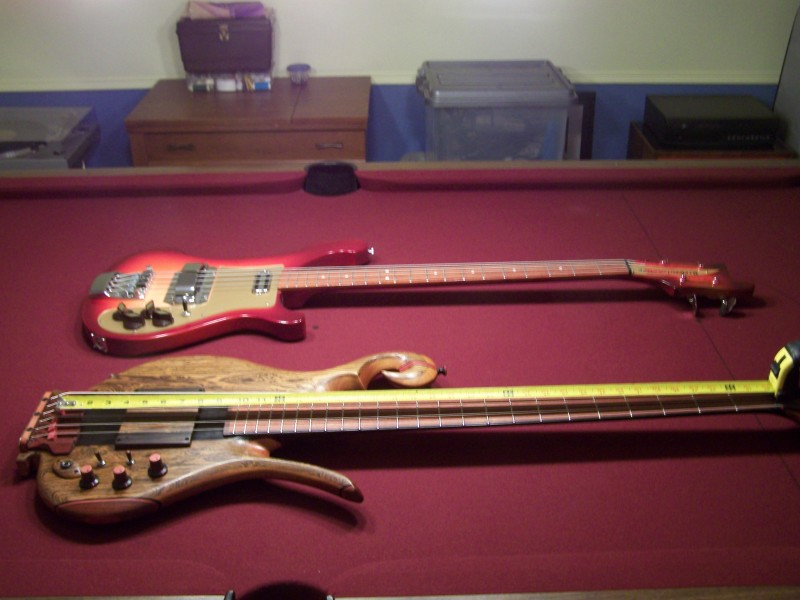
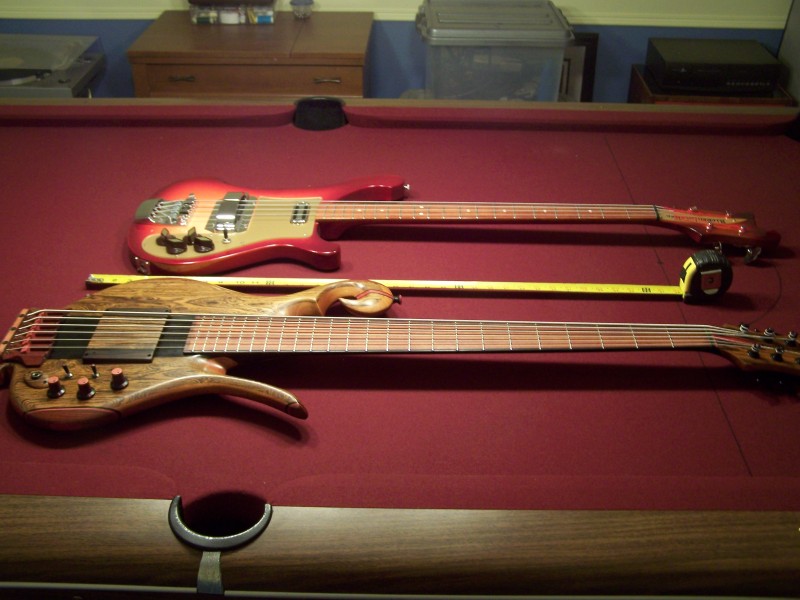
...And finally- some glamor shots of the strap buttons and mini toggles:

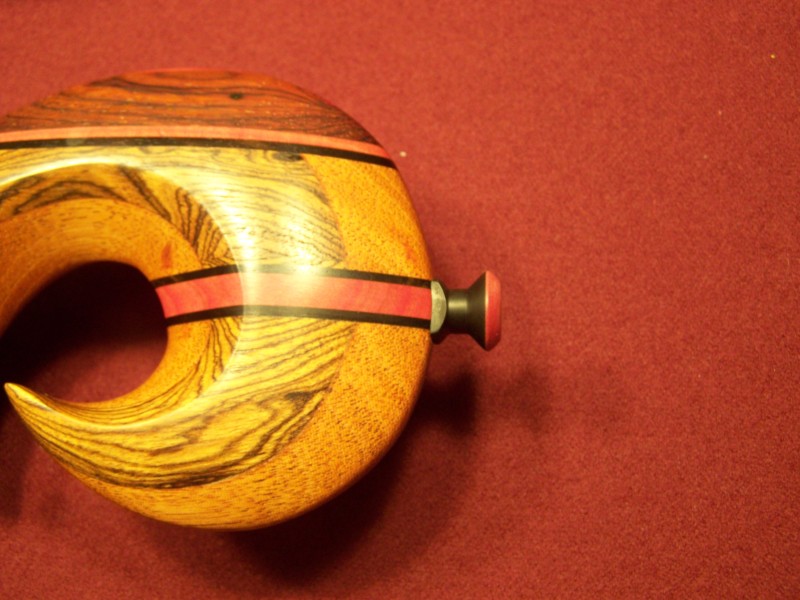
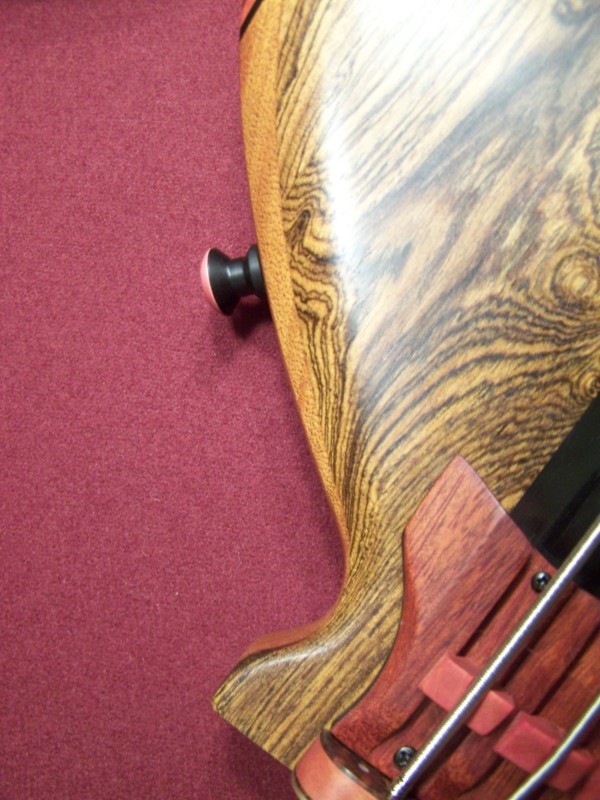
Cheers!
Kev
To answer a few questions... there are pictures of the reach to the first fret of a ric, a jazz bass, and the CT.
Next you'll see where the 12th fret falls on each bass when in the same sitting position.
Next is some shots of how the three line up.
Then I got some pictures of the scale length compared to the ric.
And the two lined up at the nut, and at the bridge...
...And finally- some glamor shots of the strap buttons and mini toggles:
Cheers!
Kev
The neck looks thin. Does it handle the tension well?
I would go for A tuning. Low A must sound great with that scale length
The neck is made from Port Orford Cedar- which is extremely lightweight when compared to other neck woods (Maple, Mahogany) yet is very stiff. It's the thinnest neck I've played on, but it makes the bass easier to play- specifically with the additional scale length and added strings. I play mostly 34" 4's, so this is a big jump, but I'm still finding it comfortable because of these design features.
I haven't had a chance to tune it down yet, but the B sounds monstrous.


And you got what YOU wanted rather than what Carl felt like building for you?
One hears stories like that.
Where are all the sound clips and videos????
I'm not sure I understand... Have you ordered a CT, or just heard stories?
...and the bass intonates by moving the saddles forward and back, the height adjustment is obtained with a file.
 There is no real way to use a variety of strings for this bass, and I have purchased 30 sets in this scale length already, so I shouldn't need to adjust much.
I don't know why there is a fear of longer scale basses - especially since most have never played anything beyond 35"
AJ has played 36" for many years - I've got a Fodera Imp Elite 36" fless & I've been experimenting on long scale builds
string length matters - BIG tone and fundamental - what makes a DB sound the way it does? 70% string length
AJ has played 36" for many years - I've got a Fodera Imp Elite 36" fless & I've been experimenting on long scale builds
string length matters - BIG tone and fundamental - what makes a DB sound the way it does? 70% string length

Did you say... 30 sets of custom scale strings? I don't think I've bought that many sets total in ten years 
I'm not sure I understand... Have you ordered a CT, or just heard stories?
...and the bass intonates by moving the saddles forward and back, the height adjustment is obtained with a file.
So is it friction/pressure that holds them in place? I don't see any screws, as far as intonation.
I don't know why there is a fear of longer scale basses - especially since most have never played anything beyond 35"
AJ has played 36" for many years - I've got a Fodera Imp Elite 36" fless & I've been experimenting on long scale builds
string length matters - BIG tone and fundamental - what makes a DB sound the way it does? 70% string length
My Kay upright is 41 1/2" and I have thought about a fretted electric that string length

I'm not sure I understand... Have you ordered a CT, or just heard stories?
...and the bass intonates by moving the saddles forward and back, the height adjustment is obtained with a file.
I just heard a few stories
.
So is it friction/pressure that holds them in place? I don't see any screws, as far as intonation.
Yes, correct. The string tension holds them in place, but there is also a thin layer of epoxy on the bottoms of the saddles to help keep them from sliding around too much. They move freely with no tension, but they stick when the string is at pitch.
cnltb
I just heard a few stories .
Today 07:28 AM
The following is MY UNDERSTANDING of Carl's work- not his words, this is not to be taken as gospel, just my observation.
Honestly, there are about a million stories about Carl. I learned a fair bit when I had the pleasure of meeting him a few weeks ago. I got to hear about some of his first instruments, as well as his dealings with other luthiers, musicans, and wanna-be's. I'm not going to speak on behalf of Carl for anything, but I will say that I have FULL confidence in his abilities as an instrument maker and his reasons for doing things the way he does. Carl went out of his way to make this instrument special for me. He took into consideration everything I had to say, and the end result is what you see.
Here's my analogy; I've truly learned this over the past few years. Dealing with Carl Thompson is much like being a musician and going into a studio to do some recording and dealing with an audio engineer. I have about a million ideas as to how I want to record, what sounds I want to acheive, what mic placement is best, what EQing I think sounds best, etc. The engineer has very different ideas as to what he thinks is going to sit well in the mix, what plans he has for reamping, mixing, adding effects, mastering, etc- so we both want to make the best album, but we both have different ideas as to how to do it. At the end of the day- that studio's name is on that recording- and if it isn't up to the studio's standards, they won't be happy putting it out as one of their recordings.
If you want a bass made exactly the way you want, Carl probably isn't your guy- because your standards aren't up to his standards. I WAS, however, able to work with Carl to incorperate the ideas I wanted for this bass. It was more work for Carl, Pete, Joe, and Kelvin- but I was more than willing to pay for their time to create things that would live up to both my standards and Carl's. Honestly- I'm sure Carl and the guys could have spent less time, money, and effort on this instrument if they just did it the way I initially thought would work- but what I have now is something FAR greater. I'm pretty sure Carl doesn't go changing people's orders for fun- he makes the best instrument possible with the materials he thinks are going to work best for it- and from what I understand, there's a tremendous amount of thought that goes into each aspect of his instruments. It's his name on the headstock. He's not going to let something out of his shop that doesn't seem right- so I'm willing to bet if he changes something on an instrument- it's to make it right. I can see how some people might not see it so plainly- but I think that's the bottom line. His name's on the headstock, so when it leaves his shop it had better be a Carl Thompson.
Does any of that make sense?
Yes, it does. And thank you for taking the time to document and share this instrument with the rest of us. I've admired Carl's basses (from afar) for a long time, and this thread is incredibly interesting to me.


there will be no way for me to purchase a CT bass in the next or far future, so this thread is like dreaming, a wonderful dream. Please feed my dream again. If you only could do some good quality recordings of you playing your thing (that thing is not a bass, is something else, and owns to the world of dreams). I think that many of us TBs would be honored to hear that tone...and if you are planning to record and share, please play your style with ordinary technique. Thanks
Absolutely gorgeous.
Carl Thompson, to me has always been a step ahead of every other luthier. Ever since I saw the rainbow bass for the first time I saw his basses as works of art moreso then an instrument. I'd be proud to hang that on my wall, even if never toplay it, but that Beaut' is emant to play. Glad it found a great home.
Carl Thompson, to me has always been a step ahead of every other luthier. Ever since I saw the rainbow bass for the first time I saw his basses as works of art moreso then an instrument. I'd be proud to hang that on my wall, even if never toplay it, but that Beaut' is emant to play. Glad it found a great home.


