• TalkBass has been independent since 1998. Add your voice.
    Create a free account to reply to discussions, view embedded media, and browse with fewer display ads.
    Join freeLog in
    Want zero display ads or expanded classifieds tools? Compare plans.

NBD: G&L, dead spot, what to do?

What should I do with the new bass (read post first)?

  • Call G&L and see if they will replace the neck under warranty

    Votes: 77 61.1%
  • Live with it if you really like the bass, it’s normal

    Votes: 31 24.6%
  • Other (including carrots)

    Votes: 18 14.3%

  • Total voters
    126

GroovyBaby

He stole my mojo!
Supporting Member
Oct 19, 2007
1,877
2,636
Huntingdon, PA
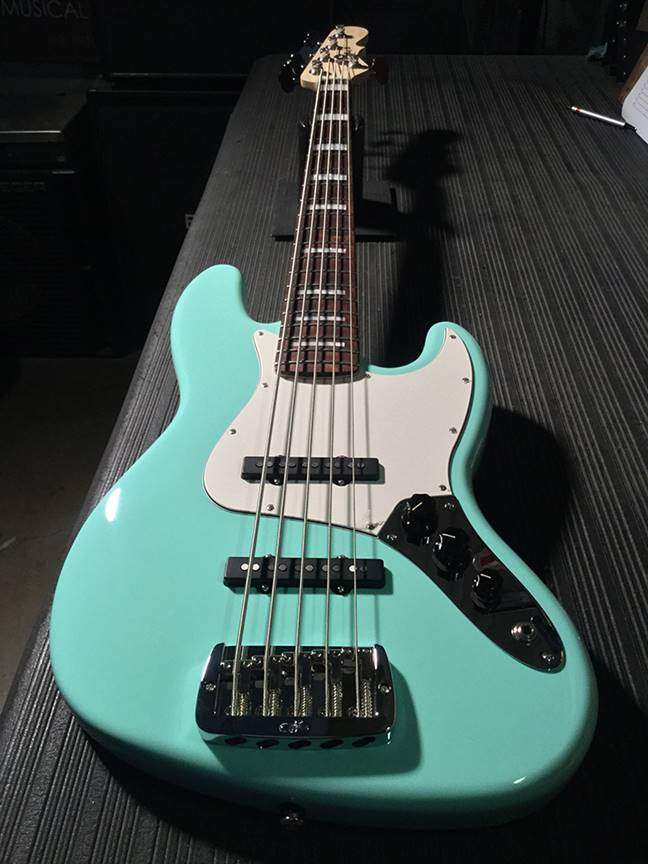
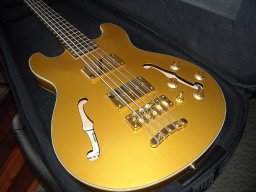
I have a new G&L JB5. It plays great and with the alder body is only 8.2 lbs (I won't buy a bass at 8.5 and above). The only thing is I've found a pretty solid dead spot on the fifth fret (note of C) of the G string. If I'm playing staccato it isn't noticeable but if I'm letting the note ring for longer than a short second, it quickly dies and then I'm hearing the harmonic G. You can actually see the tuner change from "C" to "G" pretty quickly as the note fades. This bass is new from G&L so I'm planning on trying to have this addressed under warranty. Any thoughts on this? I'll try and upload a recording and I've posted a poll. Thanks!

55564373-79BF-4195-8D24-36BBED42E4EB.jpeg
 
De-tension the G string, and make sure it's not twisted up. Loosen it enough to pull the ball end back, and let it un-twist, if it can.
Bring it back to tension and try it again.
If it persists, change that string, or try a different brand.
This is a common problem. Sometimes it can be resolved, sometimes it's always a bit of a thing.

Very nice looking bass.
 
Thanks for both suggestions. I just adjusted the saddle, retightened the saddle lock screw, took the G string off, put the G string back on and tuned it up. No difference at all. Still a punk C on the G string immediately after the initial attack. I'll try a new string...

Edit: no difference with a new string.
 
Last edited:
I have a new G&L JB5. It plays great and with the alder body is only 8.2 lbs (I won't buy a bass at 8.5 and above). The only thing is I've found a pretty solid dead spot on the fifth fret (note of C) of the G string. If I'm playing staccato it isn't noticeable but if I'm letting the note ring for longer than a short second, it quickly dies and then I'm hearing the harmonic G. You can actually see the tuner change from "C" to "G" pretty quickly as the note fades. This bass is new from G&L so I'm planning on trying to have this addressed under warranty. Any thoughts on this? I'll try and upload a recording and I've posted a poll. Thanks!

View attachment 3147189
My Fender and Warwicks do the same thing pretty much.
 
Since it's new and you're probably sending it back, you won't want to try these invasive suggestions I'm about to make :) ... but if you love everything about the bass except the dead spot, and want to keep it - here is something you can try.

I replaced my heavy tuning machines (Yamaha BB) with super light weight tuners - my intent was to cure neck dive and it cured the neck dive and I was completely surprised to find that it cured the dead spot on the G string. Many people add weight to the headstock but in my case removing weight fixed it.

So here's a way you can test it out safely (as long as you are careful with the screwdriver). Remove your A string and remove that A string tuning machine (the amount of weight you can save with a set of light tuners is about the weight of one standard tuner - and I suggest the A string because it's about in the middle of the headstock mass so should approximate a full set swap to lighter machines).

Now the dead spot may have simply shifted to a different fret - but hopefully it shifted right off the fingerboard completely.

Or the G&L may already have super light tuners - I don't know what they come with these days. If so, then "nevermind"

And last thought on the subject .... I have two identical basses one had the dead spot (fixed with lighter tuners) and the other never had a dead spot and still has original heavy tuners. So you really ought to replace your new bass for one without the deadspot :D
 
I've had a minor dead spots here and there on past basses... even very expensive ones. Sadly in my case, the only real fix was getting a different bass that seemed to have none! Now, I didn't sell those basses because of apparent dead spots alone of course. In fact, I've always learned accept the odd dead spot as part of the individual bass and its character... being made of naturally varying woods, metals, heavy components etc... I find that dead spots can arise naturally in varying degrees in all sorts of basses for various reasons. It reminds me of chasing wolf notes on my old upright... very obscure, yet solely related to the resonance of the bass and the sum of its parts.

If the decay of the note is absurdly short and crude (which I have heard shocking examples of here on TB!) and clearly a defect of sorts, I would definitely pursue a replacement instrument from the dealer as previously recommended. Nobody should be burdened with this type of disatisfaction this day in age when spending proper $ on a proper bass! However, If the dead spot on the subtle side of things... I would suggest hanging out with the bass for a while as you might find other great qualities in it despite the dead spot... which may also lessen over time given that this is a brand new instrument etc.

All things to consider IMHO and I wish you luck!

EDIT: Ive also experienced what I felt were "dead spots" on basses at different times in different playing environments on different places on the neck. I attribute this to the added feedback/resonance from being amplified etc. Therefore, I feel its critical to make all of your assessments while testing the bass acoustically!
 
Last edited:
I had a bad dead spot on my Elite jazz; same fret too. I changed the strings; the dead spot was pretty much gone.
Those nickel lo-riders were the worst/expensive strings I've ever tried.