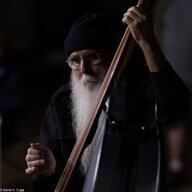
Grabbing a fistful of neck & string and thumping out some roots, fifths, and a simple walking line is fine if that's what you aspire to and can use in your musical life. On the other hand, if you want to be able to actually operate the machine, some basic instruction is necessary to prevent bad habits and possible injury.
I actually think this is pretty straight advice. And it's worth explaining to anyone new.
There are various DB related genre and tracks that are available depending on what a person has as their personal musical goals. Ongoing lessons in particular are absolutely a requirement for some aspirations in those genre and tracks. Specifically, classical music, including symphony, orchestral and theatrical work are among those tracks where most people probably will not get anywhere without formal training.
Many if not most jazz DB tracks will also at least benefit from, and may require, formal training. There are a lot of excellent working jazz DB'ists who have had formal training, although there are also some who have not. And as you get more into the various roots genre and tracks you'll find more and more successful DB'ists who have little or no formal training and who are also moving along very happily with what they want to do with the DB. There are some musicians in roots tracks and genre who do have formal training, but there are also lots of musicians who do not.
As @salcott also implied, the DB is also a very physical musical instrument where injuries are possible. Lessons can help avoid that, although to be fair, it isn't impossible for people who take ongoing lessons to get injured too. And playing the DB is not necessarily the only source of these injuries. Being big, the DB has special transportation requirements, and that can also be a source of injuries.
Probably the best thought to keep in mind is that the DB is a whole different musical instrument from bass guitar in particular, and in general from any other instrument. Experience with other musical instruments may help in regard to musical theory for the DB, but in execution because of its size and musical range, the DB needs to be approached with a different mindset than other instruments. Lessons can be very helpful in achieving that mindset.
And, since the DB has its historical origin in classical music, it is only fair to keep in mind that a large segment of the DB community sees only the formal classical track. As someone who really enjoys listening to classical music, even though I basically live and enjoy performing music in a completely different track, I can understand -- and often even appreciate -- their point of view.
I'd opine that it is good for us all to be well rounded -- to enjoy the variety of genre and tracks that the DB applies to, and to also enjoy community with the people who enjoy these genre and tracks.
Last edited: