I have a school bass with a broken neck. The neck is split through the heel. The mortise and tenon joint is very poorly fit. There is at least 1/4 inch gap in some spots. I want to shim the joint in order to reattach this neck. Should I use maple or spruce?

Enjoy the benefits of a premium membership!
Upgrade Account
-
TalkBass has been independent since 1998. Add your voice.
Create a free account to reply to discussions, view embedded media, and browse with fewer display ads.
Join free Log in
Want zero display ads or expanded classifieds tools? Compare plans.
You are using an out of date browser. It may not display this or other websites correctly.
You should upgrade or use an alternative browser.
You should upgrade or use an alternative browser.
Double Bass Neck joint shim repair
- Thread starter DaveCottrell
- Start date
More options
Who Replied?Here's the mortise before I cleaned out the gorilla glue
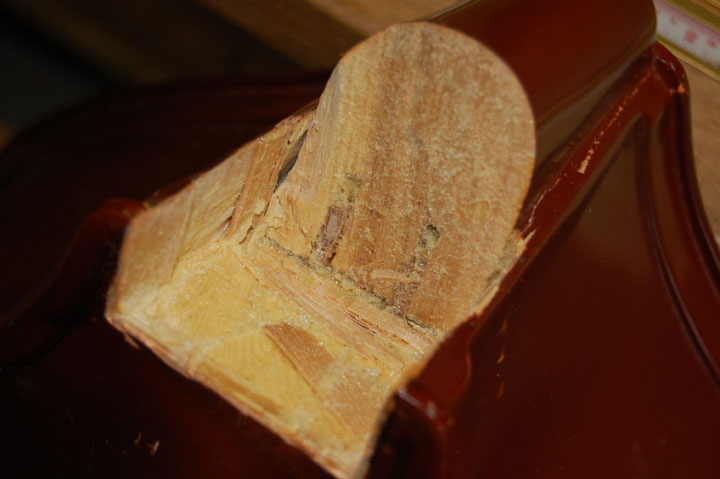
You can see some shims in there already. I will remove them to get to bare wood
Here is the joint from above. It's not even square
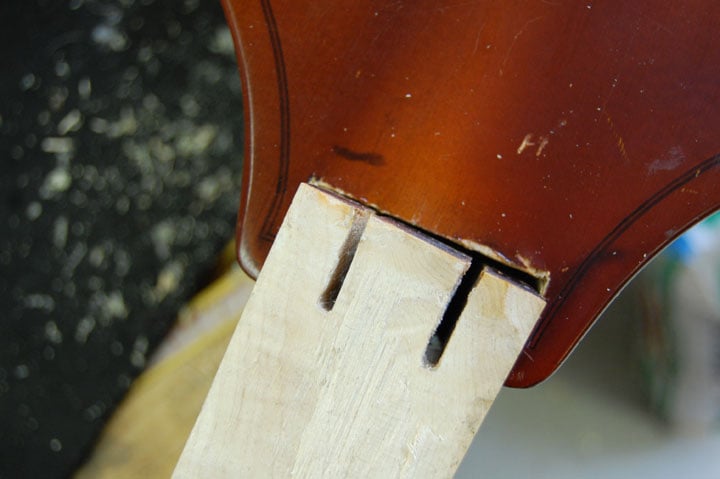
And here's another view
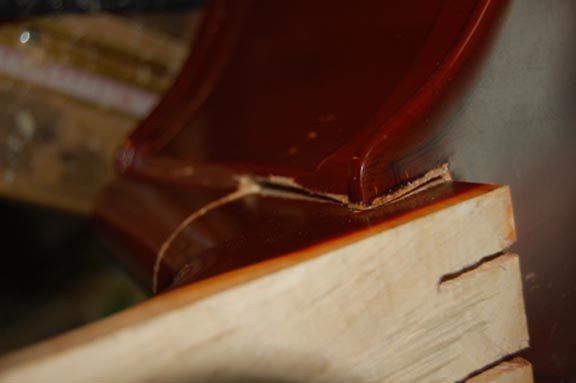
Is shimming sufficient, or should I enlarge the mortise, glue a large "patch" onto the block, and re-set the entire joint? My problem is no surface is square or flat, and I think the entire joint needs to be remilled.
You can see some shims in there already. I will remove them to get to bare wood
Here is the joint from above. It's not even square
And here's another view
Is shimming sufficient, or should I enlarge the mortise, glue a large "patch" onto the block, and re-set the entire joint? My problem is no surface is square or flat, and I think the entire joint needs to be remilled.

Jake deVilliers
Commercial User
- May 24, 2006
- 6,349
- 607
- Disclosures
- Owner of The Bass Spa, String Repairman at Long & McQuade Vancouver
You need to take the rest of the neck heel out of the pocket first. Then you can repair the neck separately from the mortise. The mortise needs to be built up with tight grained spruce and re-cut to fit the tenon nice and snugly. Those little shims are incredibly hokey...
Hide glue and away you go! Good luck!
Hide glue and away you go! Good luck!
You need to take the rest of the neck heel out of the pocket first.
I was really hoping you wouldn't say this. Heh
I was really hoping you wouldn't say this. Heh
- Jan 24, 2002
- 2,117
- 950
- Disclosures
- NS Design / AER Endorsing Artist
Here ya go.
All you guys that want to do repairs for a living should get used to this.
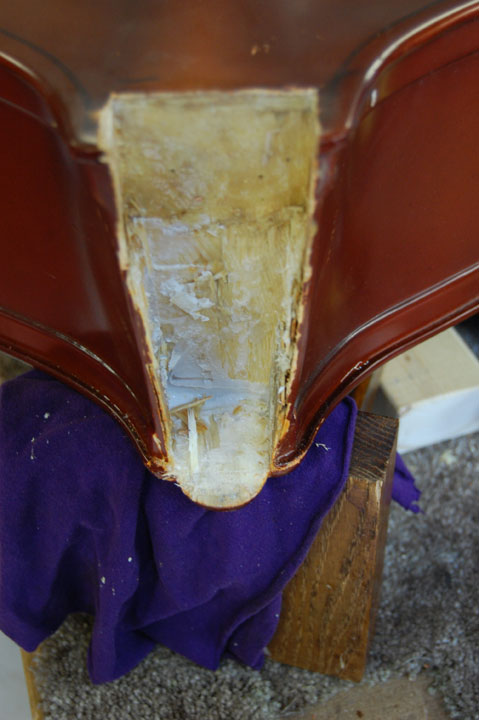
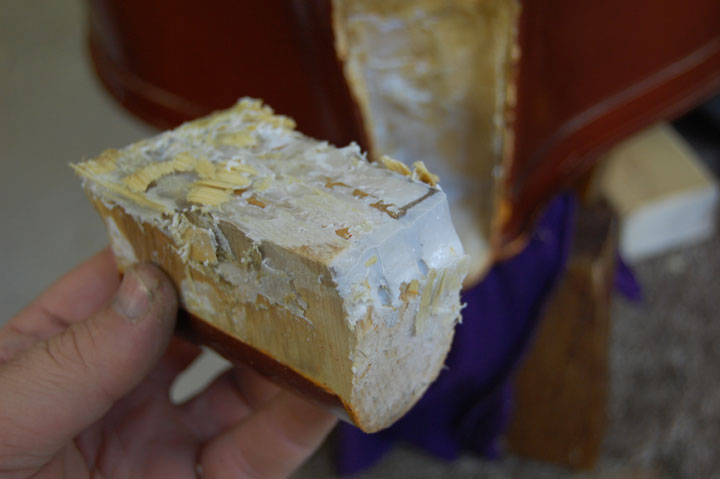
Dave
I just threw up a little.
Jake deVilliers
Commercial User
- May 24, 2006
- 6,349
- 607
- Disclosures
- Owner of The Bass Spa, String Repairman at Long & McQuade Vancouver
Here ya go.
All you guys that want to do repairs for a living should get used to this.
I particularly like the way they don't even blow the big chips out of the mortise before they glue the neck in...

Jake deVilliers
Commercial User
- May 24, 2006
- 6,349
- 607
- Disclosures
- Owner of The Bass Spa, String Repairman at Long & McQuade Vancouver
they're blown in.
That's funny!
But where do they get the chips? The corpus is always full of swarf too so they didn't take them out of there... 
- Aug 1, 2005
- 3,546
- 1,421
- Disclosures
- Private Inventor - Bass Capos
Here ya go.
All you guys that want to do repairs for a living should get used to this.
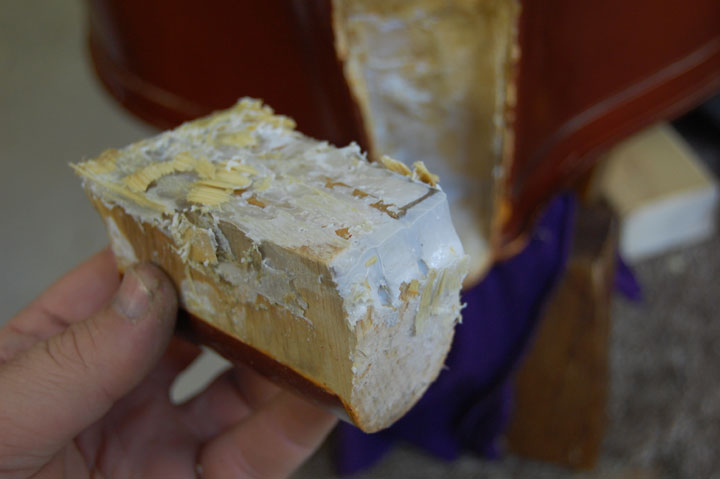
Dave
That's exactly why real bass shops quote such high prices for neck repairs on cheapo basses. I got ahold of a half-size Gewa bass with the neck broken at the front of the heel awhile back. I paid 50, including bag. I could have done a quick glue job and flipped it in no time. Being the freakin' idiot I am, I decided I would remove the rest of the heel from the neck block so that I could add some depth and increase the overstand and bridge height. Dave needed to do this - I didn't. I think my heel was glued in with polyurethane. It took about 6 hours over three days to remove. Here is where I was a few days ago:
As you can see, I had to add a FB shim anyway to gain any appreciable bridge height. I could have simply reglued the break and left the neck joint the way it was. I also had to make wood fillets to cover the mess I made with the laminated ribs. In the end I think I can still sell the bass and be left with better than McDonalds wages, but in the future I will be more cautious.
In Dave's case, he already has the heel out. He certainly suffered, but I think he's on his way.
I have one last question:
Why spruce for the wedges? I actually use beech, which I can cut very precisely on my table saw, and it has very consistent density and hardness. I can see maple, which might be easier to work with hand tools, but spruce has comparatively poor dimensional stability, especially in climates with large swings in humidity. Also, the block, neck and sides are presumeably all hardwoods. Just curious. I am no luthier, and don't presume to know better, but the spruce recommendation surprised me.
Jake deVilliers
Commercial User
- May 24, 2006
- 6,349
- 607
- Disclosures
- Owner of The Bass Spa, String Repairman at Long & McQuade Vancouver
That's exactly why real bass shops quote such high prices for neck repairs on cheapo basses. I got ahold of a half-size Gewa bass with the neck broken at the front of the heel awhile back. I paid 50, including bag. I could have done a quick glue job and flipped it in no time. Being the freakin' idiot I am, I decided I would remove the rest of the heel from the neck block so that I could add some depth and increase the overstand and bridge height. Dave needed to do this - I didn't. I think my heel was glued in with polyurethane. It took about 6 hours over three days to remove. Here is where I was a few days ago:
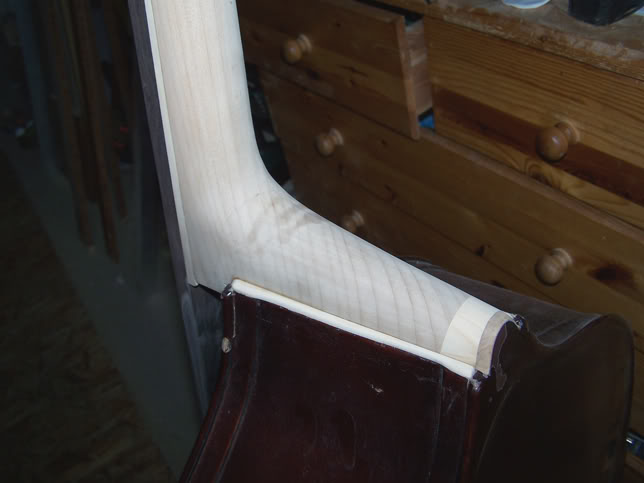
As you can see, I had to add a FB shim anyway to gain any appreciable bridge height. I could have simply reglued the break and left the neck joint the way it was. I also had to make wood fillets to cover the mess I made with the laminated ribs. In the end I think I can still sell the bass and be left with better than McDonalds wages, but in the future I will be more cautious.
In Dave's case, he already has the heel out. He certainly suffered, but I think he's on his way.
I have one last question:
Why spruce for the wedges? I actually use beech, which I can cut very precisely on my table saw, and it has very consistent density and hardness. I can see maple, which might be easier to work with hand tools, but spruce has comparatively poor dimensional stability, especially in climates with large swings in humidity. Also, the block, neck and sides are presumeably all hardwoods. Just curious. I am no luthier, and don't presume to know better, but the spruce recommendation surprised me.
If the block is spruce (and they usually are) and I'm adding to the block, I'll use spruce. Mostly its the block that needs to be re-built.
If the neck is maple and I'm adding to the neck, I'll use maple. I don't want to add any new woods to the mix.


