my mij sr800 actually measured 19.5mm at 1F and 21.5 at 12F and feels way thinner than the SR 300 I played this weekendGiven a single variety of wood, multi-laminate necks can be more reliably straight and stiff than single-piece necks. The higher-end modern Soundgears have reinforcement rods. Fancy woods might have something to do with it too but plain ol' maple has a pretty good balance of stiffness and density, and a zillion laminates are not necessarily structurally better than the three-piece necks that Ibanez used in their older Soundgears (current Standard-line Soundgears have 5-piece maple-walnut necks).
Since Ibanez posts detailed neck dimensions, we can compare numbers directly. Here are a few single-scale 4-string SRs, from bottom-of-the-line GSR to the top Prestige model. Excluding the Workshop models since those are intended to be more experimental or special-purpose.
As you'll see below, excepting the Gio, ALL THE NECK DIMENSIONS ARE EXACTLY THE SAME from their $400 models to their $3000 models. Any variations you experience in the current models are due to manufacturing tolerances. Since Ibanez has been making Soundgears for almost 40 years in many different factories there are bound to be some changes in the specs although in my experience even the necks on 30-year-old models feel pretty similar.
GSR100EX (Gio series has a 22-fret neck, unlike the 24-fret necks on all Standard, Premium and Prestige Soundgears.)
View attachment 7501920
SR300EB (bottom of Standard line) and SR600E (top of Standard line)
View attachment 7501924
SR1350B (bottom of Premium line) and SR2600 (top of Premium line)
View attachment 7501929
SR3500 (bottom of Prestige line) and SR5500 (top of Prestige line)
View attachment 7501933

Enjoy the benefits of a premium membership!
Upgrade Account
-
TalkBass has been independent since 1998. Add your voice.
Create a free account to reply to discussions, view embedded media, and browse with fewer display ads.
Join free Log in
Want zero display ads or expanded classifieds tools? Compare plans.
You are using an out of date browser. It may not display this or other websites correctly.
You should upgrade or use an alternative browser.
You should upgrade or use an alternative browser.
Need a new bass (Ibanez?)
- Thread starter Bass3Ment
- Start date
More options
Who Replied?My 1350 feels thicker than my 300 but as @ardegee posted this must just be perception, not reality. These necks are all CNC made, but the different finishes give them different feels.my mij sr800 actually measured 19.5mm at 1F and 21.5 at 12F and feels way thinner than the SR 300 I played this weekend

Might be due to how the action was set or even because your SR800 had accumulated a couple decades worth of fret wear.my mij sr800 actually measured 19.5mm at 1F and 21.5 at 12F and feels way thinner than the SR 300 I played this weekend
Good point. I'm comparing a fretted 1350 to a fretless 300. The lower action of the 300 of course makes the neck feel thinner.Might be due to how the action was set or even because your SR800 had accumulated a couple decades worth of fret wear.

Thanks for all that insight @ardgedee
Excellent food for thought, for sure.
There is something to be said for perception (wenge feels different under the fingers than maple so even if both necks have the same dimensions, they could feel different. Even maple vs roasted maple feel different under the fingers, and since we have the most nerve endings in our fingers, even a slight difference in feeling can be perceived).
There is also something to be said for manufacturing tolerances. I remember a thread where someone took calipers to a set of DR strings and though they were 45-105, the calipers read it more as 43-102. Manufacturing tolerances. And there is a video where Phillip McKnight tours the Core-Tek campus and the premium level instruments are made in a completely different facility than the standard level ones to different manufacturing tolerances.
But then again, sometimes the formula can change over time. Some of our favorite childhood snacks don't taste like they used to. Yeah, our palates change as we get older (some of our taste buds become less sensitive), but they also taste different because ingredients were reformulated (due to cost, availability, etc.) A beer I used to enjoy 25 years ago tastes watered down now. And I'm like, "did they change the formula just to wring more bottles of beer to sell?"
Like... I know this video is from 2008, but Matt Snell talks about how he first played a Soundgear and was impressed by the thin fast neck, he picked up more later on and the necks were thinner and faster, and the one he was playing in the video he thought was thinner and faster still.
Excellent food for thought, for sure.
There is something to be said for perception (wenge feels different under the fingers than maple so even if both necks have the same dimensions, they could feel different. Even maple vs roasted maple feel different under the fingers, and since we have the most nerve endings in our fingers, even a slight difference in feeling can be perceived).
There is also something to be said for manufacturing tolerances. I remember a thread where someone took calipers to a set of DR strings and though they were 45-105, the calipers read it more as 43-102. Manufacturing tolerances. And there is a video where Phillip McKnight tours the Core-Tek campus and the premium level instruments are made in a completely different facility than the standard level ones to different manufacturing tolerances.
But then again, sometimes the formula can change over time. Some of our favorite childhood snacks don't taste like they used to. Yeah, our palates change as we get older (some of our taste buds become less sensitive), but they also taste different because ingredients were reformulated (due to cost, availability, etc.) A beer I used to enjoy 25 years ago tastes watered down now. And I'm like, "did they change the formula just to wring more bottles of beer to sell?"
Like... I know this video is from 2008, but Matt Snell talks about how he first played a Soundgear and was impressed by the thin fast neck, he picked up more later on and the necks were thinner and faster, and the one he was playing in the video he thought was thinner and faster still.

^^ I have or have had 700 series from that era and they're great.

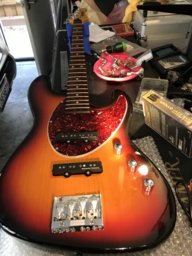
Consider a multiscale! These can be found for not too much: Used Ibanez SRMS805DTW SR Bass Workshop 5-String MS Bass - Deep Twilight | Reverb
Yep. My mint (some minor buckle rash on the rear) Topaz was under $750 shipped late last year.Consider a multiscale! These can be found for not too much: Used Ibanez SRMS805DTW SR Bass Workshop 5-String MS Bass - Deep Twilight | Reverb
Not suggesting the OP buy a 6, just saying that the 5 can be had relatively cheaply and there were 4s made but they're less common.
Ridiculous as it may seem, I find an sr400epbdx (or 405, if you prefer a 5 string) is incredibly versatile and lightweight, and even the 5 string has a relatively narrow neck, also being made up for by a slimmer, almost "D" shaped neck profile on the 5, though it claims more of a modern "C".Hi I am new here
I recently sold my MIJ Ibanez SR800. I had that bass for almost 20 years and always wanted to try something different.
I am an instrument teacher. Primarily a guitarist but i do play other stringed instruments.
I teach both guitar and bass.
So I mostly use the bass for recording and teaching.
What I liked about the old SR was the neck and the 3,3kg weight.
What I did not really like was the electronics and the fact I had to have
the bridge re-glued back onto the body because it just just fell apart.
The wood on that bass is super soft.
Tonally, that bass was kinda weak. Muddy. There weren't a lot of natural mids due to construction(?) I guess.
When I sold my old SR800 I thought finding a new bass would be easy but boy was I wrong. Turns out my small hands do not like big necks.
I had bought a JB style (MOOER copy) bass and that neck was way too thick. Just a pain to play.
I foolishly thought that any neck would do but now I am looking for a narrow nut thin neck bass.
My attention again turned back to Ibanez basses.
My problem is there aren't any available for me to try before buying.
There is an SR300 in a local music store but my thinking is: if i am getting a bass it should be better than the one I have owned.
Plus, I have never played a bass with humbuckers. Always preferred the Fenderish hollow tone kinda sound.
I also see that, in the higher price range, Ibanez no longer offer an SR bass tih a PJ pup combo.
Why Ibanez??
I also noticed that the neck on that SR300 is thicker than on my MIJ800.
What recently caught my attention is the SR500 and SR600 series.
Of course the premium and the prestige line are attractive but I feel it's kinda crazy for me to spend
all that money on a bass I have never had the chance to play and also I mainly teach and record so it seems like overkill.
Those of you who prefer thin neck and narrow nuts, what would you recommend?
What would be a step above the SR800 when it comes to a new(er) Ibanez bass?
Are there any alternatives out there? Yamaha? Schecter?
To sum it up, I would like to spend up to 800eur and get a lighter weight bass with a thin neck and noiseless electronics.
Thank you.

What I really like about it, though, especially having come from a fender j myself, is the coil tap function (which allows single-coil, humbucker, or "power tap", aka humbucker low-end and single-coil bite) combined with the 3-band EQ, which spans a wide enough range to get an accurate Jaco-esque honk out of the bridge pickup with a bit of bass and mid boost applied, but has no issue producing that sort of thump you'd want out of the neck pickup (somewhat of a surprise from an active bass) when the EQ's cut. Strangely enough, I've had the most success getting that in humbucker mode, but the power tap function also does wonders.
Other stuff that may be irrelevant but I'll mention just in case: the body is very small in comparison to the neck, but is far wider towards the bridge and has a nice long horn, which cuts out neck dive whether you prefer to sit or stand. The cutaway is also considerable, and the contoured neck joint means very easy access to the highest frets (if you want to get up to some Wooten tomfoolery).
My only issue with it, which you should consider, is the fretboard. It's jatoba, which is generally a solid material as a rosewood alternative, but it's more porous, which can mean some uneven (though luckily not sharp) edges on the fretboard with heavy play, and a need for more consistent oiling.
But in my opinion, the pros far outweigh the cons here, especially when taking into context the accessibility and versatility of the instrument and thereby just how simple getting your sound out of it is.
And a bonus- all of this comes in at anywhere between 530 to 590 pounds- and is well worth it. Beautiful thing, too.
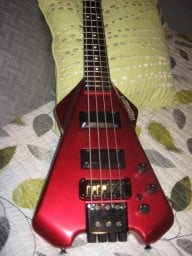
Lots of advice given and i can agree with most of it. Regarding Ibanez, the OP wants to use the bass for teaching, why not get a 200 series, lots of finishes and comes with a variety of pickup configurations including P/J. These are simple well built and serviceable instruments priced below 300 Euros, just saying. Keep It Simple!

Don't sleep on Cort basses, the Cortex factory manufactures ~80% of the Ibanez product line and has just as good quality.
If you want a bass with a slim neck, the Rithimic absolutely staggering for the price

 www.cortguitars.com
If you want a bass with a slim neck, the Rithimic absolutely staggering for the price
Jeff Berlin Rithimic
The Cort Jeff Berlin Rithimic features Jeff's signature Bartolini pickups, Babicz Full Contact bridge, Hipshot Ultralite tuners, and DRStrings Custom DDT
www.cortguitars.com

I just got one of these. It plays really well, pickups are Nordys, not crazy about the preamp, so I’m currently running it in passive.this one caught my eye. 777eur on thomann

SR500N | SR | ELECTRIC BASSES | PRODUCTS | Ibanez guitars
SR500N at Ibanez. Ibanez offers electric guitars, bass guitars, acoustic guitars, effect and pedals, amps, plus guitar accessories like tuners, straps and picks.www.ibanez.com
Looks like same preamp as on my SR1350B. Yeah, I'm not crazy about mine either. The bass sounds fine without the EQ on. I imagine there might be a situation where at higher volume I might turn it on to get a boost somewhere on the curve, but not for regular practice.I just got one of these. It plays really well, pickups are Nordys, not crazy about the preamp, so I’m currently running it in passive.
I guess that until you get up to the Prestige or Mode series you just don't get a great preamp from Ibanez.
Agreed on the Corts. I have 2 A series models, A6 FMMH and the absolutely stonking A5 Ultra Ash and they are so good for the price it's scary. They're much harder to find in the US but well worth the hunt.Don't sleep on Cort basses, the Cortex factory manufactures ~80% of the Ibanez product line and has just as good quality.
If you want a bass with a slim neck, the Rithimic absolutely staggering for the price
Jeff Berlin Rithimic
The Cort Jeff Berlin Rithimic features Jeff's signature Bartolini pickups, Babicz Full Contact bridge, Hipshot Ultralite tuners, and DRStrings Custom DDT
Check out the reviews, and for the people that insist the Bart MK1s are terrible, especially the one for the A6 by Bass Bonedo.


