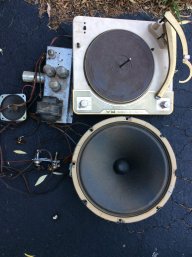
I know a lot depends on the pickup, but I'm running a Vic's to a Rumble 500 2x12 without a pre.

TalkBass has been independent since 1998. Add your voice.
Create a free account to reply to discussions, view embedded media, and browse with fewer display ads.
Join free Log in
Want zero display ads or expanded classifieds tools? Compare plans.


Most DI's thru outputs are NOT buffered, therefore that solution won't work.@Billgore Does your Avenson DI have a "thru" out to run directly to an amp? If so, you may have what you need already.
I don't even have close to an exhaustive knowledge of amp specs, but many of the newer class D amps made today have higher, piezo-friendly input impedances. I have been enjoying running my Yamahiko-equipped DB into my Genzler amps and haven't had any problems. There are many amps that do have an impedance that is too low for piezos. Those will benefit from some kind of preamp to provide the necessary input impedance. Again, the DI on your tailpiece may already suffice for that.
As @jmlee mentioned before, the FDeck HPF preamps are quite handy. I keep one in my bag just in case I need an HPF, or in those rare instances I am plugging into an amp other than my own. Francis Deck @fdeck is a member on Talkbass!
@agedhorse I was not aware of that, thank you for the information! In that case a buffered preamp makes sense as a viable solution.Most DI's thru outputs are NOT buffered, therefore that solution won't work.

Only if the pickup really requires over 1Meg load, or the input impedance is significantly lower than 1Meg.@agedhorse I was not aware of that, thank you for the information! In that case a buffered preamp makes sense as a viable solution.

My Full Circle pickup runs initially into one of Fdeck's HPFs which have a nominal 10 Mohm input impedance, and from there the signal runs into whatever I want to use for amplification—or sometimes just what's on hand somewhere.




Yes, the early Underwood pickups were often used with amps having an input impedance of less than 1Meg, so a buffer was beneficial. Since the crystals are quite small inside the brass wings, there was a lot of benefit to buffering with those amps.I've been quite happy with the sound of piezos on my uprights (Full Circle on my current bass, Realist Lifeline on my previous one) going straight into either a Markbass CMD-121P combo or my older Genz-Benz Shuttle 6.2 head. Back when I used an Underwood pickup it sounded better with a higher impedance input, so I used a Fdeck preamp.
I bought my Underwood back in the early 80's. That is what I use straight into my WD 800 today. I did have a harsh sound with it at first, but Don's daughter, Belinda suggested I flip one of the wings180 and it help it a lot.Yes, the early Underwood pickups were often used with amps having an input impedance of less than 1Meg, so a buffer was beneficial. Since the crystals are quite small inside the brass wings, there was a lot of benefit to buffering with those amps.
Since many amps these days are 1Meg or greater, there is much less benefit to a higher input impedance, and there is significant drawbacks with regard to noise (cable and circuit) as well as RF interference (especially close to RF sources such as radio transmitters).
I was working on pro audio and acoustic products (specifically active direct boxes and pick-up systems for acoustic instruments) around the time that the Underwood pickups became popular, Don's mechanical design was the first practical design for bass guitars (also used on cellos and even viola/violin) because it was easy to install. They did suffer from a lot of broken crystals because players couldn't follow the installation and handling instructions though. Underwood was another San Francisco Bay Area company that pushed the industry forward, this was a great (and fun) time to be working in audio. The fact that they are still relatively popular is a testament to the quality of the basic design.

Yup, there are a lot of tricks to these pickups, and there's a whole lot more to it than impedance. It's much easier and takes less effort top guess, which is why blaming impedance for unrelated challenges is so popular.I bought my Underwood back in the early 80's. That is what I use straight into my WD 800 today. I did have a harsh sound with it at first, but Don's daughter, Belinda suggested I flip one of the wings180 and it help it a lot.


I bought my Underwood back in the early 80's. That is what I use straight into my WD 800 today. I did have a harsh sound with it at first, but Don's daughter, Belinda suggested I flip one of the wings180 and it help it a lot.
Not the best pic and some card stock in the way before I did my wood shims...DjBebop care to explain? Do you mean just taking one element and installing it the other way (so the cable is closer to the middle of the bridge) or flipping it over the other way? Thinking about this has me worrying about breaking the wire.