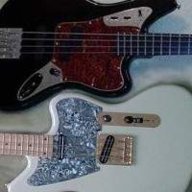
I'm a new bass player (only been playing a few of weeks...but I am loving the instrument) and have a question about strings. I know there are a thousand threads about strings here but there is so much info it is overwhelming so I figured I might as well start another thread to ask my specific questions.
I have a Squier VM Precision PJ bass and am using the stock strings. When I buy a guitar the first thing I do is to remove the stock strings and plan to do the same with this bass but, being new to playing bass, I do not know which strings to replace them with.
At the moment I am leaning towards flat wound strings more out of curiosity than anything else. Since I don't know if I will be sticking with flats (can't know until I use them right?) I don't want to spend a ton of money on a set of strings so would be looking at inexpensive ones. But before I put out any money on them I was wondering if flat wounds are something a new player should try or are they something that should be tried after one has learned to play the instrument properly and thus has a better idea of what they want in terms of tone, etc.?
I have read that flats are great for cutting through in a band situation but don't sound quite as good for playing by oneself at home. Since I only play at home are flat wound strings even worth using? Or should a home player stick with round wound strings?
If I go to flats should I stick to the same gauge or go down just slightly as flats apparently have more tension than rounds?
I have also read that flats are easier on the fingers but, because I already play guitar, playing bass is not hurting my fingers so that isn't an issue for me.
What are the advantages and disadvantages of each type of string for a home player and, more importantly, for a new bass player?
Basically I am looking for some advice that will help guide me through the maze so I would appreciate any, and all, advice and recommendations with regards to which kind of string to use, which brands might be best for a new bass player, etc., etc., etc. If it matters, I am into blues, classic rock, and a little country (primarily old school country rather than that New Country stuff).
Thanks in advance.
I have a Squier VM Precision PJ bass and am using the stock strings. When I buy a guitar the first thing I do is to remove the stock strings and plan to do the same with this bass but, being new to playing bass, I do not know which strings to replace them with.
At the moment I am leaning towards flat wound strings more out of curiosity than anything else. Since I don't know if I will be sticking with flats (can't know until I use them right?) I don't want to spend a ton of money on a set of strings so would be looking at inexpensive ones. But before I put out any money on them I was wondering if flat wounds are something a new player should try or are they something that should be tried after one has learned to play the instrument properly and thus has a better idea of what they want in terms of tone, etc.?
I have read that flats are great for cutting through in a band situation but don't sound quite as good for playing by oneself at home. Since I only play at home are flat wound strings even worth using? Or should a home player stick with round wound strings?
If I go to flats should I stick to the same gauge or go down just slightly as flats apparently have more tension than rounds?
I have also read that flats are easier on the fingers but, because I already play guitar, playing bass is not hurting my fingers so that isn't an issue for me.
What are the advantages and disadvantages of each type of string for a home player and, more importantly, for a new bass player?
Basically I am looking for some advice that will help guide me through the maze so I would appreciate any, and all, advice and recommendations with regards to which kind of string to use, which brands might be best for a new bass player, etc., etc., etc. If it matters, I am into blues, classic rock, and a little country (primarily old school country rather than that New Country stuff).
Thanks in advance.
Last edited: