no the original boxer pjs had the jazz necks too. generally a ph is characterized as a p Sith a jazz pickup and a jazz neck. most still have a p in the logo but the old boxers followed the naming scheme of the reissuesThe Boxer is a precision body. Therefore, "Precision Bass Special" would be more correct. The original and current "Jazz Bass Special" is a Jazz body. Fender traditionally assigns the primary name according to the body shape. The pickup or preamp configurations and neck width have rarely been a factor. Although, I can't say I care for the name "Boxer" but that little detail wouldn't stop me from buying one. Regardless of the Fender name, most will simply just call it a P/J anyway.

Enjoy the benefits of a premium membership!
Upgrade Account
-
TalkBass has been independent since 1998. Add your voice.
Create a free account to reply to discussions, view embedded media, and browse with fewer display ads.
Join free Log in
Want zero display ads or expanded classifieds tools? Compare plans.
You are using an out of date browser. It may not display this or other websites correctly.
You should upgrade or use an alternative browser.
You should upgrade or use an alternative browser.
New Fender Boxer 2020
- Thread starter Lammchop93
- Start date
More options
Who Replied?
in stick at Sweetwater. All between 8-9lbs Some better pics there too:
Fender Boxer Series Precision Bass - Sherwood Green Metallic
Fender Boxer Series Precision Bass - Sherwood Green Metallic


another recycled product from Fender corp. ... clap
love this option because the neck isn’t painted. same thing happens across all major industries. anybody ever wonder what happens to the thousands and thousands of last years new cars?
Never been a fan of the traditional PJ config, the J pickup is on the wrong side of the body, should be up front not in the back. just my 2 cents


I've played mine for a while now, and while I LOVE the workmanship and look and feel, I do find the Jazz pup to be a little weak. I know volume matching a PJ is difficult regardless, but aside from being weak, I think the worst part of this boxer reissue is the pickups in general. They're just kind of underwhelming and inarticulate. They sound like a cheap chinese pickup because as amazing as Fender Japan is, that's where they cut corners.
I'm getting a Dimarzio model P and model J put in as a set. I'm hoping to get a hotten J to work with which will be easier to volume balance, and also it'll be hum cancelling which will be nice for the middle position and live.
I'll let y'all how it goes.
I also upgraded the bridge with a black gotoh hi mass and it's SWEET. Really brings it together and makes it look more premium.
I'm getting a Dimarzio model P and model J put in as a set. I'm hoping to get a hotten J to work with which will be easier to volume balance, and also it'll be hum cancelling which will be nice for the middle position and live.
I'll let y'all how it goes.
I also upgraded the bridge with a black gotoh hi mass and it's SWEET. Really brings it together and makes it look more premium.


I love mine. The 12” radius is very comfortable and it punches very well. I also really like the TBX tone control. It is the very first PJ I’ve liked. I ended up with the red one as I didn’t care for the green. But that’s just me.
Not that I have noticed. I played through my amp and through my practice rig (audio interface to laptop and out through the reference speakers or headphones) and no hum. The real test will be live and that is still a ways off. Having said that I detected hum on other PJs before leaving the house so this is at least promising.25637722[/URL], member: 87193"]Does it hum in middle position currently?
Yes! Don't listen to that dude above lol. The bridge pup is single coil and the p is a split coil. Middle position is '3 coils" so you will definitely experience cycle hum in middle position. If you play clean tones and have quiet enough power/no noisy lights to get in the pickups you might not notice but if you add any gain or are in a noisy room then yes middle position has cycle hum.Does it hum in middle position currently?
Hmm....
Boxer bass $1199.99. Duff Signature bass $1249.99. Seems that Duff's name is only worth $50.00 to Fender. Well, you do get Alder body on the Duff though, which IMO is way better than Basswood. Boxer 12 degree radius versus 9.5 on the Duff. Duff gets a SD jazz pickup. That said, why? I love Fender basses and have played them for over 50 years, but this just proves once again that Fender can't come up with anything nowadays that isn't a rehash of a Leo Design. So get ready for the re-release of the Cowpoke bass.
Boxer bass $1199.99. Duff Signature bass $1249.99. Seems that Duff's name is only worth $50.00 to Fender. Well, you do get Alder body on the Duff though, which IMO is way better than Basswood. Boxer 12 degree radius versus 9.5 on the Duff. Duff gets a SD jazz pickup. That said, why? I love Fender basses and have played them for over 50 years, but this just proves once again that Fender can't come up with anything nowadays that isn't a rehash of a Leo Design. So get ready for the re-release of the Cowpoke bass.
Yeah noise gates are a fine solution if you really want single coils in a loud rig. Nothing wrong with them although the more modern and sophisticated you can go the better because bad noise gates kill your tone on the attack and sustain of your signal. Newer digital gates are getting really good though.Being that it’s always good to have anyway, wouldn’t a looped noise gate work to eliminate that hum also?
Personally, I got it for an 80s cover band so it couldn't have come at a better time. Also, 1200 was a fair price thr Japanese fenders truly are incredible when it comes to workmanship and fit and finish as I said their electronics and pickups aren't great but they're basically the best mod platform you could possibly hope for.Hmm....
Boxer bass $1199.99. Duff Signature bass $1249.99. Seems that Duff's name is only worth $50.00 to Fender. Well, you do get Alder body on the Duff though, which IMO is way better than Basswood. Boxer 12 degree radius versus 9.5 on the Duff. Duff gets a SD jazz pickup. That said, why? I love Fender basses and have played them for over 50 years, but this just proves once again that Fender can't come up with anything nowadays that isn't a rehash of a Leo Design. So get ready for the re-release of the Cowpoke bass.
Dude there is nothing wrong with basswood. It's true that since it's a softer wood, thin finishes will flake and dent a little more easily but if the finish work is professional and you take care of it, it's just a lighter weight wood. It has NO bearing on tone in a solid body instrument so I don't wanna hear it lol.
I think simply put, alder is a bit harder and more durable but heavier and basswood is a bit softer and less durable but lighter so there are pros and cons.
It has NO bearing on tone in a solid body instrument so I don't wanna hear it lol.
I didn't want to open up the can of worms containing the effect of different wood types on tone of solid bodies, BUT since you said it makes no difference...... Every type of wood makes a difference. I should know as I've played bass since 1969 and have used basses (primarily Fender's) from many different manufactures and wood types. They all sound different and impart their tonal characteristics into the instrument. Swamp Ash = slightly mid scooped. Alder = slight mid bump, Mahogany and Nato = warmer smoother. Maple = brighter. The list goes on and on.
I didn't want to open up the can of worms containing the effect of different wood types on tone of solid bodies, BUT since you said it makes no difference...... Every type of wood makes a difference. I should know as I've played bass since 1969 and have used basses (primarily Fender's) from many different manufactures and wood types. They all sound different and impart their tonal characteristics into the instrument. Swamp Ash = slightly mid scooped. Alder = slight mid bump, Mahogany and Nato = warmer smoother. Maple = brighter. The list goes on and on.
Okay...let's go through this as scientifically as possible.
First off, your primary evidence for your claim is a testimony. You have an anecdote based on life experience "I've been playing x number of decades and therefore I know that the body wood of a solid body has a meaningful impact on the guitar's tone." or "I have two of the same guitar and they're both the same except the body wood and I have A B'ed them and there is a difference."
You're giving the first anecdote. The second anecdote which I hear almost as often is slightly more scientific but still extremely spurious.
Let's talk facts on the ground.
An electric instrument is NOT an acoustic instrument.
The volume and sound are electrical signals, not acoustic signals.
The magnetic field generated by pickup pole pieces are extremely small. So small, that lowering or raising the pickup height even by a 64th of an inch has a DRASTIC impact on volume and frequency response.
My first question is more of a physics one. Let's say you strum an alder strat acoustically and listen to the acoustic properties in a quiet room, then you listen to an ash strat acoustically and do the same, HOW do those differences you're hearing in the wood against your ear get into the POLE PIECE? It is a TINY localized microphone listening to the primary vibration of the string. How on earth do the acoustic properties of a SOLID slab of wood travel up into the air and into the pole pieces, which then would go through the circuit, and into the amp? It makes no sense.
The string itself needs to vibrate freely and avoid any possibility of dampening. If you have a saddle that's not made of a hard, dense material or constructed well, it may rattle. THIS affects tone of an electric instrument.
If you have an improperly cut nut slot that's chewed up, zinging against a fret, or choking in the slot, THIS will affect tone of an electric instrument.
The string's AGE has an unbelievably impact on an electric's tone.
The distance from the string to the pole piece matters so much and I can't stress that enough.
Finally, the pickup itself and the amp itself are the true determiners. The pickup IS the soundhole. The preamp section IS the resonance chamber. The speaker from the amp IS the top. This is the anatomy of your electric signal. It's NOT an acoustic signal.
So my friend if you really want to test your claim scientifically, take two guitars. The following things must be IDENTICAL and I mean identical.
-the size, brand, and AGE of strings
-The pickup brand and model
-the hardware
-the nut and the nut work
-the fret wire, fret age/polish(objects actually touching the string)
-the distance from the string to the pole pieces TO THE 64th of an inch! You need to measure these with precision instruments
-ideally, the weight of the guitars, but I don't think that's totally necessary.
I will concede that, because all objects, much less wooden objects, will have different inherent resonant properties when vibrated, you might notice differences in sustain. Sustain is not tone though. I think sustain is luck of the draw. The most acoustically resonant solid body I own is a japanese tele with basswood. I personally think the titanium gotoh saddles play a big role in that too.
Anyway, resist the bias from your decades on the field because, for all you or anyone else know, you played an ash strat with fresh strings and higher pickups, and it sounded "brighter and spankier." Then you played an alder strat with dead strings and pickups slightly too low and it sounded "warmer."
This is why it's important to really get scientific with these claims and how to verify them.
This is why I hold the belief that solid body guitars' tone is NOT determined by the wood it's made of. It's not an acoustic instrument. It's an electric instrument. All this "maple is bright and rosewood is dark" it's just marketing crap.
It DEFINITELY matters on acoustic guitars. It matters a LOT. But that's a whole different topic.

Well put. And I have no idea how I got to this page from the Combo Club but glad I did.Okay...let's go through this as scientifically as possible.
First off, your primary evidence for your claim is a testimony. You have an anecdote based on life experience "I've been playing x number of decades and therefore I know that the body wood of a solid body has a meaningful impact on the guitar's tone." or "I have two of the same guitar and they're both the same except the body wood and I have A B'ed them and there is a difference."
You're giving the first anecdote. The second anecdote which I hear almost as often is slightly more scientific but still extremely spurious.
Let's talk facts on the ground.
An electric instrument is NOT an acoustic instrument.
The volume and sound are electrical signals, not acoustic signals.
The magnetic field generated by pickup pole pieces are extremely small. So small, that lowering or raising the pickup height even by a 64th of an inch has a DRASTIC impact on volume and frequency response.
My first question is more of a physics one. Let's say you strum an alder strat acoustically and listen to the acoustic properties in a quiet room, then you listen to an ash strat acoustically and do the same, HOW do those differences you're hearing in the wood against your ear get into the POLE PIECE? It is a TINY localized microphone listening to the primary vibration of the string. How on earth do the acoustic properties of a SOLID slab of wood travel up into the air and into the pole pieces, which then would go through the circuit, and into the amp? It makes no sense.
The string itself needs to vibrate freely and avoid any possibility of dampening. If you have a saddle that's not made of a hard, dense material or constructed well, it may rattle. THIS affects tone of an electric instrument.
If you have an improperly cut nut slot that's chewed up, zinging against a fret, or choking in the slot, THIS will affect tone of an electric instrument.
The string's AGE has an unbelievably impact on an electric's tone.
The distance from the string to the pole piece matters so much and I can't stress that enough.
Finally, the pickup itself and the amp itself are the true determiners. The pickup IS the soundhole. The preamp section IS the resonance chamber. The speaker from the amp IS the top. This is the anatomy of your electric signal. It's NOT an acoustic signal.
So my friend if you really want to test your claim scientifically, take two guitars. The following things must be IDENTICAL and I mean identical.
-the size, brand, and AGE of strings
-The pickup brand and model
-the hardware
-the nut and the nut work
-the fret wire, fret age/polish(objects actually touching the string)
-the distance from the string to the pole pieces TO THE 64th of an inch! You need to measure these with precision instruments
-ideally, the weight of the guitars, but I don't think that's totally necessary.
I will concede that, because all objects, much less wooden objects, will have different inherent resonant properties when vibrated, you might notice differences in sustain. Sustain is not tone though. I think sustain is luck of the draw. The most acoustically resonant solid body I own is a japanese tele with basswood. I personally think the titanium gotoh saddles play a big role in that too.
Anyway, resist the bias from your decades on the field because, for all you or anyone else know, you played an ash strat with fresh strings and higher pickups, and it sounded "brighter and spankier." Then you played an alder strat with dead strings and pickups slightly too low and it sounded "warmer."
This is why it's important to really get scientific with these claims and how to verify them.
This is why I hold the belief that solid body guitars' tone is NOT determined by the wood it's made of. It's not an acoustic instrument. It's an electric instrument. All this "maple is bright and rosewood is dark" it's just marketing crap.
It DEFINITELY matters on acoustic guitars. It matters a LOT. But that's a whole different topic.
Okay...let's go through this as scientifically as possible.
It DEFINITELY matters on acoustic guitars. It matters a LOT. But that's a whole different topic.
<<<< snipped for TLDNR and to spare me the lecture on what I already know from decades of real world usage to be false or misinformation. I owned a music store during the 70's and we were a Fender, Gibson, Gretsch, Peavey, Ibanez, ect. dealer. I sold basses and guitars both electric and acoustic. Maybe that doesn't make me an expert but it surely makes me knowledgeable in the sounds and types of tonewoods used in guitars >>>>
I'm not the only one who knows the differences between tonewoods AND that identical guitars made from the same woods can sound different. As this article from Guitar Player mag by Dave Hunter April 08, 2020 also points out. Read it and maybe it will be informational and helpful to you. Go back and re-read my original post I said that "which IMO is way better than Basswood", key word OPINION. I have my opinion and you have yours, that's it. We can agree to disagree. Feel free to post up another too long post but I will say no more on this subject.
Here's the article from Guitar player should care to read it. Feel free to contact Mr. Hunter should you also disagree with what he says.
Tonewood Tutorial: Everything You Need to Know About Tonewoods
okay you're just doubling down on anecdotal, anti-scientific nonsense. Sure you're entitled to your opinion but if your opinion is based on unscientific, anecdotal observation, it doesn't really mean anything. If you're unwilling to investigate the voracity of your claims, why express them at all. YOU challenged my initial statement. And now when I come back to you with a specific, reasoned response, you backpedal into "opinionville" and shame me for "lecturing." For the intellectually incurious among you, an ARGUMENT is not necessarily a LECTURE.
And that tonewood description is useless snake oil when it comes to solid body guitars. I mean it may be describing ACOUSTIC qualities but that's no more useful than taking a frequency analyzer to KNOCKING ON A COFFEE TABLE. We're talking about whether or not the acoustic properties of a solid piece of wood meaningfully impacts the tone ie frequency response of an ELECTRIC instrument's amplified signal.
All this "alder has more mid range and basswood has less bass" blah blah blah. it's all claims. Just claims. HOW? HOW do these acoustic resonant properties GET INTO THE POLE PIECES?
Like every time I've had this discussion, it remains unanswered. You just come back to me with defensiveness and claims. All you've got are CLAIMS. I offered you a way to make it scientific. If you're interested in whether or not your beliefs are actually true, you can investigate it. Follow the experiment above and then have someone else record them and do a blind listening test.
And that tonewood description is useless snake oil when it comes to solid body guitars. I mean it may be describing ACOUSTIC qualities but that's no more useful than taking a frequency analyzer to KNOCKING ON A COFFEE TABLE. We're talking about whether or not the acoustic properties of a solid piece of wood meaningfully impacts the tone ie frequency response of an ELECTRIC instrument's amplified signal.
All this "alder has more mid range and basswood has less bass" blah blah blah. it's all claims. Just claims. HOW? HOW do these acoustic resonant properties GET INTO THE POLE PIECES?
Like every time I've had this discussion, it remains unanswered. You just come back to me with defensiveness and claims. All you've got are CLAIMS. I offered you a way to make it scientific. If you're interested in whether or not your beliefs are actually true, you can investigate it. Follow the experiment above and then have someone else record them and do a blind listening test.
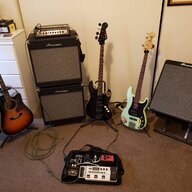
Not to start up a dead thread, but I've been wanting to build a bass. I think it would be worth my fancy to buy two bodies, say one alder and one basswood, then compare. Use the same neck, hardware, and strings. No paint on the bodies just straight AB to a daw with no eq, then mic it from an amp with everything at noon. I think this would be pretty cool to see


