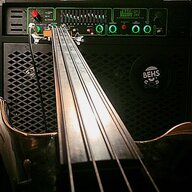
Currently I am playing one of those Amazon starter kits for coming up on 6 months and while find it quite functional, it is not the most comfortable thing to play. Additionally some notes are sharp or flat and very buzzy (this is not due to technique I had it looked at).
So of course what is my next thought, I must upgrade! I have been looking mainly at two basses the Woody Allen Rumblecat and the JC signature. Currently am leaning towards the JC.
Any way I could play these in store, does guitar center or any major chain allow ordering just to play. I live in sort of a brick and mortar music store deficient zone.
Do I honestly need to upgrade? The bass I am using is perfectly fine…
TalkBass is a great resource but as a new player you also might need some context. This place has a lot of members who appear to have unlimited disposable income and the solution to every post is to buy more gear. There are also some pro players who do have very high quality and expensive gear since it's literally their job, so conversations about the need to buy new stuff is different when it's your livlihood.
The first thing I'd recommend is to take your current instrument to a local repair shop or luthier. Invest a new set of strings and pay them to set it up, and make sure to mention the issues with intonation and buzz. You may find that spending $60 on a "tune up" has it playing like a whole new instrument!
If you do want to move on to a new bass, you really want to feel it in your hands before you commit. There are so many factors, from neck width/thickness to string spacing, even scale length, without experience you probably don't know what does or doesn't work for you, and you may even miss some qualities of instruments when window shopping online.
I'd suggest going to whatever local stores are available and trying everything there, and note down the features and specs of the basses that you connect with. It doesn't matter if they cost $100 or $5000, you're just trying on shoes to see what fits. If you don't have any local stores you might look to the local musician community, you'll often find local musicians really like talking about gear and would be happy to let you try out their instruments to help you identify what you like.
If you do find something that speaks to you, whether in person or online, buy from a place with a return policy unless you can truly afford to just throw that money away. You might find that after a few hours it's not as comfortable as it was in the store, or it doesn't sound the same at home as it did in the demo room. Personally, unless I'm buying from someone who I know sets up their instruments well, I always budget the cost of new strings and a professional setup onto any new instrument, too.
Lastly, at this stage in your bass life, the #1 feature for any bass should be having an instrument that inspires you to pick it up. It doesn't matter what anyone else thinks or even how it sounds. If you have the desire to pick it up, hold it, play it, and study it, you'll grow as a musician. All the fancy specs and perfect tones mean absolutely nothing if it sits in a case all day because you don't want to get it out and play it.