My mom and dad bought this bass for me for me somewhere around 1969 or 1970. I played it in 3 different bands when I was in junior and senior high school. I have always loved this bass, I've had offers to trade for name brand basses or to sell it. But I've kept it and don't think I would ever part with it.
I can't remember where they bought it, but it was purchased at one of these four stores, Sears, Western Auto, Montgomery Wards or possibly JC Pennys
My son is using the bass right now with the youth group band he is leading.
It does not have the the correct bridge or knobs. The original knobs were chromed plastic Hat design and they cracked from age I guess and would not stay on. The bridge my son talked me into changing it. The bridge cover is missing, I lost it and I'm trying to find a replacement.
Here are some pictures
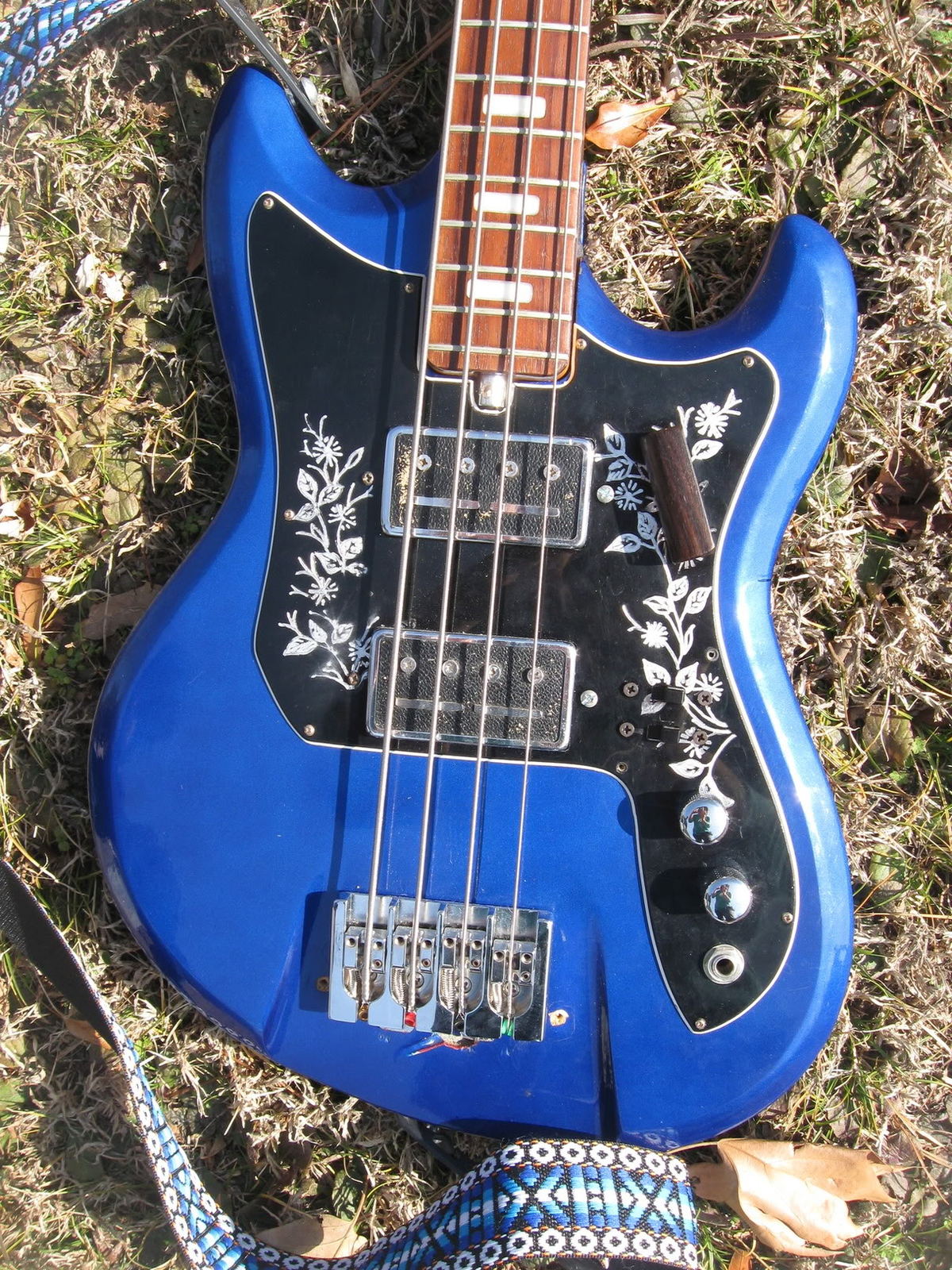
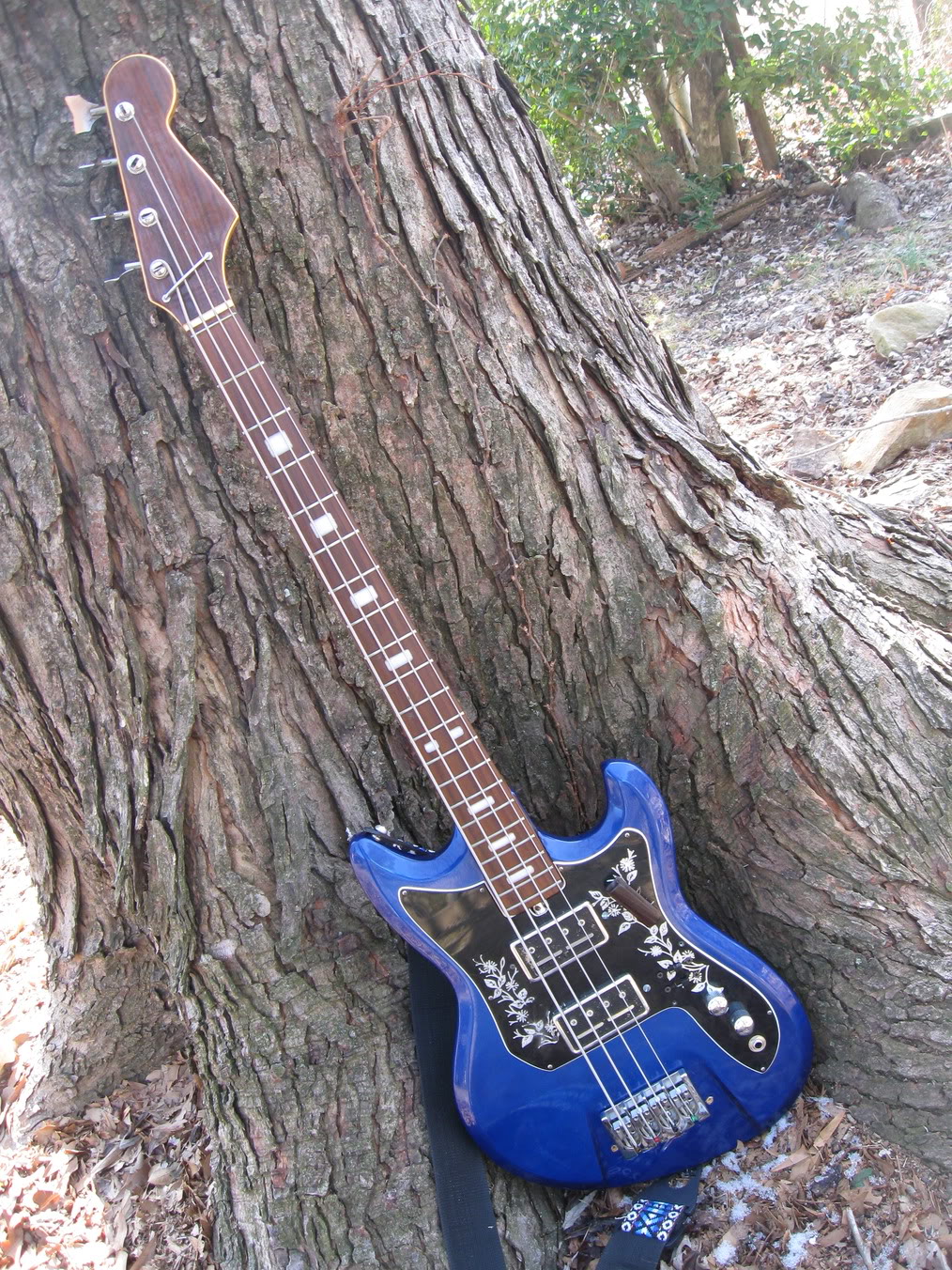
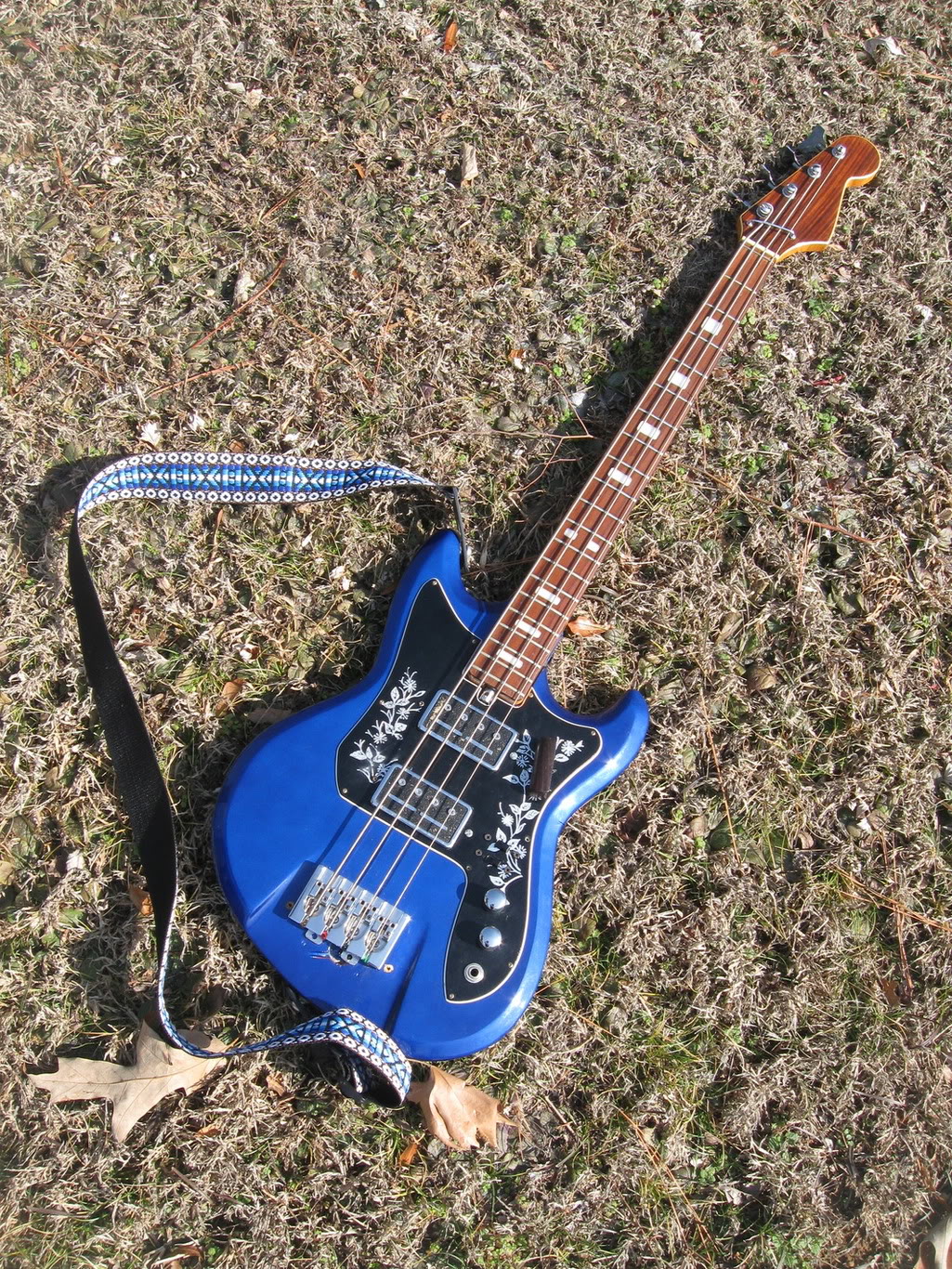
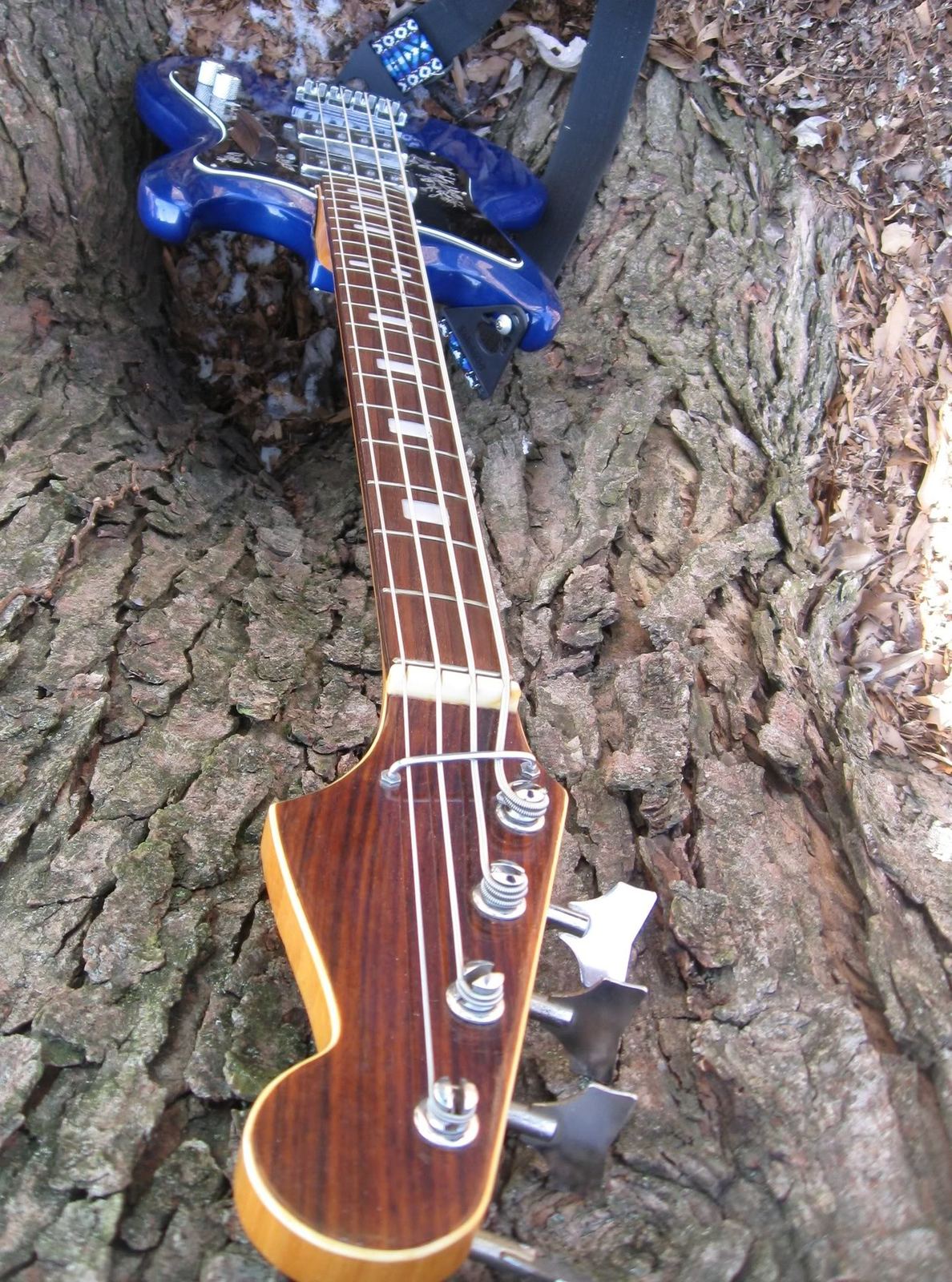
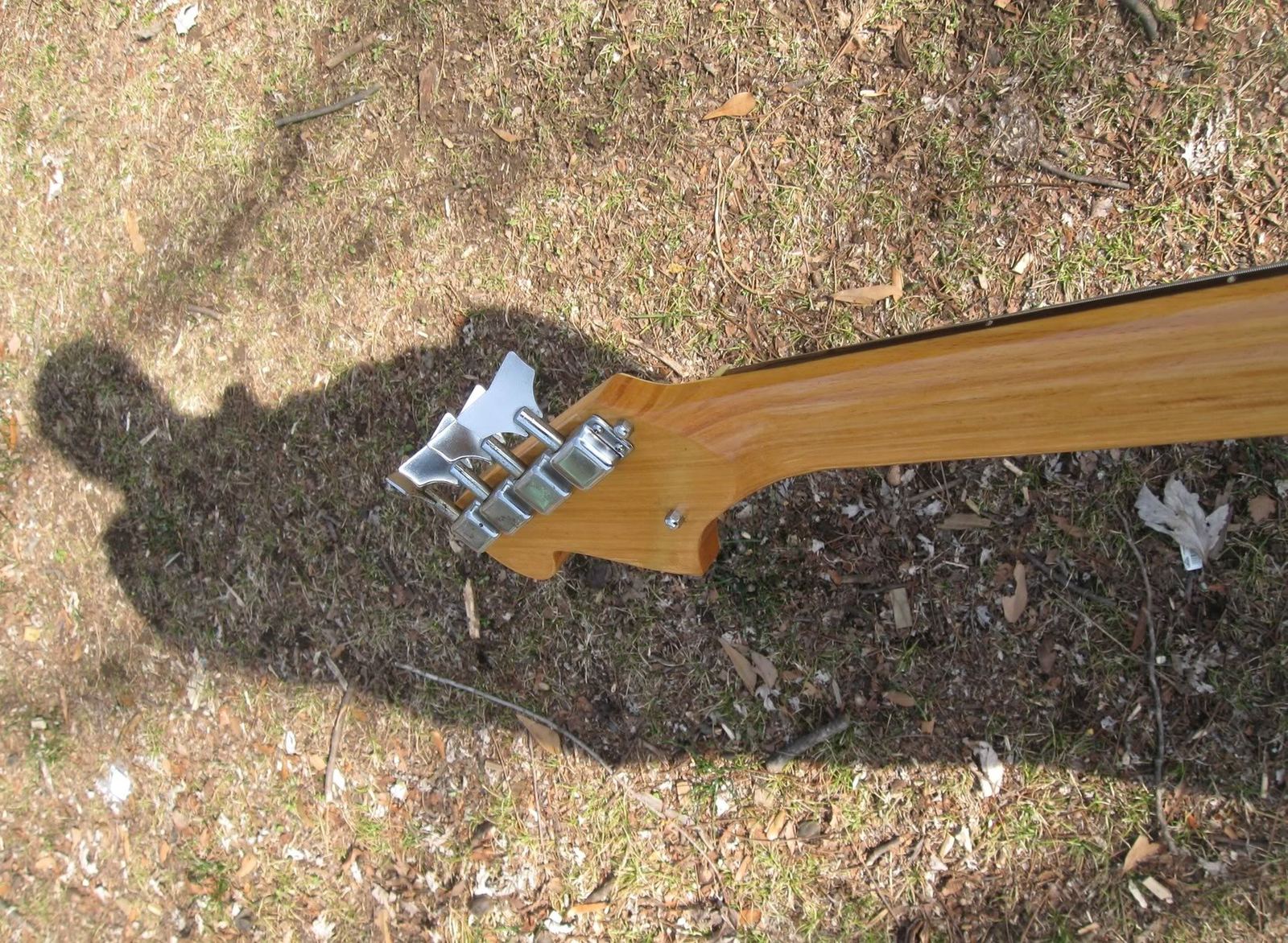
I asked my son to send some good pictures of the bass so I could post it and this is what he sent. Really didn't mean for him to try and be artistic about it, just wanted some good pictures. Any way as you can see by the finish I really took good care of it over the years, doesn't really look like it's 41 or 42 years old
I don't remember if there were any markings on the guitar, I don't even remember a decal on the headstock. It came as a package with a transistor amplifier. The amp finally gave up the ghost about 12 years ago. I should have kept it. The amp had a 15" speaker and the control panel was slanted on the front of the amp.
Thanks for any help you can give me,
Delos Wood
I can't remember where they bought it, but it was purchased at one of these four stores, Sears, Western Auto, Montgomery Wards or possibly JC Pennys
My son is using the bass right now with the youth group band he is leading.
It does not have the the correct bridge or knobs. The original knobs were chromed plastic Hat design and they cracked from age I guess and would not stay on. The bridge my son talked me into changing it. The bridge cover is missing, I lost it and I'm trying to find a replacement.
Here are some pictures
I asked my son to send some good pictures of the bass so I could post it and this is what he sent. Really didn't mean for him to try and be artistic about it, just wanted some good pictures. Any way as you can see by the finish I really took good care of it over the years, doesn't really look like it's 41 or 42 years old
I don't remember if there were any markings on the guitar, I don't even remember a decal on the headstock. It came as a package with a transistor amplifier. The amp finally gave up the ghost about 12 years ago. I should have kept it. The amp had a 15" speaker and the control panel was slanted on the front of the amp.
Thanks for any help you can give me,
Delos Wood