
Enjoy the benefits of a premium membership!
Upgrade Account
-
TalkBass has been independent since 1998. Add your voice.
Create a free account to reply to discussions, view embedded media, and browse with fewer display ads.
Join free Log in
Want zero display ads or expanded classifieds tools? Compare plans.
You are using an out of date browser. It may not display this or other websites correctly.
You should upgrade or use an alternative browser.
You should upgrade or use an alternative browser.
only one bass player
- Thread starter RichardW
- Start date
-
- Tags
- bass player one player
More options
Who Replied?


I would love to play in a trio with another bassist and a drummer. You could trade off supporting and leading (the earth bass/air bass model), or just go nuts at the same time! It would require the right players and a vision.
I read a Phil Lesh quote about what it was like to play with Mike Gordon. They asked him what's it like to have two basses on stage. He said something like "It was like two hippopotami humping."
Molotov use two basses in a lot of their songs, like "Que no te haga bobo Jacobo" and "Here we Kum", and it definitely sounds great!


Molotov use two basses in a lot of their songs, like "Que no te haga bobo Jacobo" and "Here we Kum", and it definitely sounds great!
In fact 2 basses and one guitar is their standard lineup. One bass (Micky, on the right) is a short scale used mostly like a detuned riffing guitar while in the other (Paco, on the left) relies the "traditional" bass role. I find the end balance really nice.


It does happen, see a lot of Jazz gigs where two bass players are use, but it needs arrangement of the parts.
As a rule one player harmonises and the other players melodies, even more fun with heavy left handed Keys to contend with.
It is a frequency issue if bass instruments occupy the same areas, a sort of dissonant nausea, because of the amount of air being moved, can occur and it is an un-pleasant sensation...quite dis-orientating.
i have seen a few Rock/metal acts do it, but using effects, so it is not pure bass frequency functioning as bass, it is functioning as another part.
Acoustically it works....orchestras have been doing it for centuries, b ere is the Great NHÒP to explain why,
As a rule one player harmonises and the other players melodies, even more fun with heavy left handed Keys to contend with.
It is a frequency issue if bass instruments occupy the same areas, a sort of dissonant nausea, because of the amount of air being moved, can occur and it is an un-pleasant sensation...quite dis-orientating.
i have seen a few Rock/metal acts do it, but using effects, so it is not pure bass frequency functioning as bass, it is functioning as another part.
Acoustically it works....orchestras have been doing it for centuries, b ere is the Great NHÒP to explain why,
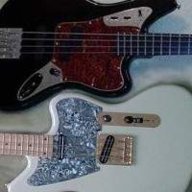
Had another band play a gig with us at a dive bar in Seattle around 1995 or so. Can't remember their name. They had 2 bassists, no guitars and sounded amazing. Made quite an impression on me then as I was kinda young and thought I was pretty good. Nope. These guys both could play circles around me.
All I remember about their rigs and their setup was both of them had completely different 2x15 cabs. One's tone was bright and the other deep. The bright guy was very busy and often threw a few chords in. The other was playing some sick grooves. They made it work.
...Also gave me massive gas for a 2x15 cab.
All I remember about their rigs and their setup was both of them had completely different 2x15 cabs. One's tone was bright and the other deep. The bright guy was very busy and often threw a few chords in. The other was playing some sick grooves. They made it work.
...Also gave me massive gas for a 2x15 cab.

and the Tramps used two basses on "Disco Inferno".
Seriously? That's such a cool bassline. I don't recall hearing a 2nd part.
D
Deleted member 165050
Guest
Hmmm some interesting opinions about acoustics and low frequencies in here 
Check out Renauld Garcia Fons, a jazz bassist who usually has a bassist in his band playing usual bassist stuff while he plays extended solos. Although he is often in the upper register of the double bass that isn't always the case, and low frequency intervals between two instruments can have a hugely rich modulated sound.
Also check out the double bass section of any orchestra, and particularly how double basses and cellos cross over frequency ranges. Same thing applies again with low frequency intervals (i.e. chords).
Multiple instruments in the sub 100Hz-ish range work just fine, as long as you think about what they are doing. All rock instruments cross over in frequency ranges and keeping them clear of each other in that respect is a pipedream.
And then there's Lemmy of course, who played rather a lot of chords on bass.
Check out Renauld Garcia Fons, a jazz bassist who usually has a bassist in his band playing usual bassist stuff while he plays extended solos. Although he is often in the upper register of the double bass that isn't always the case, and low frequency intervals between two instruments can have a hugely rich modulated sound.
Also check out the double bass section of any orchestra, and particularly how double basses and cellos cross over frequency ranges. Same thing applies again with low frequency intervals (i.e. chords).
Multiple instruments in the sub 100Hz-ish range work just fine, as long as you think about what they are doing. All rock instruments cross over in frequency ranges and keeping them clear of each other in that respect is a pipedream.
And then there's Lemmy of course, who played rather a lot of chords on bass.

alexclaber
Commercial User

old news
i've played many times with another bass player, both on 6 strings. with good players it makes for perfectly fine music - but i would agree that generally two bass guitars don't blend nearly as well as acoustic basses do, which makes sense why its much more common for them.
To Relsom, yes, there are two bass players playing matched notes in "Disco Inferno". I never knew it until I closely watched a couple of YouTube videos of the band playing that song. One bass is distorted and sounds a bit like a synthesizer while the other has no effects. It is very well done. 
Great info. twofingers!As a sound guy too, I can tell you it's a simple matter of physics. Mid frequency and high frequency tones "blend" better. Chords in sub frequencies (with rare exception) sound horrible.
So, if you had two bass players, they would have to occupy two different sonic footprints. Either...
One would have to play low bass and one higher (which really negates the need for that higher instrument being a bass).
Or one could play sustained notes while the other does plickity plackity stuff...which can usually be handled by a drummer/percussionist.
If you'll notice, the same has happened throughout history of music. Babershop quartets don't have two bass singers, while all of them have a couple or three guys in the middle/high range. Symphonies usually have a slue of mid/high instruments with maybe a couple tubas or double basses. Those bass tones simply clash when layered in most cases. (There are exceptions, of course, but they are rare.)
Short version: They couldn't realistically occupy the same space like keys or guitars can. If they have to occupy two different sonic spaces, why have them both be basses when so many other instruments do the mid/high things so much better than basses do?

Hmmm some interesting opinions about acoustics and low frequencies in here
Check out Renauld Garcia Fons, a jazz bassist who usually has a bassist in his band playing usual bassist stuff while he plays extended solos. Although he is often in the upper register of the double bass that isn't always the case, and low frequency intervals between two instruments can have a hugely rich modulated sound.
Also check out the double bass section of any orchestra, and particularly how double basses and cellos cross over frequency ranges. Same thing applies again with low frequency intervals (i.e. chords).
Multiple instruments in the sub 100Hz-ish range work just fine, as long as you think about what they are doing. All rock instruments cross over in frequency ranges and keeping them clear of each other in that respect is a pipedream.
And then there's Lemmy of course, who played rather a lot of chords on bass.
Tell you what...
Play a 9 chord on a 5 string bass guitar starting with open low B. Then play the same chord on a piano with B5 as the lowest note. One of them will sound great. One won't.
Latest posts
-

-

-

-
 Do the new Rickenbacker 4003s sound like the 4001s from the '70s?
- Latest: buldog5151bass
