For me, in order to get that distortion break up, I have to have the volume so high it’s overpowering everyone else in the mix.
Meaning, I have to turn down to sit in the mix well. Therefore, losing that distortion breakup and having a clean tone.
My thought process of switching to a lower wattage cab makes me think I can achieve that breakup at a volume thats reasonable in the mix.
If I’m not making sense, sorry.
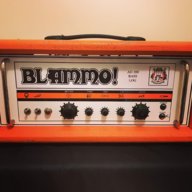
I'm not that familiar with the AD200B (seen and heard them, just haven't played one -- well, maybe once, very briefly), so forgive me if I'm missing something.
Assuming that you've messed with the Gain vs. Master volume settings and still haven't gotten the tone you want, it sounds like you might be looking for power tube distortion vs. just what's available from the preamp. If that's the case then, as stated by others, above, your cabs' power handling isn't the issue, it's their sensitivity/efficiency.
The wattage rating on the cab is related how much power it will handle from your amp*, not how loud it will go with a certain amount of power. Assuming your cab will handle what the amp's putting out without getting unduly stressed, it's the efficiency that will determine how loud you can get, not the wattage rating on the cab.
A new, energy-efficient, LED light bulb might hit 800 lumens with 10 Watts of power, where an older-style incandescent bulb might need 50 or 60 Watts to hit that.
Speaker efficiency is typically (but not always) measured in decibels-per-Watt at 1 meter distance (dB/W/m).** A speaker listed at 90 dB/W/m should produce a sound pressure level of 90 decibels at a spot 1 meter in front of it with 1 Watt of input power. (It will sound louder up close and less loud farther away, obviously.)
If you have two cabs rated at, say, 500 Watts, each, either should handle the full output of your amp (assuming the ratings are honest). If one is rated at 95 dB/W/m and the other is rated at 100 dB/W/m, the latter will go a lot louder.
In any case, if what you're shooting for is the sound of the amp pushed (I'm not sure, but that's what it sounds like to me) but you can't push it with two cabs, try playing it through one. If the cab will handle it, you'll have to push the amp harder to hit the same volume level. You'll also lose some fullness in the lows/low mids and will probably have to boost the low EQ to get a similar tone (which will push both amp and cab harder). If you like the sound of your current cabs, it's worth a shot -- listen to the cab for signs of stress, though, particularly if you're cranking the amp -- the deep lows from some tube amps (don't know about the Orange, specifically) can put a lot of stress on a speaker, even if the wattage numbers aren't that high.
I don't have much experience with GK cabs, but my brief (in-store) experiences with the Neo 410 left me with the impression that it was scooped and somewhat boomy -- by all accounts the Neo 12" cabs are tighter and better balanced. Given what you say, I'd try a 2x12 before a 4x12, or you might find yourself in the same boat you're in now. You can always get a second if you want. Ampeg/Orange cabs will probably also match the amp well (though I don't know how modern the tone from the Orange cabs would be).
If you're looking to try something (very) different, I am a fan of the MAS (Michael Arnopol Soundworks) cabs.
@thumbs&fingers played an AD200B with them for awhile, I think, and might be able to give you some insight. (I've played the MAS 48 he has for sale with a 150 Watt tube amp and thought it was killer -- it would definitely handle the output from your amp, but I don't know about its efficiency, one way or another.)
For now, though, try the amp with one of your current cabs and see what you think.
*, ** With power handling and efficiency, both, not everyone measures the same way -- sometimes there are small but noteworthy differences and sometimes major fudging. You can read up on this in a multitude of other threads, but good rules of thumb are to 1) look for RMS (vs. peak) wattage ratings, 2) take things with a grain of salt, and 3) use your ears -- if the cab sounds stressed, it probably is.