With my 51P RI I set the amp EQ all the way across at 12:00 and set the bass tone about half way. That gives me plenty of mid range or lower tone to play with on the bass tone control. Sounds good to my old ears.

TalkBass has been independent since 1998. Add your voice.
Create a free account to reply to discussions, view embedded media, and browse with fewer display ads.
Join free Log in
Want zero display ads or expanded classifieds tools? Compare plans.

Sounds like you may be a candidate for a change of the tone cap to a different value. I don't care for the typical muddy sound of any stock passive bass with the tone control rolled all the way back. So I change the cap to a .022mfd and that makes the tone control work in a range that does what I like. It's an inexpensive mod, especially if you are handy with a soldering iron - and it's entirely reversible if you don't like the result.Personally, I can't stand having the tone rolled all the way off. Depending on the P-Bass, I normally have it close to dimed. A couple of my basses are a bit brighter than the others (60th Anniversary P for one), so they get rolled off a bit more, depending on the song. But to my ears, rolling it completely off just sounds like so much mush. Very rarely do I turn it down farther than half-way.
Duck Dunn talks about how the engineers always made his bass sound treble-y to him when soloed, but when mixed into the final mix it sounded nice and round. Part of this is that the treble gives the note definition, but much of the extraneous high frequency is just eaten up by the hi-hat and guitar so it doesn't sound too strident. The other part is, yeah - they could take it out afterward, they couldn't really put it in, so record "open" mix/eq to the sound you want after - with the rest of the band on so hear what the final product sounds like - not the track.To my ears it sounds like some of the classic P bass tones (Jamerson, Dunn, etc) would best be had by rolling the tone all the way. Do others trying to get that sound roll the tone all the way off?
On a related note - I saw a video of Chris Wood from MMW playing his P bass with tapes on it. It sure sounded like his tone was all the way off too.
I guess for some reason I assumed most people kept the tone mostly open, but it would make sense that some peoples style is more of an 'always off' type of thing.



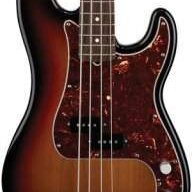

having said that, when I roll off the tone on my Precision there is a low-mid punch that is just not there when wide open.

No offense to Entwistle, but I think he was high...as a matter of fact, he likely wasThat is why Entwistle quit playing p-basses ... when you open up the tone you lose low end, to get the low end you lose treble. That is why he ended up playing active basses. That is why Billy Sheehan added a neck pickup to his p-bass.



That is why Entwistle quit playing p-basses ... when you open up the tone you lose low end, to get the low end you lose treble. .