

Enjoy the benefits of a premium membership!
Upgrade Account
-
TalkBass has been independent since 1998. Add your voice.
Create a free account to reply to discussions, view embedded media, and browse with fewer display ads.
Join free Log in
Want zero display ads or expanded classifieds tools? Compare plans.
You are using an out of date browser. It may not display this or other websites correctly.
You should upgrade or use an alternative browser.
You should upgrade or use an alternative browser.
P bass vs PJ bass
- Thread starter robert43
- Start date
More options
Who Replied?
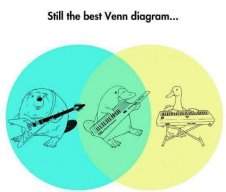
This definition is too strict. For one thing it excludes the original model Fender Precision basses that had a single single-coil pickup - I don't think one can reasonably argue that the original Precision Bass is not actually a Precision bass. But also it goes against the fact that for a long time Fender has sold "Precision" basses with PJ pickup configuration.A Precision Bass has a single humbucking pickup
Even if a Precision bass left the factory with only a split P pickup, I don't think it's reasonable to say that the addition of an after-market J pickup (without removing the P) somehow stops the instrument from being a Precision any more than painting it a colour that Fender doesn't offer would, especially when there are official PJ models.
This definition is too strict. For one thing it excludes the original model Fender Precision basses that had a single single-coil pickup - I don't think one can reasonably argue that the original Precision Bass is not actually a Precision bass. But also it goes against the fact that for a long time Fender has sold "Precision" basses with PJ pickup configuration.
Even if a Precision bass left the factory with only a split P pickup, I don't think it's reasonable to say that the addition of an after-market J pickup (without removing the P) somehow stops the instrument from being a Precision any more than painting it a colour that Fender doesn't offer would, especially when there are official PJ models.
I'll maintain that a Precision Bass is generally thought of as a single pickup bass (whether the original style with the single-coil pickup, or the later version with the split pickup), and regardless of what the decal says on the peghead, add a back pickup and it now becomes a different instrument functionally and sonically.
I'd also add that with the perpetual churn of the basic Fender building blocks for bass (mixing the two basic bodies, the two basic necks, and various combinations and variations of their pickups and electronics and hardware), the mixed products (like a Jazz in a PJ layout) and what they call them is down to marketing in most cases.
I also quite remember with advent of the Yamaha BB2000 in the early 80's, it was a sensation as it was a factory-built PJ style instrument at a time when IF you wanted a Fender equivalent, your only choice was to take your Precision Bass to a tech, and have it routed and modified to add a Jazz pickup. You could not buy a Fender PJ till more that a few years later.
Semantics aside, we'll agree to disagree in some ways.
Last edited:
I agree with the point I highlighted, but disagree that adding a back pickup makes it functionally and sonically different, because in my view you can always turn the back pickup off and then you've got a standard P tone.I'll maintain that a Precision Bass is generally thought of as a single pickup bass (whether the original style with the single-coil pickup, or the later version with the split pickup), and regardless of what the decal says on the peghead, add a back pickup and it now becomes a different instrument functionally and sonically.
By way of analogy, if you install a new transmission in your Ford Mustang it doesn't stop being a Mustang.
Sure. Happy that we can each state our views and then shake hands and move on to other topics. (Or whatever it is we're supposed to be doing in Covid conditions: I guess not shake hands; perhap nod politely?)Semantics aside, we'll agree to disagree in some ways.


My PJ is by far my most versatile bass, other than my separate Ps and Js. It was my main bass for years in NYC playing styles ranging from jazz, funk, rock, pop, salsa, samba, reggae, soul, fusion, prog, you name it. Alongside my Ps and Js it is the only 'modern' bass that gets a lot of studio time.


If you look for a typical P-bass sound, then, you don't need a PJ bass.
If you look for the typical set of tones a J-bass can produce, then a PJ bass won't get close enough in my opinion, hence, again, you don't need a PJ bass.
If you look for a more versatile version, tone-wise, of a P-bass then you can definitely consider a PJ, which, unless letting the bridge pickup substantially prevail, will sound as a "more refined" P-bass or as a P-bass by muting the bridge pickup.
For the way the question has been asked I'll also go for carrots this time.
If you look for the typical set of tones a J-bass can produce, then a PJ bass won't get close enough in my opinion, hence, again, you don't need a PJ bass.
If you look for a more versatile version, tone-wise, of a P-bass then you can definitely consider a PJ, which, unless letting the bridge pickup substantially prevail, will sound as a "more refined" P-bass or as a P-bass by muting the bridge pickup.
For the way the question has been asked I'll also go for carrots this time.

Just remember that not all PJ combinations are created equal. Some suck badly. Some are amazing.Hi thanks all I made up my mind I have a spare neck tuners bridge so I am going to buy a P body route the j pickup etc put it together and see what I think if I dont like it I sell it
Just remember that not all PJ combinations are created equal. Some suck badly. Some are amazing.
What pjs would you consider amazing? Looking to pick one up.
Ibanez SR650E with the Nordstrand designed PJ pickups.What pjs would you consider amazing? Looking to pick one up.
I also like the Fender Mustang PJ.

It's sometimes bass dependent. Smaller shifts in pickup location and voicing can result in a phasey honk.What pjs would you consider amazing? Looking to pick one up.
I have had great luck with EMG P/J sets for active and love my passive Wilde P46/J45L, too. The Wildes replaced the factory Peavey actives (which were the closest non EMG looking EMGs I have seen). The Peaveys honked, the Wildes didn't.

Yamaha 734/5 a, its a great sounding pj, and the j pickup has plenty of balls just like the p pup..What pjs would you consider amazing? Looking to pick one up.

... playing styles ranging from jazz, funk, rock, pop, salsa, samba, reggae, soul, fusion, prog, you name it.
Same with my SCPB style basses.
My favorite sets are EMG Geezers and DiMarzio Model PJ's, but there's a whole world of sets I haven't tried that I hear are good like Nordstrand, Fralin, Lollar, Novax, and the like. Generally, though, I prefer sets with a humbucking J so you have a lower possibility of introducing noise.What pjs would you consider amazing? Looking to pick one up.

I do, on both my J and PJ basses. Soloed neck pickup on a J is beautiful, soloed bridge pickup with some EQ adjustments is a cool usable sound imho. With PJs you have different options.Hi yes I dint think any 1 used the J by itself as even with a J bass I guess no one really just uses 1 pickup only or do they?


