• TalkBass has been independent since 1998. Add your voice.
    Create a free account to reply to discussions, view embedded media, and browse with fewer display ads.
    Join freeLog in
    Want zero display ads or expanded classifieds tools? Compare plans.

Pedal that’s always on

so I picked up a Boss OC-2 maybe a month back and quite enjoying it. It’s a quirky but also a good fun pedal

My question is this, I’ve put it on my board and when I switch on, the OC-2 always engages itself. (I’m not leaving it on at the end of the previous session)

The Dreadbox and Diamond will”stay on” if left engaged then power turned off

It doesn’t bother me I’m just interested in why this might be. Cheers
 
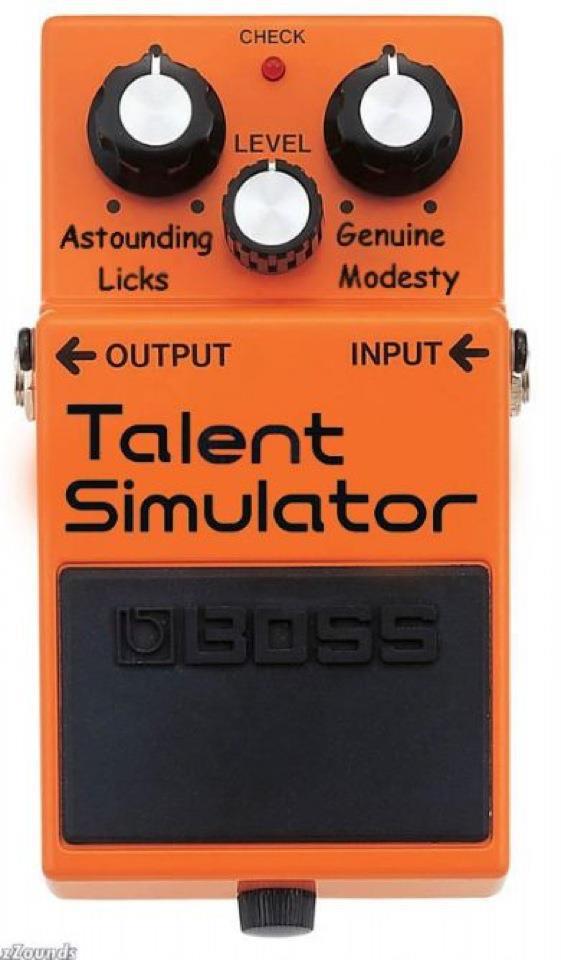
Talent_simulator_pedal.jpg
 
Had a serious issue with Roland’s non-existent customer service. I like the OC2, but will never again own another Boss pedal. That being said, the Scorpion is the most versatile pedal i have. Like ‘em so much, ive got two…edit- oops misunderstood the OP. - no, ive got 40+ pedals, none of them stay on…
 
Last edited:
  • Like
Reactions: JeffTCS
so I picked up a Boss OC-2 maybe a month back and quite enjoying it. It’s a quirky but also a good fun pedal

My question is this, I’ve put it on my board and when I switch on, the OC-2 always engages itself. (I’m not leaving it on at the end of the previous session)

The Dreadbox and Diamond will”stay on” if left engaged then power turned off

It doesn’t bother me I’m just interested in why this might be. Cheers
Yes, most if not all Boss pedals do this. It's intended. If I had to guess at a practical reason why: if your power supply happens to falter such that the pedal shuts off, it will simply come back on without you needing to re-engage it. It's also useful for people who use loop switching systems, as in that case you frequently want the pedal to always be on, because switching sounds is mostly involving switching which loop is active and not which pedals are engaged. Loop switching systems weren't common when this was invented, so I would guess it to be the former reason instead of the latter. If it's not that, the designer may have thought that this just seems more convenient in general, without any specific use case for such a feature.

In some more modern pedals, you can program whether they default to on or off when plugged in.
 
  • Like
Reactions: foal30
so I picked up a Boss OC-2 maybe a month back and quite enjoying it. It’s a quirky but also a good fun pedal

My question is this, I’ve put it on my board and when I switch on, the OC-2 always engages itself. (I’m not leaving it on at the end of the previous session)

The Dreadbox and Diamond will”stay on” if left engaged then power turned off

It doesn’t bother me I’m just interested in why this might be. Cheers


My Boss BD2 does the same thing. It's most likely normal.
 
  • Like
Reactions: foal30
Not all Boss pedals default to on. I have TU-2 and DD7 on my board. When you turn the power on, they light temporarily and then turn off. My BD2 stays on.

Perhaps the difference is analog VS digital. AFAIK, the BD2 is analog and the TU-2 and DD7 are digital. They are all buffered, rather than true bypass. My guess is analog Boss pedals default to on so you know it's powered and ready to go. If they don't turn on, it's an indicator to troubleshoot. So the feature is sort of a function check. The digital pedals do a self-check that shows you a light, and then they turn off.

Why would this be useful. The BD2 is a buffered pedal, so even when the effect is bypassed, the pedal is on. If it doesn't get power, it won't pass a signal. Consider troubleshooting a dead pedal board with a bunch of buffered pedals. If the analog pedals all default to on, any that fail to turn on have a problem. If the pedals default to off, you have to toggle pedals until you find the one that does not turn on.

For the record, I would prefer that the BD2 starts up on the off position. But I have gotten used to it, and it no longer bugs me.
 
  • Like
Reactions: foal30
Yes, most if not all Boss pedals do this. It's intended. If I had to guess at a practical reason why: if your power supply happens to falter such that the pedal shuts off, it will simply come back on without you needing to re-engage it. It's also useful for people who use loop switching systems, as in that case you frequently want the pedal to always be on, because switching sounds is mostly involving switching which loop is active and not which pedals are engaged. Loop switching systems weren't common when this was invented, so I would guess it to be the former reason instead of the latter. If it's not that, the designer may have thought that this just seems more convenient in general, without any specific use case for such a feature.

In some more modern pedals, you can program whether they default to on or off when plugged in.

My other Boss pedals didn’t or don’t. But it’s clearly a thing. Cheers
 
  • Like
Reactions: Wasnex