• TalkBass has been independent since 1998. Add your voice.
    Create a free account to reply to discussions, view embedded media, and browse with fewer display ads.
    Join freeLog in
    Want zero display ads or expanded classifieds tools? Compare plans.

Double Bass perforated basses

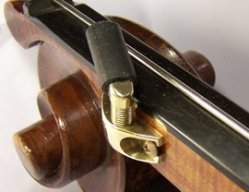
I often use this method using .012 plated wire and a guitar tuner clamps. Sometimes the wire can be threaded through the crack without drilling. With care, the pre-shaped cleat can be placed in the proper manner. It is a good and cost effective method which can be redone when the top really needs to come off.

Tom
 
I use this technique for school repairs. I will plug the holes with modified toothpicks and use touchup varnish to make them nearly invisible. Schools don't like paying for the top to come off when there's not catastrophic damage to deal with..
 
I use magnets for that type of repair to bring the crack back together and then place a strip of linnen inside to reinforce it. I suppose I might consider a tiny hole with wire like Paul described but I haven't done that in quit a while, years and years.
Magnets. That's an idea, but they must be some pretty darn strong ones you have! My guy uses strips of very thin drum skin instead of linen. He gets them especially prepared for this purpose, and has some very cool flexible clamps which pull the back together for positioning.
I've had back seams repaired with wire in the past. It was done carefully and worked, but the skin approach is way better.
 
Magnets. That's an idea, but they must be some pretty darn strong ones you have! My guy uses strips of very thin drum skin instead of linen. He gets them especially prepared for this purpose, and has some very cool flexible clamps which pull the back together for positioning.
I've had back seams repaired with wire in the past. It was done carefully and worked, but the skin approach is way better.

Yes Rob they are dangerously strong...I kinda hate working with them as they can jump a foot or so to stick to each other and if my finger is in between... ouch.

I would like to learn about that method or your guys.
 
Yes Rob they are dangerously strong...I kinda hate working with them as they can jump a foot or so to stick to each other and if my finger is in between... ouch.

I would like to learn about that method or your guys.

Ken, I don't know where he got the skin, but it looked like a natural skin snare drum or tamborine head, about ten thousanths thick. I think he just coated it with hide glue and layed it over the seem, much like you would with linen.

Those magnets sound pretty scary. Could you do it with electromagnets? Then you could keep them off until in position. Would anything Invalid Link Removed work?
 
Hi Matthew,

I don't know if I was too clear but I don't use the magnet to guide the cleat. I use the magnets to press the crack closed and apply clamping pressure while the hide glue dries.

So on the outside I have a couple magnets embedded into a block of wood with some masking tape to prevent it from inadvertently being glued to the side. I put a couple magnets into another small square of wood making sure they are close as possible to the surface. The proper drill bit is helpful, a forstener bit. When the two come together they pull the crack closed. And they actually move with each other, like "ironing" a shirt. the y press the crack. In my case the crack was a small concussion crack not a long crack. It would require a couple of these magnets on the inside to pull a long crack closed.

To get the magnet inside, it sticks to one of those flexible grabbers, the kind to retrieve the soundpost, and with the magnet in the correct place outside the bass, after applying glue to the crack, I insert the magnet on the end of the tool, go in through the f hole, and when it gets close it leaps into the correct place. The I do the ironing motion to bring the crack together and leave it until it dries. Once dry, I spread glue to the inside and insert a strip of linen and press it in with a smooth object on a stick. A total PIA!