
• TalkBass has been independent since 1998. Add your voice.
    Create a free account to reply to discussions, view embedded media, and browse with fewer display ads.
    Join freeLog in
    Want zero display ads or expanded classifieds tools? Compare plans.

Plastic + Nitrocellulose

Hey everyone. Quick question for you luthier types.

I think I've read that certain plastics can harm nitrocellulose lacquer. So, does anyone here know if these plastic Fender-type neck plate cushions will react with nitro?
I don't know exactly what type of plastic these are made of, but I'm sure some of my fellow Fender nerds are familiar with these:
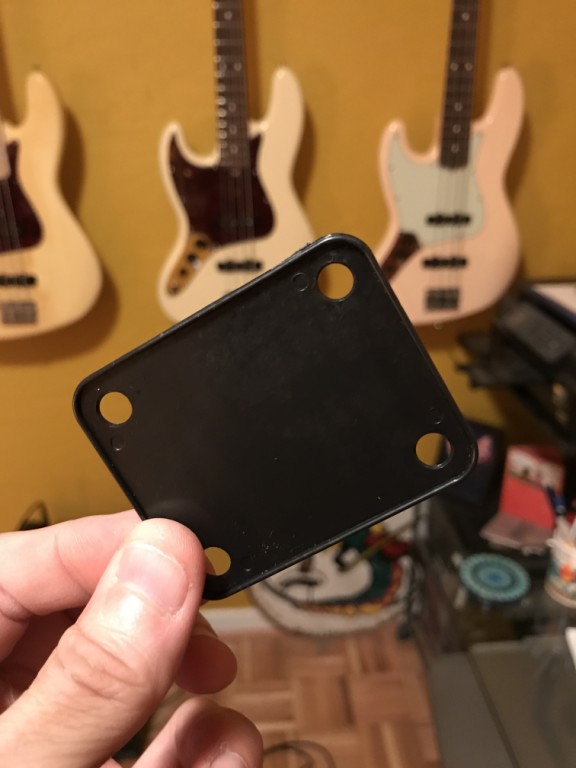
6TmDIT.jpg


Thanks in advance!
 
I'm no chemical expert, but I was told that it's not the plastics (generalisation) that react with nitro, it's the release agents used to release the part from the mould in the forming process. If the plastic is cleaned thoroughly...it should be ok. Bubble wrap has a solvent which helps form the bubbles...that's the reactive part...not the plastic.
 
  • Like
Reactions: Matt R.
That "new car" smell is largely mold-release off gassing from the plastic parts. Mm mm.....mold release. I never heard of a plastic neck plate hurting nitro, some foam case liners will eat it though. I know nitro looks nice, but its not a very good finish for guitars, fragile, vulnerable to common chemicals, chips easily, etc. The newer Water Borne finishes are finally reaching the point where they can rival the gloss and transparency of nitro, that's the way it going with most manufacturers except the custom shops and relic jobs.
 
  • Like
Reactions: ICM and Matt R.
I was just about to ask this exact same question.

I have a new 1966 Jazz Bass finished in Nitro, and I can already tell the finish is prone to flaking off. There is slight bubbling around the control plate and neck pocket (which Fender at the factory tried to touch up).

I've seen several other new 1966 Nitro-finished Jazz Basses (and Strats) with flaking around the edges of the neckplate. I want to minimize this by using a neckplate gasket. And, I like the way they look.

Does anyone know FOR SURE if the generic plastic neckplate gaskets react with Nitro or not?

Thank you for your time and expertise.
 
I was just about to ask this exact same question.

I have a new 1966 Jazz Bass finished in Nitro, and I can already tell the finish is prone to flaking off. There is slight bubbling around the control plate and neck pocket (which Fender at the factory tried to touch up).

I've seen several other new 1966 Nitro-finished Jazz Basses (and Strats) with flaking around the edges of the neckplate. I want to minimize this by using a neckplate gasket. And, I like the way they look.

Does anyone know FOR SURE if the generic plastic neckplate gaskets react with Nitro or not?

Thank you for your time and expertise.
Nitro shouldn't react with PVC or ABS plastic, but who knows what those plates are made with? There are more than a few varieties of 'plastic'. Nitro reacts with acids and bases, heat and cold, most solvents, pressure and UV. Just making the neck joint tight may cause Nitro to flake and bubble. A plastic spacer can deform a little under movement, so when tight, it can crush a little under the load of the joint and potentially have microscopic flexing with hard neck movements. Personally I want a very tight joint at the neck with no movement, so I would not put anything softer than wood there myself. The plastic neck spacer may be hard enough to be no problem in the joint, but it will depend on the plastic. I'd think a plastic that is soft enough not to damage Nitro may be too soft for that purpose in the joint. Reaction with Nitro is another risk, as Nitro is reactive, non-durable and relatively soft compared to modern finishes.

Anyway, I don't think anyone is going to be be to promise you that xyz generic plastic will be guaranteed not to react with Nitro. The chemical makeup of the plastic is unknown in most cases, and Nitro is generally a highly reactive and weak finish, but ages and wears in an aesthetically pleasing way. :)
 
I think PVC could potentially be a problem. When I've seen or heard of lacquer softening it has usually been from contact with vinyl straps or protective sleeves on guitar stands and wall hangers. That being said I think a lot of pickguard sheet is PVC these days so maybe it is alright after all.

edit: I think it might be the plasticizer present in flexible vinyl like leatherette or vinyl hose that is the problem, rather than the vinyl itself, which would explain the rigid PVC being safe.
 
Last edited:
  • Like
Reactions: MARVIN MECKLER