• TalkBass has been independent since 1998. Add your voice.
    Create a free account to reply to discussions, view embedded media, and browse with fewer display ads.
    Join freeLog in
    Want zero display ads or expanded classifieds tools? Compare plans.

Double Bass Position playing suggestion request for a practice piece.

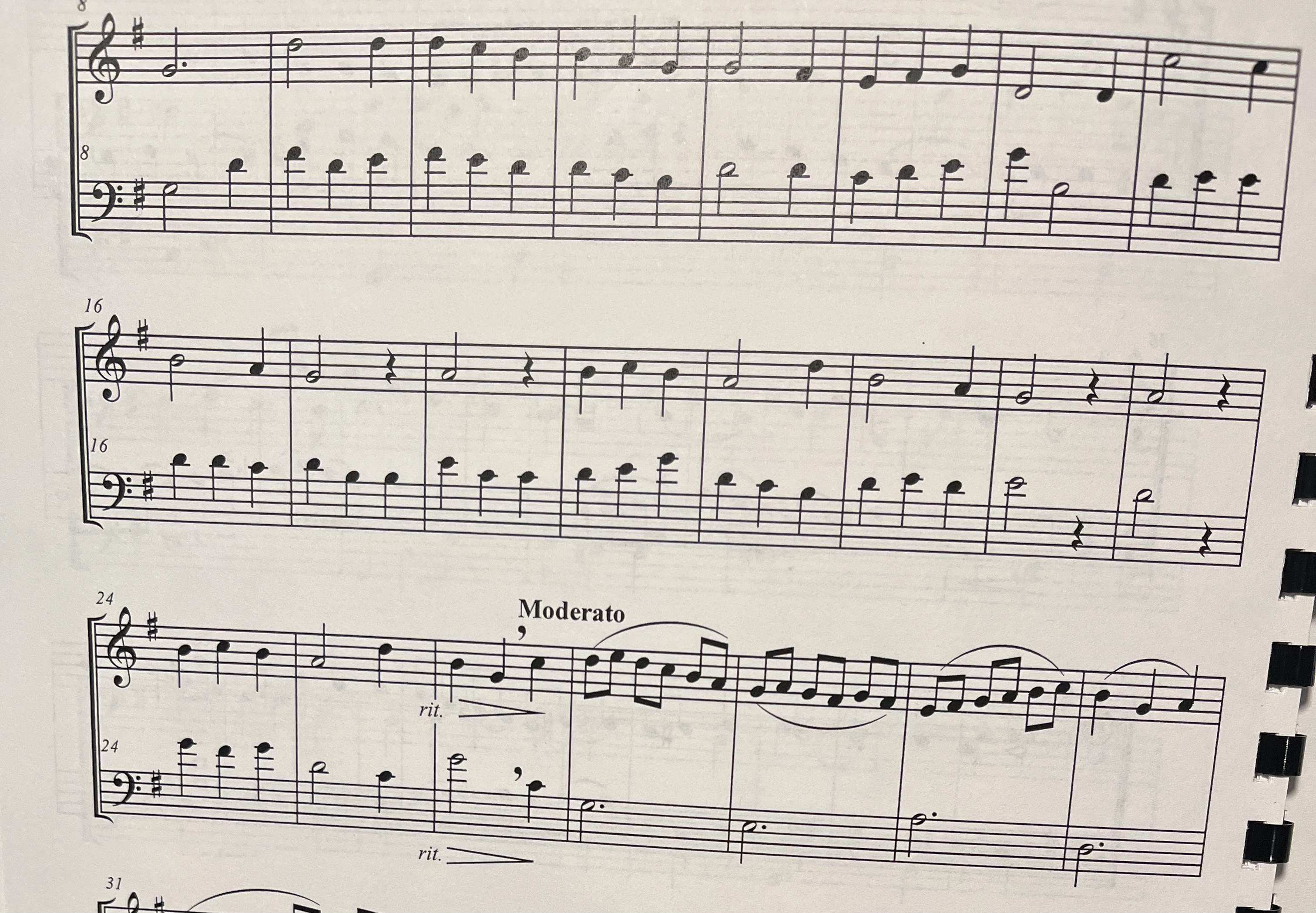
Hey, all. My teacher keeps upping my sight reading challenges and attached is a snip of a Christmas piece he gave me to work on (working on the bass clef currently) I get what the notes are, and what the time is, but not sure as to what (rabbath) position to play it in. Would you guys do the bulk of this on 3rd position or bounce between 2nd and 4th?

As always thanks for your advice.

John

E631D742-228C-406D-90D1-C0E0AA4CEDCC.jpeg
 
Thanks Casey, even though I’ve been doing g and d scale position surveys out of Vade mucum for the past several months, the e, f, and f# area of the 3rd position is still a little tricky for me. Maybe this piece will further untwist my fingers a little more!

My vibrato is neither strong nor confident but I’m getting there, lol! Right now my vibrato placement feels unnatural to me. Kind of like clapping at inappropriate times! Any suggestions on what particular sections to apply it too?

I plan to do the treble side next, though your right about the apprehension. I can read the clef by itself (though admittedly not as quickly as the bass clef), something about combining the concentration to do it while being hunched over the bass in thumb position where stopping the strings make your fingers feel like they’re bouncing on trampolines make it a frustrating experience about 30 min in :roflmao:.
 
Last edited:
  • Like
Reactions: marcox
The half notes here suit vibrato.

Vibrato in general is a big topic, and there are many experts with widely varying opinions.
Your teacher will be a big help. A nice vibrato takes time.

Generally bass vibrato is from the arm, it is not a hand vibrato. Lower notes and softer intensity suits a slower vibrato, with faster vibrato for high notes and intensity. It can be effective to start the note with no vibrato then come on strong Gary Karr style.

There are singers who have a vibrato/sound I love and I try to copy them. For myself, Nat King Cole comes to mind even when I’m playing classical.

Orin O’Brien feels there is no place for vibrato in classical pizz, but I have had conductors request a big vibrato on the pizz. Some jazz bass players feel there is no place for vibrato on pizz. You get to make up your own mind. Baroque players have opinions on vibrato use.

With treble clef sometimes I play an octave down pizz, when comfy an octave higher pizz, and finally with the bow. It’s a process. Don’t avoid treble clef as it can be a block later. Ironically tp playing is considered easier by some than the lower positions. High position playing and crossing strings vs shifting gets comfortable with short regular practice doses.
 
Last edited:
You know I totally didn’t even think about that in addition to Casey’s suggestions that most all of this can also be played in thumb position. For some reason I always instinctively push thumb position to everything written in Treble clef. I only have two brain cells left and every once in a while the bang together and make a spark. So many choices lol. 9 months in to the double bass and I’m still enamored with the discipline it demands of the player. It forces you to stop and think before playing at all times. Thanks again to the quick responses to my newbie questions Casey and to everyone else that I’ve pestered through the last couple of months. It really helps me think through things. Merry Christmas to all of you! I’m gonna go work on my sight reading and Chris Fitzgerald style thumb position callus (go watch Chris’s thumb position vids if you don’t know what I’m talking about) while I wait on the family to arrive for Christmas dinner! :D
 
Last edited:
  • Like
Reactions: CaseyVancouver