• TalkBass has been independent since 1998. Add your voice.
    Create a free account to reply to discussions, view embedded media, and browse with fewer display ads.
    Join freeLog in
    Want zero display ads or expanded classifieds tools? Compare plans.

Power cords

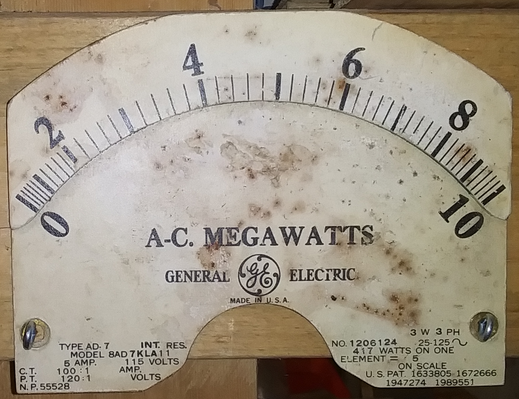
My dad, now retired, worked at a company that had a plant where they made chlorine gas and lye (sodium hydroxide) by electrolysis of salt brine. This company was "vertically integrated," to the point where they had their own power plant and salt mines. Anyway, the process was phased out, and they shut down the plant, but before demolishing it, told the workers they could go in and grab a souvenir. My dad took this scale from an electrical meter. He knew I was interested in electricity, so he gave it to me.

upload_2021-7-4_20-36-30.png
 
My dad, now retired, worked at a company that had a plant where they made chlorine gas and lye (sodium hydroxide) by electrolysis of salt brine. This company was "vertically integrated," to the point where they had their own power plant and salt mines. Anyway, the process was phased out, and they shut down the plant, but before demolishing it, told the workers they could go in and grab a souvenir. My dad took this scale from an electrical meter. He knew I was interested in electricity, so he gave it to me.

View attachment 4323759
That's quite the souvenir. It's too bad he wasn't able to get the whole meter.
 
As long as these Swiss cords' insulation does not have some EU eco rating like the ones they have on Mercedes spark plugs that are supple but made of soy that rodents like. My landlord in San Diego had a Merc E-vehicle and they chewed through the high current lines and cost him a lot of money to replace. Another option that are rodent safe yet supple are the ones that are hospital grade. Really nice cables and I got some from the flea market.

And folks, just because I said hospital grade IEC cables, do not go and start swapping cords next time you visit or if you work at a hospital. :D
I agree.
"Excuse me Mr. Kohler, I just need to shut down your heart monitor while I swap out the power cable for an inferior replacement."

Edit: The replacement was supplied with some Behringer gear; just to add insult to injury.
 
Last edited:
Fair enough. But "most" isn't necessarily "all."

Do you keep all your individual power cords with the equipment they came with? I don't.
No. I wish I could but that isn’t realistic.

For my more critical components (Which is most) I like to use a dedicated power cable for each. Just about every cable I’ve ever received with a product has been the very minimal spec. Thickness is at best an indicator of insulation thickness and tells you nothing about gauge. That’s fine for a cable that will get the job done. However, I like to take it one step further and use a cable I know has quality parts and was assembled by someone that takes pride in their work. Fortunately I have some soldering skills up to NASA standards compliments of the USAF.

But I’ll only take it one step further than that. I’m not going to pay an extravagant price for an esoteric cable when I know it won’t make an audible difference.

No. I wish I could but that isn’t realistic.

For my more critical components (Which is most) I like to use a dedicated power cable for each. Just about every cable I’ve ever received with a product has been the very minimal spec. Thickness is at best an indicator of insulation thickness and tells you nothing about gauge. That’s fine for a cable that will get the job done. However, I like to take it one step further and use a cable I know has quality parts and was assembled by someone that takes pride in their work. Sometimes that has to person is cheap and therefore me.

It’s not hard to make a cable if you apply yourself. But I’m fortunate enough to have to have had AirForce training. Thank you sir. Of course, that helps and makes it more fun.

But I’ll only take it one step further than that. I’m not going to pay an extravagant price for an esoteric cable when I know it wouldn’t make any difference with even the finest electric bass an amp setup. You may be able to hear a doctor difference in a refined home audio system.

bottom line is to use the highest quality components and have them assembled by someone with skill. That’s about as good as you can get and have good Sonics plus reliability. Anything more is only cutting into your profits.
bass an amp setup. You may be able to hear a doctor difference in a refined home audio system.

bottom line is to use the highest quality components and have them assembled by someone with skill. That’s about as good as you can get and have good Sonics plus reliability. Anything more is only cutting into your profits.

In the end there are only two things that matter. You to need a large enough gauge for the length, good insulation and most importantly, reliability. Once you have all that, move on.
 
Last edited:
As long as these Swiss cords' insulation does not have some EU eco rating like the ones they have on Mercedes spark plugs that are supple but made of soy that rodents like. My landlord in San Diego had a Merc E-vehicle and they chewed through the high current lines and cost him a lot of money to replace. Another option that are rodent safe yet supple are the ones that are hospital grade. Really nice cables and I got some from the flea market.

And folks, just because I said hospital grade IEC cables, do not go and start swapping cords next time you visit or if you work at a hospital. :D
Hospital grade has some unusual requirements that are related to the procedures for periodically checking the integrity of the gear. Probably not needed for bass gear.

I had mice eat through the spark plug wire on my lawnmower one winter. They also ate through the little squeeze bulb for priming the carb, meaning I had to replace the bulb before I could mow my lawn.
 
  • Like
Reactions: agedhorse
For my more critical components (Which is most) I like to use a dedicated power cable for each. Just about every cable I’ve ever received with a product has been the very minimal spec. Thickness is at best an indicator of insulation thickness and tells you nothing about gauge. That’s fine for a cable that will get the job done. However, I like to take it one step further and use a cable I know has quality parts and was assembled by someone that takes pride in their work. Sometimes that has to person is cheap and therefore me.

bottom line is to use the highest quality components and have them assembled by someone with skill. That’s about as good as you can get and have good Sonics plus reliability. Anything more is only cutting into your profits.

In the end there are only two things that matter. You to need a large enough gauge for the length, good insulation and most importantly, reliability. Once you have all that, move on.
I can state without exception that power cables on most products are designed and built to very specific and verifiable (via NRTL followup factory inspections) specifications. The gauge is specified AND PRINTED on the outside of all power cables that are NRTL recognized (virtually all power cables sold in the developed and developing world). The specifications are part of the safety certification program that every product goes through before being placed for sale, they are quite specific with regard to the type of conductor insulation and jacket that is allowed for each product category's listing. The quality of the parts, tolerances and assembly are part of the process because the power cords must pass extensive performance testing (including overload and mechanical) as part of the component recognition program, it's not optional. It has nothing to do with profit, it has everything to do with compliance.

Aftermarket power cords may not be held to the same standards however. While an amp manufacturer has extensive oversight from regulatory agencies inspecting their facilities and component compliance, aftermarket power cord sales have virtually no oversight other than the morals of the companies selling the products (which range from very high quality to absolute junk). In fact, some of these aftermarket safety approvals are counterfeit or fraudulent).
 
I can state without exception that power cables on most products are designed and built to very specific and verifiable (via NRTL followup factory inspections) specifications. The gauge is specified AND PRINTED on the outside of all power cables that are NRTL recognized (virtually all power cables sold in the developed and developing world). The specifications are part of the safety certification program that every product goes through before being placed for sale, they are quite specific with regard to the type of conductor insulation and jacket that is allowed for each product category's listing. The quality of the parts, tolerances and assembly are part of the process because the power cords must pass extensive performance testing (including overload and mechanical) as part of the component recognition program, it's not optional. It has nothing to do with profit, it has everything to do with compliance.

Aftermarket power cords may not be held to the same standards however. While an amp manufacturer has extensive oversight from regulatory agencies inspecting their facilities and component compliance, aftermarket power cord sales have virtually no oversight other than the morals of the companies selling the products (which range from very high quality to absolute junk). In fact, some of these aftermarket safety approvals are counterfeit or fraudulent).

I had no idea that the specs for a certified cable was so High. That’s a good thing to know. I now have more confidence in OEM power cables. Trying to take it a step further is probably a waste of resources.

I’m not too arrogant to know when I’m actually learning something. Seriously.
 
  • Like
Reactions: SoCal80s
FWIW nearly all the codes and safety standards that apply to our electrical equipment are driven by the insurance industry. The reason is elegantly simple. They do not want to pay claims for damage due to fire or for injury or death. Even the name Underwriters Laboratories refers to insurance underwriters. I’m just saying…
Carry on.
 
FWIW nearly all the codes and safety standards that apply to our electrical equipment are driven by the insurance industry. The reason is elegantly simple. They do not want to pay claims for damage due to fire or for injury or death. Even the name Underwriters Laboratories refers to insurance underwriters. I’m just saying…
Carry on.
That used to be the case, but now they are driven by global safety interests relatively independent from the insurance industry. Most are government trade industry based and are legal requirements in regions like the EU, enforced by government agencies much like how our FCC operates.

In practice, the number of injuries and deaths today are a fraction of what they were in the good ‘ol days. Are some aspects taken to the absurd? Sure, but there’s always a little bad with the good.
 
Do the same calculation using current rather than voltage and you will see the other limiting factor.

I have dealt with this my entire professional life, industrial controls and power systems was the specialty of my EE degree. It applies very much to audio electronics as well.

It's easy to determine the reasons for manufacturers not shipping with large gauge power cords- they cost more to buy, to ship and they're not necessary. It won't hurt to use a heavier one, but....

Right WRT the calculations- I hope you never decide to read comments in audio forums that deal with 'high end' and home theater equipment & accessories. If you have, you have my sympathy. I'm so freaking sick of their BS I could puke. Cable stands & supports? Batteries on cables that are intended to 'eliminate or reduce cable break in time'? GMAB!
 
you're missing half the formula there. you need to use a jack and socket together, so it would be limited by both ratings. voltage rating multiplied by current rating would be the maximum power rating.

Working on one cup, at the time. Right- power output needs current. For some stupid reason, I was thinking of the speaker load (I have no other excuse- I don't drink, use drugs, beat my head on the wall....).

Ever talk to someone who says they use Romex to connect their home theater speakers to the amplifiers? I have- don't do it.
 
No. I wish I could but that isn’t realistic.

For my more critical components (Which is most) I like to use a dedicated power cable for each. Just about every cable I’ve ever received with a product has been the very minimal spec. Thickness is at best an indicator of insulation thickness and tells you nothing about gauge. That’s fine for a cable that will get the job done. However, I like to take it one step further and use a cable I know has quality parts and was assembled by someone that takes pride in their work. Fortunately I have some soldering skills up to NASA standards compliments of the USAF.

But I’ll only take it one step further than that. I’m not going to pay an extravagant price for an esoteric cable when I know it won’t make an audible difference.

No. I wish I could but that isn’t realistic.

For my more critical components (Which is most) I like to use a dedicated power cable for each. Just about every cable I’ve ever received with a product has been the very minimal spec. Thickness is at best an indicator of insulation thickness and tells you nothing about gauge. That’s fine for a cable that will get the job done. However, I like to take it one step further and use a cable I know has quality parts and was assembled by someone that takes pride in their work. Sometimes that has to person is cheap and therefore me.

It’s not hard to make a cable if you apply yourself. But I’m fortunate enough to have to have had AirForce training. Thank you sir. Of course, that helps and makes it more fun.

But I’ll only take it one step further than that. I’m not going to pay an extravagant price for an esoteric cable when I know it wouldn’t make any difference with even the finest electric bass an amp setup. You may be able to hear a doctor difference in a refined home audio system.

bottom line is to use the highest quality components and have them assembled by someone with skill. That’s about as good as you can get and have good Sonics plus reliability. Anything more is only cutting into your profits.
bass an amp setup. You may be able to hear a doctor difference in a refined home audio system.

bottom line is to use the highest quality components and have them assembled by someone with skill. That’s about as good as you can get and have good Sonics plus reliability. Anything more is only cutting into your profits.

In the end there are only two things that matter. You to need a large enough gauge for the length, good insulation and most importantly, reliability. Once you have all that, move on.

That makes a lot of sense, now you explained it that way.

That makes a lot of sense, now you explained it that way.


.
 
It's easy to determine the reasons for manufacturers not shipping with large gauge power cords- they cost more to buy, to ship and they're not necessary. It won't hurt to use a heavier one, but....

Right WRT the calculations- I hope you never decide to read comments in audio forums that deal with 'high end' and home theater equipment & accessories. If you have, you have my sympathy. I'm so freaking sick of their BS I could puke. Cable stands & supports? Batteries on cables that are intended to 'eliminate or reduce cable break in time'? GMAB!
Don’t forget to polish your cables with magic cable conditioner… ;)
 
:laugh:
Only for a constant mechanical load like a motor. The mechanism is a bit complicated, but a rotating motor creates back emf, which opposes current draw, when the voltage, the motor tries to slow down, the slip angle increases, the back emf is decreased so the current increases to try to keep the speed constant. This does not apply the same to fan loads (and a few other loads) where the load on the motor changes with the square or cube of the speed) and also depends on the motor type.

If you reduce the current to an amplifier with a non-regulated supply, the current DECREASES because there is no feedback mechanism like what most motors have. When the power supply is PWM regulated, that’s a form of feedback and will behave more like a motor.

This is a complicated topic, and shows why making simplistic and broad sweeping claims about power cords without understanding the underlying science/math is really pretty foolish. All the important information is in the details.

This takes me right back to ENGR 6843: Rotating Machines. The guy that taught us had the patents for the permanent magnet electric motors Toyota uses in the Prius. Brilliant, sweet and very eccentric fellow. He named his kids Proton, Atom and Electron (no joke).

All I know is some guy named Eddy is responsible for this and we should beat his ash. :mad:

Eddy Currents? I knew him back in the day. What a jerk.

That used to be the case, but now they are driven by global safety interests relatively independent from the insurance industry. Most are government trade industry based and are legal requirements in regions like the EU, enforced by government agencies much like how our FCC operates.

In practice, the number of injuries and deaths today are a fraction of what they were in the good ‘ol days. Are some aspects taken to the absurd? Sure, but there’s always a little bad with the good.

I used to be terrified of standards and certification for consumer electrical equipment until I started dealing with the FAA. :laugh: