
Enjoy the benefits of a premium membership!
Upgrade Account
-
TalkBass has been independent since 1998. Add your voice.
Create a free account to reply to discussions, view embedded media, and browse with fewer display ads.
Join free Log in
Want zero display ads or expanded classifieds tools? Compare plans.
You are using an out of date browser. It may not display this or other websites correctly.
You should upgrade or use an alternative browser.
You should upgrade or use an alternative browser.
Preferred methods for learning bass
- Thread starter IamGroot
- Start date
More options
Who Replied?


According to Texas A & M, I am a CTP, which means I know a little about how people learn.
There are four basic ways, but none of us fit exactly in one of the four. So this expands and could take up several of your choices. Be interested what you come up with.
I'm a visual learner so books, charts, patterns, etc. are my go to source. Then I have to know why something works, so I'm a theory guy. Plus if I have no interest in the subject I'll not put in the time needed, I have to be motived and have a goal.
Good luck with your answers.
There are four basic ways, but none of us fit exactly in one of the four. So this expands and could take up several of your choices. Be interested what you come up with.
I'm a visual learner so books, charts, patterns, etc. are my go to source. Then I have to know why something works, so I'm a theory guy. Plus if I have no interest in the subject I'll not put in the time needed, I have to be motived and have a goal.
Good luck with your answers.

Nothing beats live experience with other players IME but I might not have gotten nearly as much of that without having done a 2-year program at the local college.
Transcribing stuff is super helpful, too.
Transcribing stuff is super helpful, too.
Mostly self taught with good ol fashion learning by ear.
I supplement with Amazing Slow Downer, YouTube bass covers, iReal Pro, transcription and other books for reading practice.
I don’t play a lot of scales or other academics anymore; but occasionally I’ll find a nugget from an online lesson video that’ll work its way in.
I supplement with Amazing Slow Downer, YouTube bass covers, iReal Pro, transcription and other books for reading practice.
I don’t play a lot of scales or other academics anymore; but occasionally I’ll find a nugget from an online lesson video that’ll work its way in.
When I want to learn a new song, I google the tabs and start practicing at 50 bpm. Most of the time I'm like "that doesn't sound right at all who the hell uploaded this?" and then I try to figure out the correct notes by ear. When I get it right I look back at the tabs just to realize that everything was perfectly correct from the beginning and I just misread something because I probably need glasses.
According to Texas A & M, I am a CTP, which means I know a little about how people learn.
There are four basic ways, but none of us fit exactly in one of the four. So this expands and could take up several of your choices. Be interested what you come up with.
I'm a visual learner so books, charts, patterns, etc. are my go to source. Then I have to know why something works, so I'm a theory guy. Plus if I have no interest in the subject I'll not put in the time needed, I have to be motived and have a goal.
Good luck with your answers.
I do the visual/theory approach too, but I am trying to do more direct audio approach now,
I live within A&M commuting distance and I am looking at buying a few homes in the area for rental properties very soon. I like A&M even though my whole family is burnt orange. If I can get my vision problems fixed, I may retire fully and be a student there in Fall 2022. My undergrad was Engineering, but I want to go back for pure math.
Nothing beats live experience with other players IME but I might not have gotten nearly as much of that without having done a 2-year program at the local college.
Transcribing stuff is super helpful, too.
Community college music classes were the game changer for me.
I've been most successful with one-on-one lessons structured around my goals.

JeezyMcNuggles
Inactive
- Feb 23, 2018
- 14,723
- 20,970
- Disclosures
- I suck, but nobody really notices
Playing bassWhat methods do you USUALLY use for learning bass? (Click all that apply)

I got a music performance degree in classical DB a couple decades ago, and that was excellent for playing DB and having general music literacy. Mostly, music school taught me how to practice very efficiently. I played BG since I was 12 without ever taking lessons, and I only recently realized what a detriment that was to me - I've never really played BG to its potential.
In recent years I picked BG back up, and revamped my technique. Basically teaching myself, but there are a few players that I am focusing on watching videos of, really studying their technique and their choices, and reverse-engineering it for myself. This is self-teaching, but I don't think I would really be qualified to do it if I didn't have some years of rigorous, formal study under my belt.
In recent years I picked BG back up, and revamped my technique. Basically teaching myself, but there are a few players that I am focusing on watching videos of, really studying their technique and their choices, and reverse-engineering it for myself. This is self-teaching, but I don't think I would really be qualified to do it if I didn't have some years of rigorous, formal study under my belt.
According to Texas A & M...
I though I was gonna read an aggie joke.


I took violin lessons for five years. Most of it translated; did have to learn how to read bass clef, though.
I learn cover band material by ear as I've been doing this long enough to do so, but for anyone starting out; learn how to read. It literally pays.
I learn cover band material by ear as I've been doing this long enough to do so, but for anyone starting out; learn how to read. It literally pays.
Ideally, personal instruction is great - especially if one doesn't have a strong music background. I had a very huge musical background before taking up bass, so pretty much self taught. Having a theory background helps a great deal. I have spent a lot of time with SBL content to help fill in gaps that are specific to bass mentality/technique, but mostly just take care of my own needs.
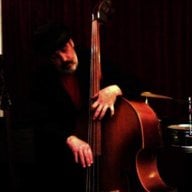
Lifetime of music lessons on various instruments (double bass, clarinet, saxophone, trumpet), at times intensive (i.e. symphony audition prep) at other times casual, musical family, a couple years of university-level music studies.
I treat bass like any other instrument: fundamentals first (tone production, intonation, articulation, scales, arpeggios, etc.) then repertoire.
For learning repertoire I always prefer written music (I never learned tab) or lead sheets. I'll transcribe if needed (most pop forms are pretty easy to pick out by ear).
On guitar and bass guitar I'm entirely self-taught, but my double bass instruction has definitely made me a better bass guitarist.
I treat bass like any other instrument: fundamentals first (tone production, intonation, articulation, scales, arpeggios, etc.) then repertoire.
For learning repertoire I always prefer written music (I never learned tab) or lead sheets. I'll transcribe if needed (most pop forms are pretty easy to pick out by ear).
On guitar and bass guitar I'm entirely self-taught, but my double bass instruction has definitely made me a better bass guitarist.
Paid-for online courses (TalkingBass and StudyBass). Might be worth adding this to your poll.
I do the visual/theory approach too, but I am trying to do more direct audio approach now, I live within A&M commuting distance and I am looking at buying a few homes in the area for rental properties very soon. I like A&M even though my whole family is burnt orange. If I can get my vision problems fixed, I may retire fully and be a student there in Fall 2022. My undergrad was Engineering, but I want to go back for pure math.
Prue math. Had problems with math holding down my GMAT scores, and came up with a study paper on Math 101 for dummies. Got me and our Daughter into graduate school. When our Granddaughter was thinking about Grad School I asked if she would like a copy, her reply; "My GPA was high enough I don't have to worry with that." Picking my self up from the floor I realized that must have come from her Father's side, LOL.
Central Texas, Bryan and College Station, would be a great place to live and as the school is expanding, (Gig um Aggies) with no signs of a slowdown your rental venture should work to your advantage.
Lived in Bryan for nine years. Fond memories. Blue Bell Ice cream and Shiner beer. What else could a guy ask for?
Last edited:
Approach it as "learning the instrument," and "learning music," rather than doing what most people do, which is "learning songs." People who just learn songs aren't really anything but musicians in passing; you can't really communicate or collaborate with them musically on anything but the most surface levels. Sadly, this is 90 percent of the "musicians" out there, IME. They're just surface level. They never actually learned the instrument in general, or learned music in general. They just learned how to play songs. They might know 1,000 songs really well, more songs than most, and still not really be a musician that you can sit down and come up with something with. What I'm saying here isn't really about technical prowess either. It's about a fundamental approach to just what it is that you are doing with music in the first place. People who are not very advanced on a technical level can be real musicians, and can approach things this way – even if they aren't "good" at playing.
Learn the technique basics from a technically sound bass player. How you hold your hands, how you move your fingers over the strings, etc. You don't need to be strictly beholden to it forever, as, if you have any musical-technical instinct whatsoever, you will naturally find your own ways. But it should be your starting point, just like you learned to hold the steering wheel with both hands when first sitting down to learn to drive.
Learn basic rock-n-roll and pop level music theory (meter, chord theory, intervals).
Play along with your dad's records before he gets home from work.
The better the records you play along with, the better you'll get. Choose wisely. I suggest R&B music, as it will make great feel and timing instinctive to you, as well as technique – and it is such a fundamental and influential genre to most other genres these days, that being shaped by it young will prepare you to work in countless other genres. You like an artist? Don't just play along with them. Play along with what influenced them. Then play along with what influenced THEM. Etc. You'll end up at R&B music within a generation or two, in most cases.
Learn the technique basics from a technically sound bass player. How you hold your hands, how you move your fingers over the strings, etc. You don't need to be strictly beholden to it forever, as, if you have any musical-technical instinct whatsoever, you will naturally find your own ways. But it should be your starting point, just like you learned to hold the steering wheel with both hands when first sitting down to learn to drive.
Learn basic rock-n-roll and pop level music theory (meter, chord theory, intervals).
Play along with your dad's records before he gets home from work.
The better the records you play along with, the better you'll get. Choose wisely. I suggest R&B music, as it will make great feel and timing instinctive to you, as well as technique – and it is such a fundamental and influential genre to most other genres these days, that being shaped by it young will prepare you to work in countless other genres. You like an artist? Don't just play along with them. Play along with what influenced them. Then play along with what influenced THEM. Etc. You'll end up at R&B music within a generation or two, in most cases.
Last edited:

Structured (paid) Online courses.What methods do you USUALLY use for learning bass? (Click all that apply)
BassBuzz
TalkingBass
It's not an option in your poll so I haven't voted.
My spouse is a guitarist, so 'My guitarist tells me what to do'. She tells me when I'm sucking or too ambitious with an arrangement, which is almost always helpful.

What methods do you USUALLY use for learning bass? (Click all that apply)
Well to be honest I only learned once, but it’s taking me 53 year and counting to complete the course.


