Trying to find an upright bass string. I was wondering why they don’t make a prosper bronze for upright Any thoughts? I’ve played d addario strings for years and love the zyex strings. but I went to gut they really brought out a great acoustic sound. but I’ve notice playing with an amp it sounds more like a beat box than a bass. With the zyex strings amp I always got an electric sound. I’m just want something that booms like a bass both amp an acoustic.

Enjoy the benefits of a premium membership!
Upgrade Account
-
TalkBass has been independent since 1998. Add your voice.
Create a free account to reply to discussions, view embedded media, and browse with fewer display ads.
Join free Log in
Want zero display ads or expanded classifieds tools? Compare plans.
You are using an out of date browser. It may not display this or other websites correctly.
You should upgrade or use an alternative browser.
You should upgrade or use an alternative browser.
Prosper Bronze strings
- Thread starter gallanttj
- Start date
More options
Who Replied?



Not bronze but:
Aquila Corde makes copper wound strings....
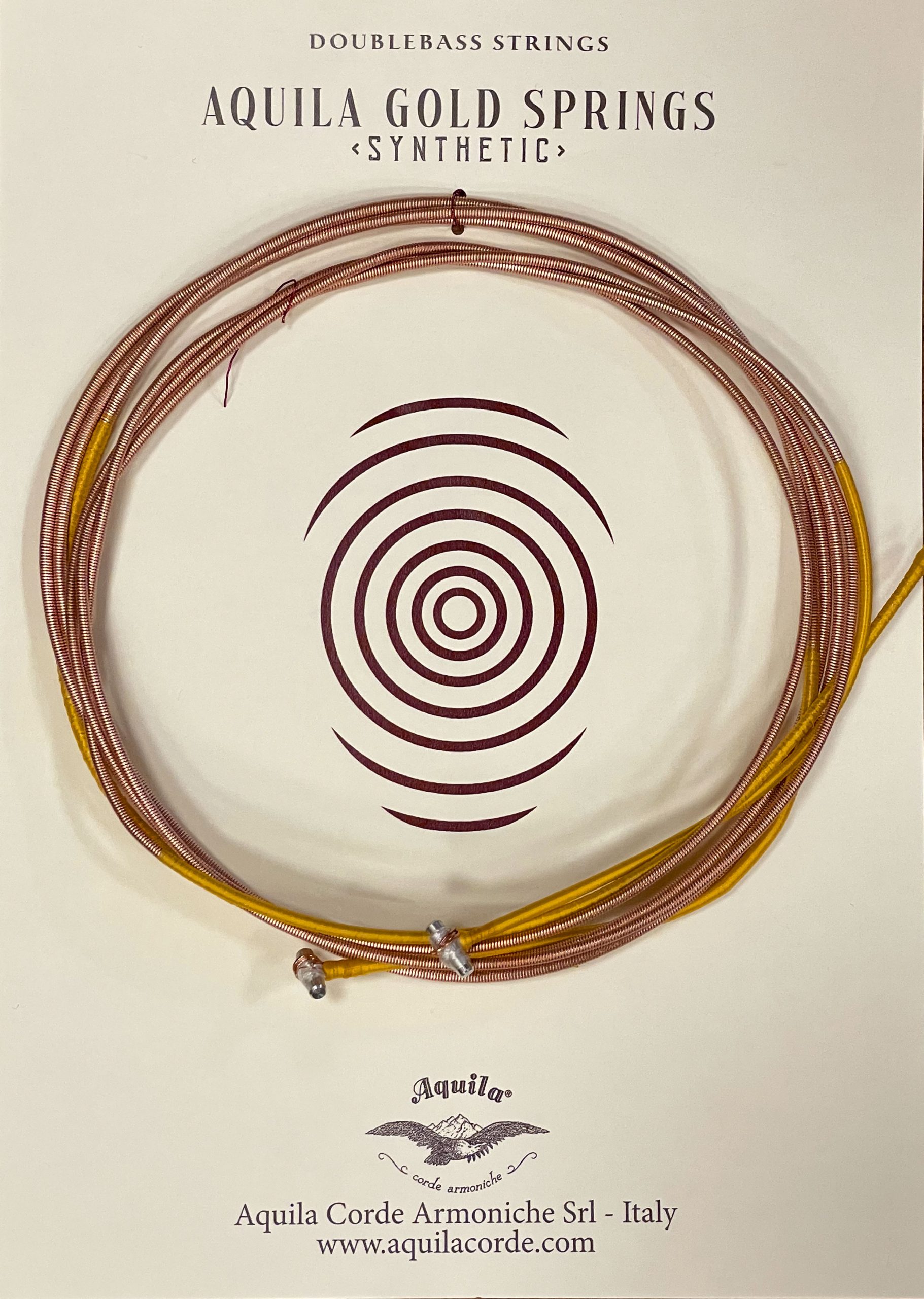
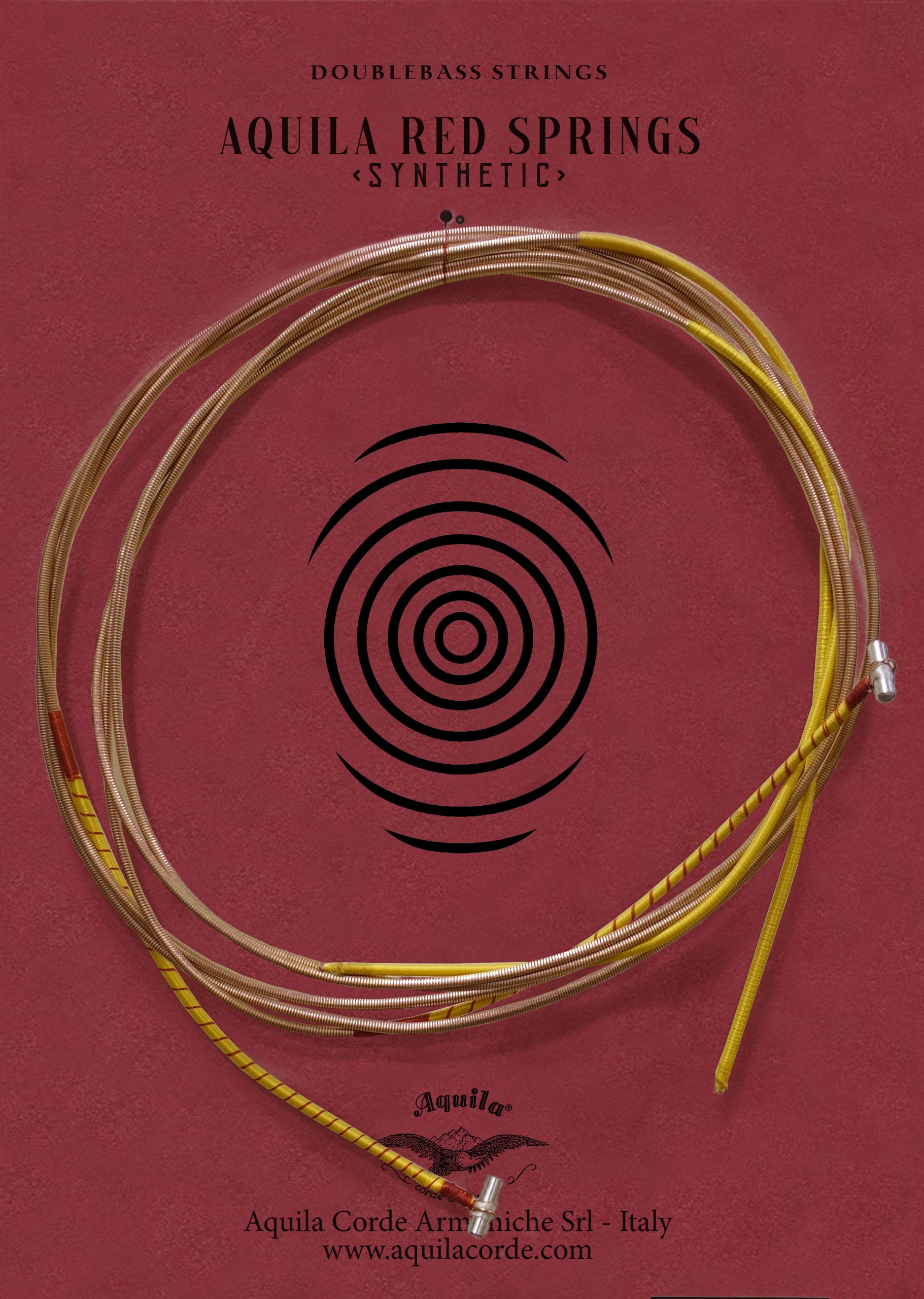
Also the E and A on the Gamut Red Diamond set are copper wrapped as well.

 shop.gamutmusic.com
Aquila Corde makes copper wound strings....
22 Series A + E | Aquila Corde Armoniche
Synthetic core covered with a flat copper wire. For pizzicato and occasionally bow. Low sustain. Pizzicato 22 Series A Pizzicato 22 Series E Bowed 22 Series A Bowed 22 Series E
aquilacorde.com
16 Series A + E | Aquila Corde Armoniche
Synthetic core covered with a flat copper wire. For pizzicato and occasionally bow. Medium sustain. Pizzicato 16 Series A Pizzicato 16 Series E Archetto 16 Series A Archetto 16 Series E
aquilacorde.com
Also the E and A on the Gamut Red Diamond set are copper wrapped as well.
Red Diamond Gut Bass String Set
Gamut Red Diamond Gut Bass Strings are designed for modern performance practice at a=440, and are hand-made to the same exacting quality standards as our Academie line of Baroque contrabass strings. Red DiamondString Gauge Approx. Tension g-1 Varnished Gut 2.50mm(0.098", 50PM) 23kg (52.91lb) d-2...
shop.gamutmusic.com

Also seconding that this has more to do with your amplification set up than strings. The only way to get your acoustic sound through a speaker is with a microphone and probably most importantly, extremely talented musicians who are extremely sensitive and know how to play with controlled dynamics. Plus playing in halls with exceptional acoustics/sound systems doesn't hurt.
For us regular working musicians, we unfortunately don't have that luxury, leading to piezo pickups and amps being more feasible for us to use. What is your pickup and amp setup? Probably the most natural sounding pickup on the market is the Realist copperhead. You also want to make sure you have an amp that can handle a 1 megohm impedance, which helps piezos sound best. If not, see if you can get a pre-amp that can help.
The other accept that will help is how you dial in your tone settings on your amp. My rule with amplifying upright is to find a basic setting that enhances your acoustic tone, filling in the sonic gaps that may be missing, and adjusting as needed depending on the sound of the room I'm playing in. For example, my acoustic sound is naturally heavy in the low end, so I usually roll off all or most of the bass frequencies on my amp. For low mid, I aim for about 9 or 10 o'clock. High mid I usually keep right at noon, and then I will add more treble as needed. I use plain guts on my G and D and Spirocore mittels on A E and B. Pickup and amp wise, I have been bouncing between a KNA-1 or an Ischell contact mic depending on the volume threshold of the gig, straight into a GK MB-150 lately.
With your example of amplifying guts and zyex, I would personally add more highs and roll off the lows for guts. That way, you can actually get some pitch definition through an amp. For the zyex, a keeping treble and high mid at noon, while adjust the lower frequencies could help tame the electric bass response.
It is going to take a lot of experimenting, but you will find a solution in time!
For us regular working musicians, we unfortunately don't have that luxury, leading to piezo pickups and amps being more feasible for us to use. What is your pickup and amp setup? Probably the most natural sounding pickup on the market is the Realist copperhead. You also want to make sure you have an amp that can handle a 1 megohm impedance, which helps piezos sound best. If not, see if you can get a pre-amp that can help.
The other accept that will help is how you dial in your tone settings on your amp. My rule with amplifying upright is to find a basic setting that enhances your acoustic tone, filling in the sonic gaps that may be missing, and adjusting as needed depending on the sound of the room I'm playing in. For example, my acoustic sound is naturally heavy in the low end, so I usually roll off all or most of the bass frequencies on my amp. For low mid, I aim for about 9 or 10 o'clock. High mid I usually keep right at noon, and then I will add more treble as needed. I use plain guts on my G and D and Spirocore mittels on A E and B. Pickup and amp wise, I have been bouncing between a KNA-1 or an Ischell contact mic depending on the volume threshold of the gig, straight into a GK MB-150 lately.
With your example of amplifying guts and zyex, I would personally add more highs and roll off the lows for guts. That way, you can actually get some pitch definition through an amp. For the zyex, a keeping treble and high mid at noon, while adjust the lower frequencies could help tame the electric bass response.
It is going to take a lot of experimenting, but you will find a solution in time!


My only experience with phospor bronze is on my ABG. My impression is they add a metallic midrange texture that is sort of the opposite of how I envision an acoustic upright sounding. I believe this strings are pretty abrasive and hard, so they would probably bite into the fingerboard.
I do agree that part of the problem is using a pickup. However, the authenticity of the sound you get varies quite a bit by pickup design and placement. The most authentic pickup I have heard is the Ehrlund EAP. Caveats, it doesn't work well on every bass and you need to experiment with placement to find a position where it picks up a natural sound.
Another part of the problem is the feedback loop between the amp, air, bass, pickup. All of these elements need to be treated as a system. There are lots of non-linearities in the frequency response of this system. As the feedback loop gets stronger these non-linearities tend to get further exaggerated. Therefore, the more amplification you need, the more your sound will be degraded.
Corrective EQ can be used to compensate to some degree. I have had success with parametric EQ as well as a 31-band graphic. The idea is you increase gain until a frequency starts to feedback. Back of the gain a bit and then do a frequency sweep with boost to find the most problematic frequencies. You can notch anywhere from 4 to 6 frequencies without gutting your sound, and IME it tends to make a pretty significant improvement with most uprights. This is assuming the upright is suitable for amplification, which is not necessarily true. The last bass I played professionally was designed to be a cannon acoustically, and IMHO it did not amplify particularly well.
The Audio Sprockets Tone Dexter is another tool you can use to try and even out the non-linearities in the system. Basically you play into a mic and the Tone Dexter compares the mic sound to the pickup sound, and tries to process the signal from the pickup so it's closer to a mic sound.
I agree mics give the most accurate representation of how a bass sounds. However, while they are great for recording, I personally consider them virtually unusable for on-stage amplification. I normally use more amplification than is possible with a mic, and IME mics tend to pickup excessive bleed from drums and cymbals. There are ways around these problems, but I don't really consider them practical for the type of work I generally do.
Regarding your amp. If you want an authentic sound, you need an amp and cab that are fairly high fidelity. A lot of great players loved the old GK MB150E. The rig has very limited volume and pretty strong baked in tone. I personally hated to play bass guitar or upright through them. Given the choice I grabbed an GK 200MK keyboard amp.
Piezo pickups generally need to be terminated with a relatively high impedance. The minimum input impedance the amp should provide is 1 Meg. Optimum is often somewhere between 2 and 5 meg. It varies by pickup design. 10 Meg is sometimes claimed as the gold standard, but it may actually be a bit too high for some pickups and not high enough for others. If you amp does not provide at least a 1 Meg load, you are likely to get some improvement by adding a buffer of some sort.
I do agree that part of the problem is using a pickup. However, the authenticity of the sound you get varies quite a bit by pickup design and placement. The most authentic pickup I have heard is the Ehrlund EAP. Caveats, it doesn't work well on every bass and you need to experiment with placement to find a position where it picks up a natural sound.
Another part of the problem is the feedback loop between the amp, air, bass, pickup. All of these elements need to be treated as a system. There are lots of non-linearities in the frequency response of this system. As the feedback loop gets stronger these non-linearities tend to get further exaggerated. Therefore, the more amplification you need, the more your sound will be degraded.
Corrective EQ can be used to compensate to some degree. I have had success with parametric EQ as well as a 31-band graphic. The idea is you increase gain until a frequency starts to feedback. Back of the gain a bit and then do a frequency sweep with boost to find the most problematic frequencies. You can notch anywhere from 4 to 6 frequencies without gutting your sound, and IME it tends to make a pretty significant improvement with most uprights. This is assuming the upright is suitable for amplification, which is not necessarily true. The last bass I played professionally was designed to be a cannon acoustically, and IMHO it did not amplify particularly well.
The Audio Sprockets Tone Dexter is another tool you can use to try and even out the non-linearities in the system. Basically you play into a mic and the Tone Dexter compares the mic sound to the pickup sound, and tries to process the signal from the pickup so it's closer to a mic sound.
I agree mics give the most accurate representation of how a bass sounds. However, while they are great for recording, I personally consider them virtually unusable for on-stage amplification. I normally use more amplification than is possible with a mic, and IME mics tend to pickup excessive bleed from drums and cymbals. There are ways around these problems, but I don't really consider them practical for the type of work I generally do.
Regarding your amp. If you want an authentic sound, you need an amp and cab that are fairly high fidelity. A lot of great players loved the old GK MB150E. The rig has very limited volume and pretty strong baked in tone. I personally hated to play bass guitar or upright through them. Given the choice I grabbed an GK 200MK keyboard amp.
Piezo pickups generally need to be terminated with a relatively high impedance. The minimum input impedance the amp should provide is 1 Meg. Optimum is often somewhere between 2 and 5 meg. It varies by pickup design. 10 Meg is sometimes claimed as the gold standard, but it may actually be a bit too high for some pickups and not high enough for others. If you amp does not provide at least a 1 Meg load, you are likely to get some improvement by adding a buffer of some sort.
Last edited:
I do use the realist that u mentioned.
The Copper Head is the last pickup I used professionally. IMHO it is a decent compromise if you play quite a bit of arco, which I did. The tonal balance with pizz is fairly decent, but this pickup tends to exaggerate a low mid resonance produced by the bass's body. IME, this resonance gives pizz sort of a boxy quality and makes the tone sort of diffuse and underdamped. If you don't need it for arco, you might want to consider a different pickup.

A Realist was the worst pickup I ever tried with my cheap german ply.
Boomy boomy boomy…
Boomy boomy boomy…
O only heard a bassist one time which sounded OK with a Realist, any other time only boomy lows.
The Lifeline was a bit better, the Shadow NFX sounds a bit distant but with a good sound and good for switching between pizz and arco.
If you need to drive a band: Yamahiko, Full Circle or a bridge wing pickup like the Underwood (but with the last no bowing or switchable EQ/volume). Wilson or ANS/Bassbalsereit may work too.
For a contact mic I prefer the AKG C411 over the Ehrlund EAP or the MSP. More mid/high frequency content to hear intonation better.
But these only work for a medium volume situation.
Back to the strings:
I once got a prototype DB string set from an Asian guitar/bass guitar manufacturer. I put them on my Stagg EDB and they sounded like a bass guitar whereas typical DB strings sounded a lot closer to a DB than these prototypes. I asked the manufacturer if they are made like flatwound BG strings, only longer and with DB ball end and silk and he said that‘s exactly how the were made. So a lot be of the basic sound comes from the strings, only the resonances come from the acoustic body.
Long sustaining strings won‘t work well for bowing, so construction of BG strings is not transferable to DB strings. At least historically a DB is mainly a bowed instrument.
The Lifeline was a bit better, the Shadow NFX sounds a bit distant but with a good sound and good for switching between pizz and arco.
If you need to drive a band: Yamahiko, Full Circle or a bridge wing pickup like the Underwood (but with the last no bowing or switchable EQ/volume). Wilson or ANS/Bassbalsereit may work too.
For a contact mic I prefer the AKG C411 over the Ehrlund EAP or the MSP. More mid/high frequency content to hear intonation better.
But these only work for a medium volume situation.
Back to the strings:
I once got a prototype DB string set from an Asian guitar/bass guitar manufacturer. I put them on my Stagg EDB and they sounded like a bass guitar whereas typical DB strings sounded a lot closer to a DB than these prototypes. I asked the manufacturer if they are made like flatwound BG strings, only longer and with DB ball end and silk and he said that‘s exactly how the were made. So a lot be of the basic sound comes from the strings, only the resonances come from the acoustic body.
Long sustaining strings won‘t work well for bowing, so construction of BG strings is not transferable to DB strings. At least historically a DB is mainly a bowed instrument.
Last edited:
For a contact mic I prefer the AKG C411 over the Ehrlund EAP
Probably should group the Ischell with these.
Probably, but I have not used one, so I cannot be sure if I would prefer it over the others. The C411 is at least easier to mount than the hermetic air isolation the Ischell needs.Probably should group the Ischell with these.
I‘m happy with the C411 but hardly have a case where I can use it.
A double backup for piezo and contact mic is enough, I think.

Just to muddy the waters a little more...
I was able to get very usable tones, both pizzicato and with the bow from the Underwood and the Realist Copper. But it took attention to technique and amplification. I had an easier time and was much more satisfied with the results from a Realist Lifeline. I have used the Full circle on a few rental/backline basses and it was also pretty trouble free.
I also use a Troll ribbon mic in some instances. I never blend with my rig, too complicated for the effort and results. However, once or twice, a sound person has taken on that challenge. Personally I don't think it's worth it, in my world it's either mic or pickup.
I have a Yamahiko single element on my bass now. I love how it sounds and the installation is really clean. It has good signal and takes EQ really well.
Caveats, I'm not that great with the bow and most of my gigs are either amplified with drums or mostly acoustic without drums. There was a time when I could just use the Troll even with drums but that requires the drummer to be mindful and the sound engineers to be really great.
*edit* Not sure how this relates to the Phosphor Bronze OP but I've mostly used either gut strings or steel core, flat wound. I would assume a very different sound.
I was able to get very usable tones, both pizzicato and with the bow from the Underwood and the Realist Copper. But it took attention to technique and amplification. I had an easier time and was much more satisfied with the results from a Realist Lifeline. I have used the Full circle on a few rental/backline basses and it was also pretty trouble free.
I also use a Troll ribbon mic in some instances. I never blend with my rig, too complicated for the effort and results. However, once or twice, a sound person has taken on that challenge. Personally I don't think it's worth it, in my world it's either mic or pickup.
I have a Yamahiko single element on my bass now. I love how it sounds and the installation is really clean. It has good signal and takes EQ really well.
Caveats, I'm not that great with the bow and most of my gigs are either amplified with drums or mostly acoustic without drums. There was a time when I could just use the Troll even with drums but that requires the drummer to be mindful and the sound engineers to be really great.
*edit* Not sure how this relates to the Phosphor Bronze OP but I've mostly used either gut strings or steel core, flat wound. I would assume a very different sound.
Last edited:
If you’re using gut strings and a realist pickup, that is the darkest, boomiest combination I can think of, although I’m certainly still learning. I would start by getting the acoustic sound you like the best, forgetting about amplification initially. If you liked the zyex, you could try zyex EA and gut DG. Forget the phosphor bronze idea, upright bass is not an acoustic guitar! Just experiment with strings until you find what like best or run out of money.
Then try different pick ups, those are actually cheaper than strings these days and there’s usually no trade off buying them used. I tried 5 different ones over the course of a couple of years. I settled on a Yamahiko single element. To compare them, you need an impedance matching preamp or a high impedence input. I personally have found that 1 megohm does not do the trick for most piezo; I.e. they sound better with a higher (10megohm on my Clarus) input. There are cheap impedence matching preamps around, the old fishman model B is one. It doesn’t have good eq options, but at least it eliminates the impedence mismatch that really kills a lot of piezos.
Then try different pick ups, those are actually cheaper than strings these days and there’s usually no trade off buying them used. I tried 5 different ones over the course of a couple of years. I settled on a Yamahiko single element. To compare them, you need an impedance matching preamp or a high impedence input. I personally have found that 1 megohm does not do the trick for most piezo; I.e. they sound better with a higher (10megohm on my Clarus) input. There are cheap impedence matching preamps around, the old fishman model B is one. It doesn’t have good eq options, but at least it eliminates the impedence mismatch that really kills a lot of piezos.
I just post a string opinion on the string side looking for suggestions I might go with a zyex gut combo like u mention idk yet but I have thought about trading off my realist for a ear trumpet mic but I don’t know much about the ear trumpet mics and really don’t want to invest a lot bc I don’t mic often I normally play acoustic. At our local Opry I’m straight acoustic but notice in the mics they have set up I get a metallic sound I know it’s not my bass mic bc I’m not amped it’s just how they have their mics set. I just looking for a warm deep rich tone without the metallic sound on the g string when u play high up on the string and something that makes a tone not just a table hit. I know I’m a bluegrass basses but if my guitar made no tone I wouldn’t play it and but something that did and yes most bluegrass basses want just a thump but I want tone with my thumb not metallic table hitsIf you’re using gut strings and a realist pickup, that is the darkest, boomiest combination I can think of, although I’m certainly still learning. I would start by getting the acoustic sound you like the best, forgetting about amplification initially. If you liked the zyex, you could try zyex EA and gut DG. Forget the phosphor bronze idea, upright bass is not an acoustic guitar! Just experiment with strings until you find what like best or run out of money.
Then try different pick ups, those are actually cheaper than strings these days and there’s usually no trade off buying them used. I tried 5 different ones over the course of a couple of years. I settled on a Yamahiko single element. To compare them, you need an impedance matching preamp or a high impedence input. I personally have found that 1 megohm does not do the trick for most piezo; I.e. they sound better with a higher (10megohm on my Clarus) input. There are cheap impedence matching preamps around, the old fishman model B is one. It doesn’t have good eq options, but at least it eliminates the impedence mismatch that really kills a lot of piezos.
I understand the metallic-on-the-G-string issue, that’s annoying. I found that Evah Pirazzi G string helped my bass with that, although I don’t think it will be any thumpier, low sustain than gut. You might try a used one, or maybe an Oliv G. Actually, I’m going to put an Oliv G in the classifieds for $50 soon.I just post a string opinion on the string side looking for suggestions I might go with a zyex gut combo like u mention idk yet but I have thought about trading off my realist for a ear trumpet mic but I don’t know much about the ear trumpet mics and really don’t want to invest a lot bc I don’t mic often I normally play acoustic. At our local Opry I’m straight acoustic but notice in the mics they have set up I get a metallic sound I know it’s not my bass mic bc I’m not amped it’s just how they have their mics set. I just looking for a warm deep rich tone without the metallic sound on the g string when u play high up on the string and something that makes a tone not just a table hit. I know I’m a bluegrass basses but if my guitar made no tone I wouldn’t play it and but something that did and yes most bluegrass basses want just a thump but I want tone with my thumb not metallic table hits
Plain gut D-G with Evah E-A might be about the thumpiest practical combination.
As far as the mic vs pick up debate, I spent a little time trying that too, but I’m looking for a jazz sound and I need to blend with a drummer, piano player, sax, etc…and the pick up is much better for me. But, there’s a few mic comparisons on you tube, one of them is the DPA vs the Nadine.
That same guy, Herve, has a lot of excellent string comparisons, on YouTube and his own site with audio examples.
If you don’t have control over the FOH and monitor sound the board operator can do a lot to let your sound get too metallic, specially if (s)he is already partially deaf and exaggerates the high frequencies.
Some (mostly cheap and affordable Asian mics exaggerate the high mids which can help for some singers but not so much for instruments.
A dynamic mic has typically less highs than a condenser (like the Nadine), so that might help. But a fool at the board can even ruin that too.
Air mics should not be fed in an amp, only FOH and not into the monitors. They can feed back very quickly otherwise.
Contact mics are better, but seldom work with a plywood bass. It css as n be hard to find a good position for it on the top.
Pickups are highly resistant to feedback, the more the closer they are to the strings. Bridge foot to adjuster is the best place if you want a good sound for pizz and arco.
It might be that you need to get the soundpost a bit more away from the bridge foot. Easy task for a luthier.
Before putting much money into that first check if the board operator might be a problem. Get a friend who know how to operate a board or at least checks if the operator follows your wishes of changing the sound and check with him the sound.
I had it once playing with a tango orchestra where the leader thought the bass needs to be amplified that the board operator had no idea of double bass sound and turned the bass up to a very boomy sound. In the intermission I went to the board and turned the bass down, but after a few minutes the boom was there again. I told them in the Soundcheck that the bass frequencies needed to be turned down, but since they ignored me, I simply pulled the plug and played purely acoustical which was no problem at all … except for the operator who checked his board in mild panic what was going wrong.
Some (mostly cheap and affordable Asian mics exaggerate the high mids which can help for some singers but not so much for instruments.
A dynamic mic has typically less highs than a condenser (like the Nadine), so that might help. But a fool at the board can even ruin that too.
Air mics should not be fed in an amp, only FOH and not into the monitors. They can feed back very quickly otherwise.
Contact mics are better, but seldom work with a plywood bass. It css as n be hard to find a good position for it on the top.
Pickups are highly resistant to feedback, the more the closer they are to the strings. Bridge foot to adjuster is the best place if you want a good sound for pizz and arco.
It might be that you need to get the soundpost a bit more away from the bridge foot. Easy task for a luthier.
Before putting much money into that first check if the board operator might be a problem. Get a friend who know how to operate a board or at least checks if the operator follows your wishes of changing the sound and check with him the sound.
I had it once playing with a tango orchestra where the leader thought the bass needs to be amplified that the board operator had no idea of double bass sound and turned the bass up to a very boomy sound. In the intermission I went to the board and turned the bass down, but after a few minutes the boom was there again. I told them in the Soundcheck that the bass frequencies needed to be turned down, but since they ignored me, I simply pulled the plug and played purely acoustical which was no problem at all … except for the operator who checked his board in mild panic what was going wrong.


